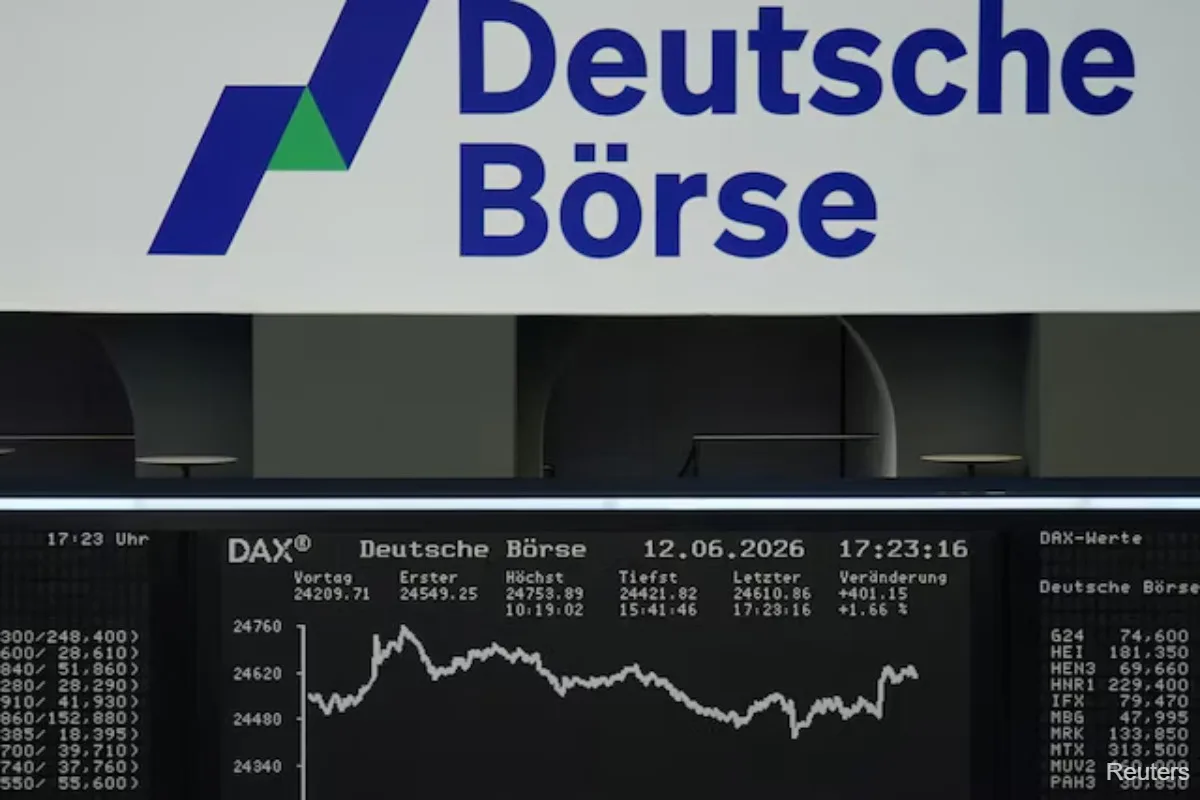
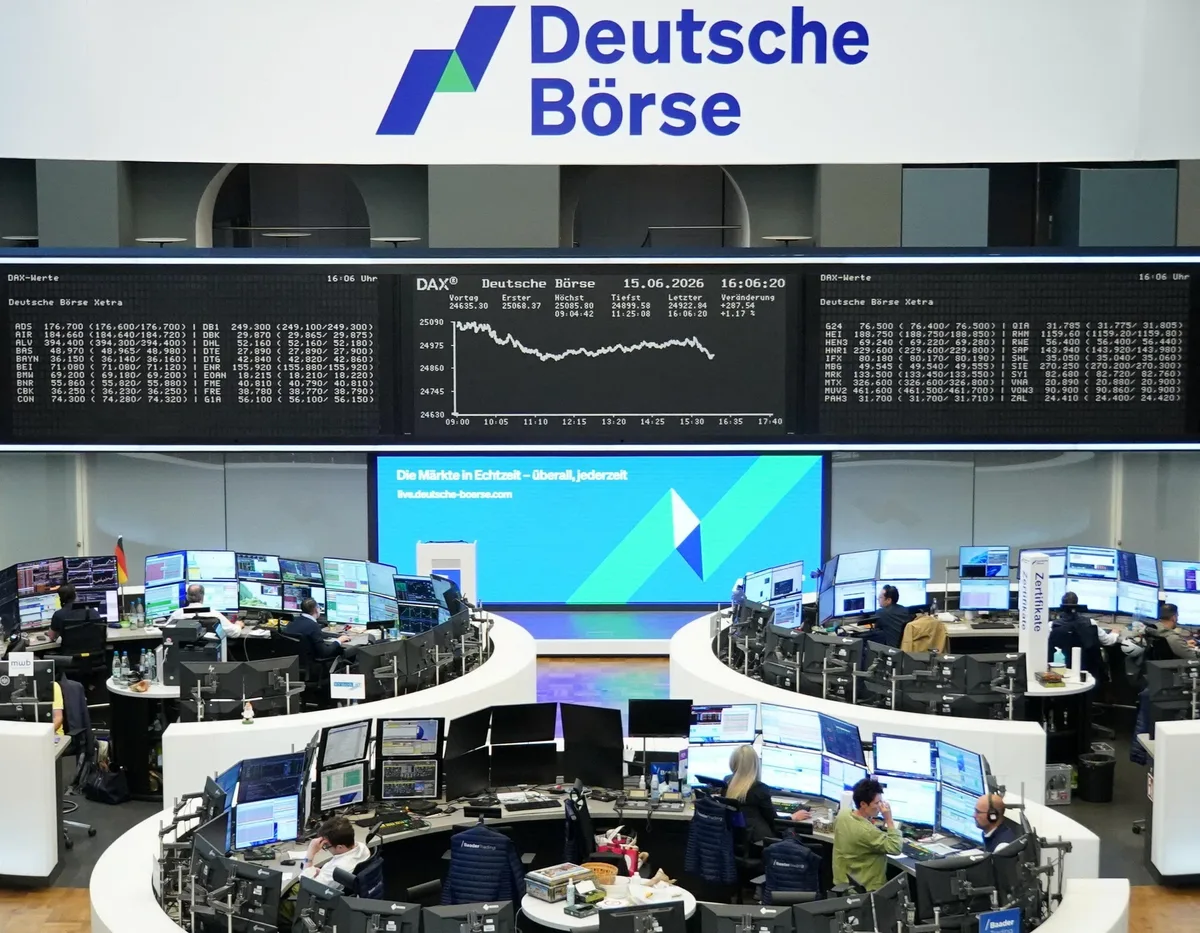
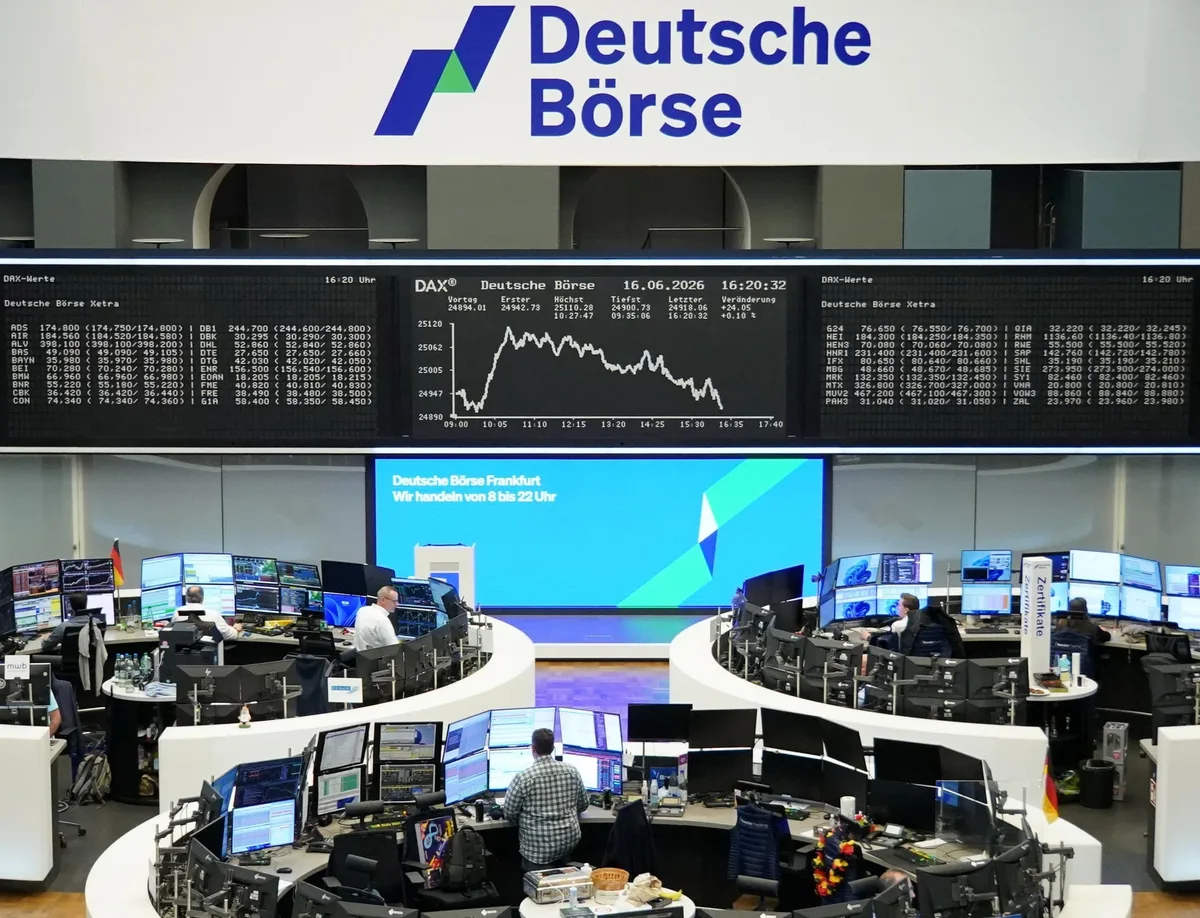
Europe’s STOXX 600 index surged 1.2% to 640.94 points at the open on June 15, 2026, surpassing its previous record set on February 27, 2026, before the Middle East conflict began [1, 2]. The index ended the day 0.2% higher, recovering losses sustained since the conflict started on February 28 [3].
The rally followed the announcement of a preliminary US-Iran peace agreement due to be signed on June 19, 2026, which would reopen the Strait of Hormuz and end a three-month-long conflict [1, 2, 3]. This boosted global market optimism and risk sentiment. Brent crude prices fell about 4% to near $82 a barrel by June 16, hitting three-month lows amid easing geopolitical concerns [1, 2, 3, 4, 5].
Most sectors advanced on June 15, led by a 3.5% rise in auto stocks and gains over 5% in airlines sensitive to energy costs, including Lufthansa and Air France [1, 2]. Renault shares jumped 5% after announcing a military vehicle partnership with Thales, while Schneider Electric rose 3.3% following a collaboration with Taiwan’s Foxconn to develop AI data center infrastructure [1, 2]. Energy stocks fell 2.7% in response to lower crude prices [1, 2].
European shares had broadly underperformed US and Asian markets from March due to reliance on oil supplies through the Strait of Hormuz and less exposure to AI stocks, weighing on sentiment [1, 2, 3, 5]. Michael Field, Chief Equity Strategist at Morningstar, noted, "It’s probably the time you should see some rotation ... into areas such as defence in Europe, which have been weak," reflecting shifting investor focus after the conflict eased [3].
On June 16, the rally extended with the STOXX 600 edging up 0.3% to 636.01 points by 0717 GMT [4, 5]. The industrial goods and services sector led gains, rising about 1.1–1.2%, and banks advanced around 1.7%, supported by UniCredit's shares climbing 2.8% to 4.2% after Germany rejected its offer to buy Commerzbank shares [4, 5]. Meanwhile, tech stocks declined, including STMicroelectronics which fell 2.5% to 4.1% after announcing plans to issue $1.5 billion in convertible bonds [4, 5].
Concerns about energy-driven inflation prompted the European Central Bank to hike interest rates by 25 basis points last week, with traders expecting another 25-basis-point increase before year-end [1, 2, 3, 4, 5].
Investors welcomed the dissipation of geopolitical risk. Nabil Milali, Multi-asset Portfolio Manager at Edmond de Rothschild, said, "Investors would do well to look beyond this and welcome the dissipation of geopolitical risk and, with it, the dire scenarios of a global recession or a sustained inflationary shock" [5].
The scheduled signing of the US-Iran preliminary peace deal on June 19 remains a key event for markets to monitor [1, 2].