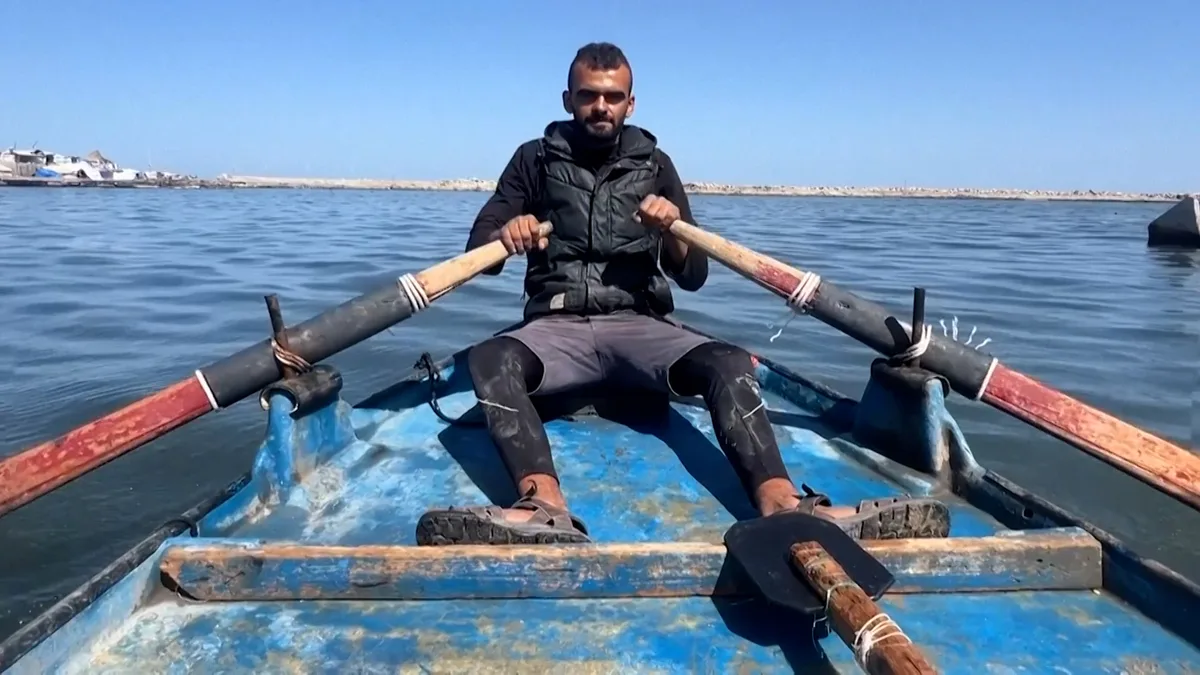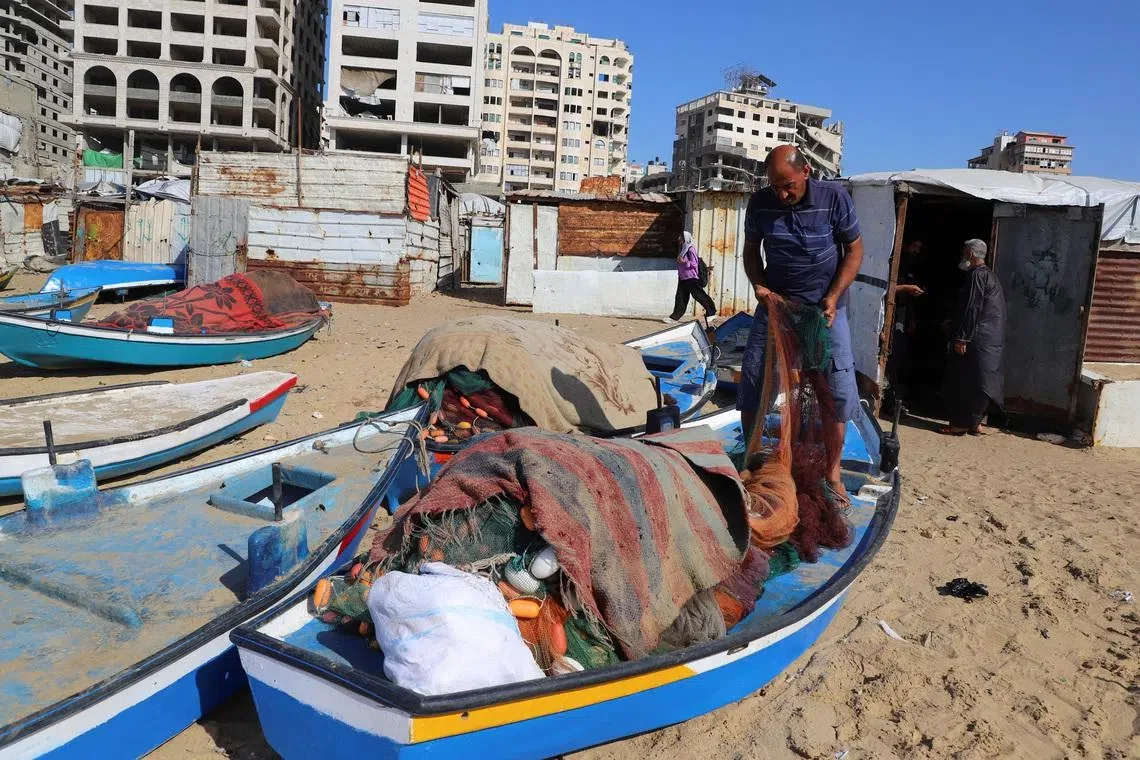
Gaza fishermen have turned to patching pleasure dinghies with reclaimed fiberglass, wood, and door frames pulled from rubble to keep their boats afloat amid severe shortages of repair materials. [1, 2] Israeli restrictions limit the entry of new fiberglass and other essential materials into Gaza, making repairs on larger, purpose-built boats difficult and expensive. [1]
Fiberglass prices have skyrocketed, rising from 50 to 60 shekels per kilo before the war to about 800 shekels now. "A kilo of fibreglass in the era before the war was 50 or 60 shekels (approximately $17 or $21). The cost today was around 800 shekels," said Mohammad al-Hissi. [1] The sharp price increase and restricted supply have forced fishermen to rely on small repairs using salvaged materials.
The fishing industry is struggling. Its total catch has plunged to less than 15 tons per month, compared with around 15 tons per day before the war, according to Zakaria Baker. He said, "The Gaza fishing industry's total catch has shrunk to less than 15 tons a month - the amount they used to take every day before the war." [1] Fishing historically provided an important source of food in Gaza but ongoing conflict has contributed to food insecurity and high malnutrition rates among children. Nearly 3,500 children were admitted for malnutrition treatment in Gaza as of April 2026. [1]
Since the last ceasefire in 2024, fishermen have remained close to shore to avoid Israeli military shooting incidents reported in Gaza's coastal waters. This has further limited their ability to fish farther from the coast. [1] Musab Baker, who helps with boat repairs, said, "We repair and maintain boats, and serve fishermen in any way we can. But we are unable to do anything apart from the small boats." [1]
The conflict began with Hamas attacks on southern Israel in October 2023, leading to tightened Israeli restrictions on Gaza's imports. [1] Since the ceasefire, there has been ongoing but reduced violence including military incidents near fishing zones. [1]
A report on June 5, 2026, detailed fishermen patching boats with reclaimed materials, followed by an Al Jazeera report the next day highlighting their use of door frames salvaged from rubble to make dinghies. [1, 2] The fishermen face significant challenges rebuilding their industry as restrictions, high costs, and security dangers persist.