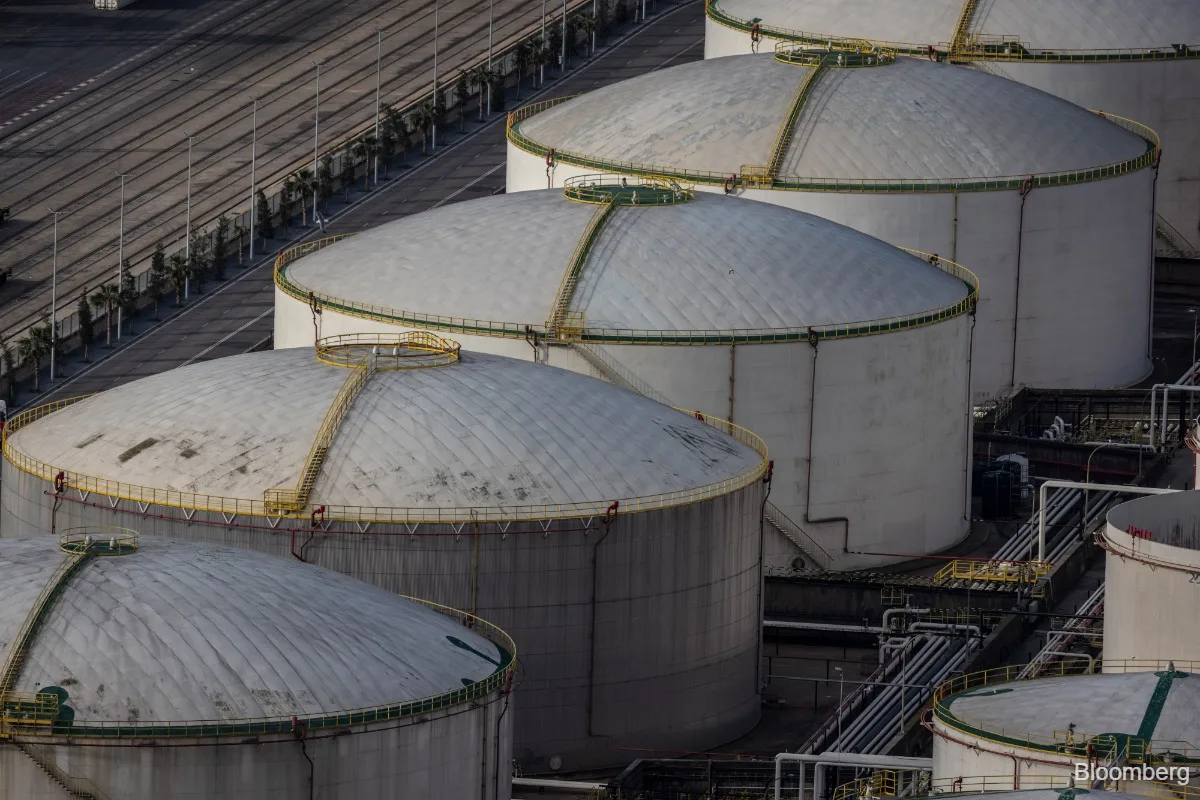
The global oil market is projected to return to an oversupply in 2027 as the effects of the Iran conflict fade and shipping flows through the Strait of Hormuz normalize faster than expected. Goldman Sachs forecasts an average oil surplus just above 3 million barrels per day in 2027, with Strategic Petroleum Reserve (SPR) rebuilding absorbing more than 1 million barrels per day, leaving roughly 2 million barrels per day as surplus supply [1, 2, 3, 4].
Morgan Stanley estimates an even higher surplus of 4.8 million barrels per day next year and has cut oil price forecasts twice in just over two weeks due to weaker demand and expected glut [1, 2, 5, 6]. Benchmark crude oil prices fell about 30% in the second quarter of 2026, erasing gains seen during the Iran war [1, 3, 6, 4]. Citigroup projects Brent crude could fall to between $60 and $65 per barrel by the end of this year amid weakening Chinese demand and stabilizing supply [4].
US Strategic Petroleum Reserve stocks declined from 415 million barrels at the end of February to 331 million barrels by June 19, the lowest level since 1983, reflecting significant drawdowns amid the conflict [1, 2, 3]. The Iran war was triggered by initial US-Israel strikes on February 28, 2026, disrupting flows through the Strait of Hormuz, a vital oil transit chokepoint [5, 6].
Following a June 17 interim memorandum of understanding between the US and Iran that allowed for a 60-day negotiation period, some shipping through the Strait of Hormuz reopened. Despite recent vessel attacks, traffic normalization has proceeded faster than anticipated, with full export recovery expected by the end of July 2026 [1, 2, 3, 6]. Iran insists on retaining control over maritime traffic through the Strait, possibly working with Oman as part of transit arrangements [1, 2, 3, 6].
Goldman Sachs’s Samantha Dart noted, "Once we have a normalisation of flows through the strait, the expectation is that we go into an oversupply. We do expect a little over one million barrels a day just of SPR rebuilding globally, but still, that would leave us close to two million barrels a day of a surplus" [1]. Morgan Stanley analysts confirmed, "As attention turns to 2027, the market has come full circle – back to surplus" [1].
Citigroup analysts, including Francesco Martoccia, added, "Fundamentals are rapidly reasserting themselves. Shipping flows are normalising, Chinese buyers remain absent, physical crude markets have weakened sharply, and inventories have drawn far less than expected. We continue to recommend selling any summer rallies and forecast Brent reaching US$60 to US$65 a barrel by the turn of the year" [4].
Qatar’s Foreign Ministry spokesperson Majed Al Ansari said, "There will be technical talks this week on issues including regional security that could later be elevated to senior level," indicating ongoing diplomatic efforts related to the region [5].
The next major milestone will be the full normalization of exports through the Strait of Hormuz by the end of July 2026, which is expected to further shape market dynamics heading into 2027 [2, 3].