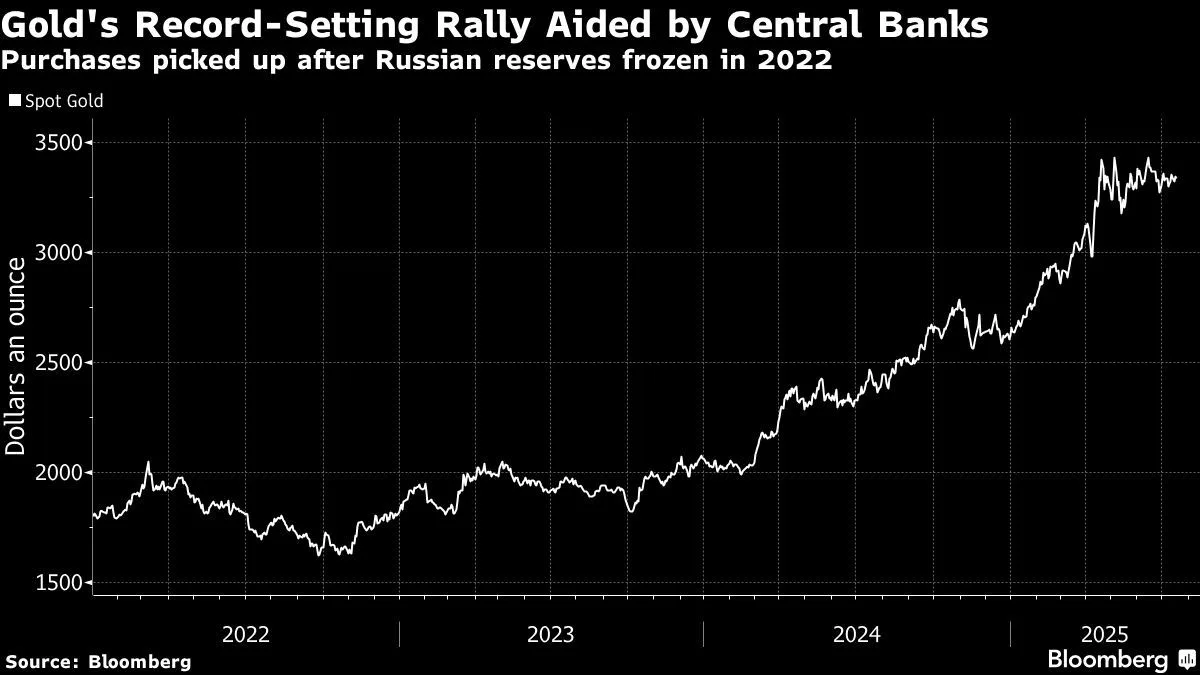
Gold prices have declined roughly 14-15% since the outbreak of conflict in Iran in late February 2026, falling sharply in the early days of the war and trading near $4,465 to $4,540 an ounce in mid-May 2026 [1, 2, 3, 4, 5, 6, 7]. The Middle East conflict has disrupted the region, with the ongoing closure or blockade of the Strait of Hormuz raising fears around inflation and pushing energy prices higher [1, 2, 3, 5, 6, 7]. This has increased expectations that central banks, including the US Federal Reserve, will keep interest rates elevated or raise them further, as they seek to curb inflationary pressures [1, 2, 3, 5, 6, 7]. Higher interest rates weigh on non-yielding assets like gold, contributing to the price decline [1, 2, 3, 5, 7].
Investor sentiment has fluctuated amid conflicting signals about a US-Iran ceasefire and progress toward reopening the Strait of Hormuz. Gold fell nearly 2% on May 19 as tensions persisted and Treasury 30-year yields rose sharply [1, 2, 5]. The price steadied near $4,540 on May 20 as hopes grew for a truce and US President Trump said talks were in the "final stages" [2, 6]. However, Iran's mixed responses kept markets uncertain on May 21 [7]. Ole Hansen, Head of Commodity Strategy at Saxo Bank, noted, "The current environment highlights an increasingly important distinction between what traders are focusing on in the short term and what investors continue to monitor over the long term" [2].
Silver and other precious metals have also seen sharp price drops since February amid the inflation worries [2, 5, 6, 7]. Daniel Hynes, Senior Commodity Strategist at ANZ Banking Group, said, "Gold’s risk-reward profile has deteriorated, prompting investors to unwind their positions. However, they expect central banks to eventually pivot to monetary easing on growth concerns, supporting gold" [3].
Despite recent declines, central bank gold purchases gained momentum. The World Gold Council reported central banks bought 244 tonnes of gold in Q1 2026, up from 208 tonnes in Q4 2025 [8, 4]. Goldman Sachs analysts forecast central banks will increase buying to an average of 60 tons monthly in 2026, almost double prior estimates [8, 4]. Goldman Sachs maintains a bullish gold price target of $5,400 an ounce by the end of 2026, noting that gold serves as "a natural source of cash if private investors face liquidity needs – for example, if equity markets sell off amid higher rates and weaker growth expectations" [8]. Citigroup analysts including Kenny Hu said, "When the Strait of Hormuz situation eventually deescalates, the prevailing macro headwinds against gold will ease and the gold price will likely bottom out" [6].
The market will watch closely for further developments in US-Iran talks and any resolution allowing the reopening of the Strait of Hormuz, which could alleviate energy and inflation pressures impacting gold. Central banks’ ongoing gold buying and monetary policy decisions will also shape prices through the rest of 2026.