Japan announced the Partnership On Wide Energy and Resources Resilience (POWERR Asia) on April 15, pledging US$10 billion to ASEAN nations to strengthen energy and resource security [1, 2, 3, 4]. The financing equals the cost of 1.2 billion barrels of crude oil that ASEAN imports annually [1, 2, 3, 4].
As part of Tokyo’s Free and Open Indo-Pacific vision, POWERR Asia prioritizes regional oil stockpiling and securing critical raw materials [1, 2, 3]. Japan is also working with South Korea and other partners to build resilient energy supply chains under the initiative [1, 2, 3].
Japan’s manufacturing depends heavily on petrochemical-derived imports from ASEAN. About 50% of its ethylene, 38% of plastic containers, and 35% of rubber tyres come from the region [1, 2, 3, 4]. The Iran war triggered shortages of naphtha-derived products used in plastics and medical supplies like gloves, dialysis tubes, and syringes, causing early impact on Japanese industries [1, 2, 3, 4].
Experts note the economic linkages between Japan and ASEAN run deep. Dr Takashi Terada of Doshisha University said fuel shortages or port disruptions rapidly reverberate back into Japan’s economy due to interconnected production and logistics [4]. Professor Heng Yee Kuang from the University of Tokyo called Japan a “troubleshooter,” offering solutions to ASEAN partners’ challenges through POWERR Asia [1].
The initiative emphasizes "enlightened self-interest," aiming to secure Japanese supply chains while aiding ASEAN [1, 2, 3, 4]. Unlike prior Japanese aid programs typically tied to business access, POWERR Asia focuses directly on mutual benefits for both sides [1, 2, 3, 4].
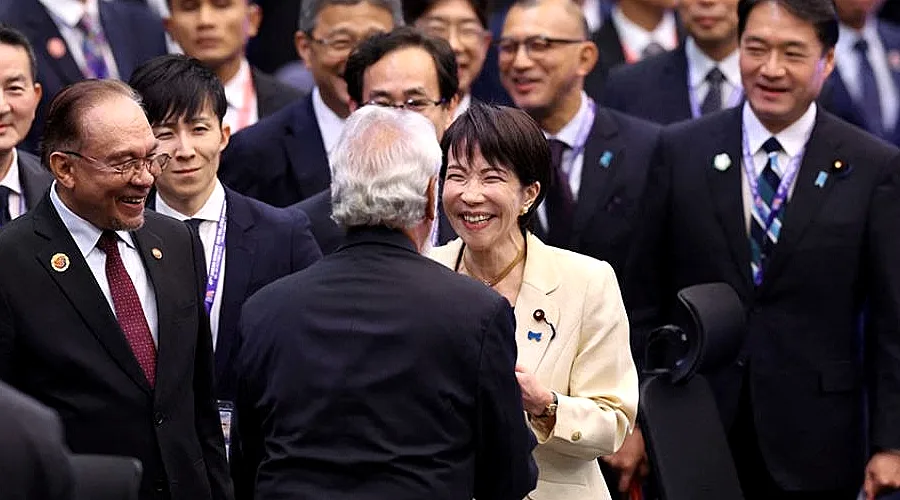
Prime Minister Sanae Takaichi announced POWERR Asia at a meeting with ASEAN leaders, including Singapore’s Prime Minister Lawrence Wong, signaling Tokyo’s commitment to regional cooperation amid global tensions [1, 2, 3, 4]. The program's implementation and financing details are expected to unfold throughout the year.