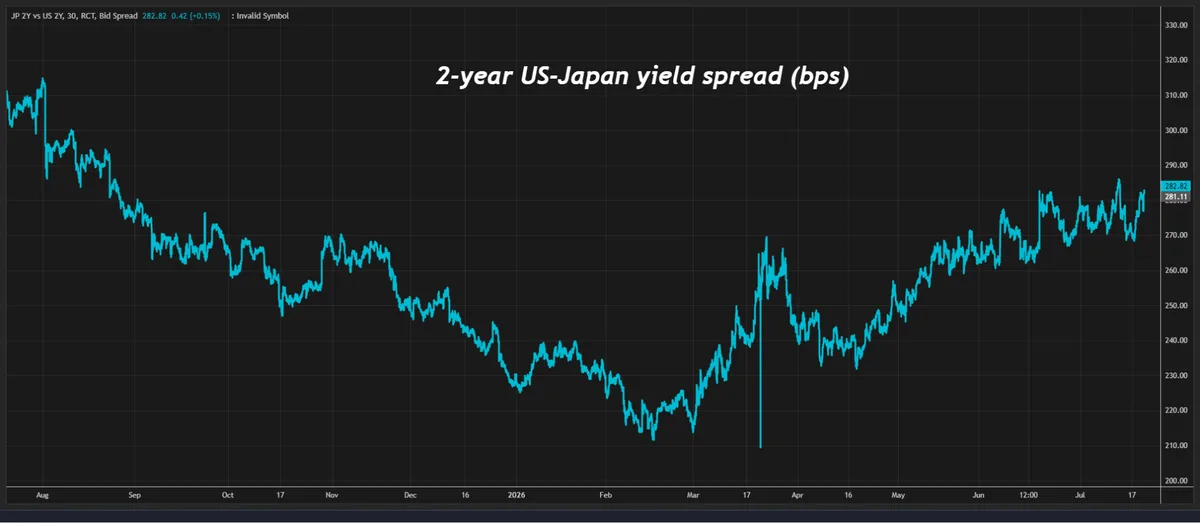
The Japanese yen fell to about 163 yen per US dollar, marking its weakest level since 1986. The US dollar/yen exchange rate surpassed 163.00 for the first time in 40 years, with the mark briefly hit in the New York market on July 21 [1, 2, 3, 4].
Japan relies heavily on energy imports, sourcing roughly 90% of its energy needs, with 95% coming from the Middle East. Rising tensions in the Middle East have driven up oil prices, worsening Japan's trade deficit. This has prompted investors to sell the yen, accelerating its decline [1, 2, 4].
Prime Minister Sanae Takaichi's plans for aggressive fiscal stimulus have increased concerns about Japan's fiscal discipline. Japan’s gross debt-to-GDP ratio remains above 200%, the highest in the world. Though the Bank of Japan raised its policy rate to 1%—the highest in 31 years—real interest rates remain deeply negative [1, 2, 4].
Morgan Stanley’s chief Japan economist, Takeshi Yamaguchi, noted that while some argue the fiscal picture is not so bleak, "when asked whether they would buy long-term JGBs at current levels, their answer was nevertheless 'no.'" Investors and economists worry that fiscal expansion could be inflationary and damage confidence in government bonds [1].
Japanese Finance Minister Satsuki Katayama said the government stands ready to take decisive action in currency markets if necessary, signaling readiness to intervene to support the yen [3, 4].
The yen’s weakness also extends to other currency pairs. The new Taiwan dollar/yen and Singapore dollar/yen exchange rates have shifted, with some analysts predicting the yen may weaken further against these Asian currencies this year. For example, Bloomberg Industry Research forecasts the Singapore dollar/yen rate could rise to 130-132, while other banks expect the yen to stabilize or rebound near current lows [5].
On July 22, attention centered on PM Takaichi's fiscal plans and the BOJ’s rate hike, fueling further concerns about a softer yen [1, 4]. By July 23, the Singapore dollar/yen rate reached around 126.3, with mixed forecasts on whether it will push higher or retreat before year-end [5].