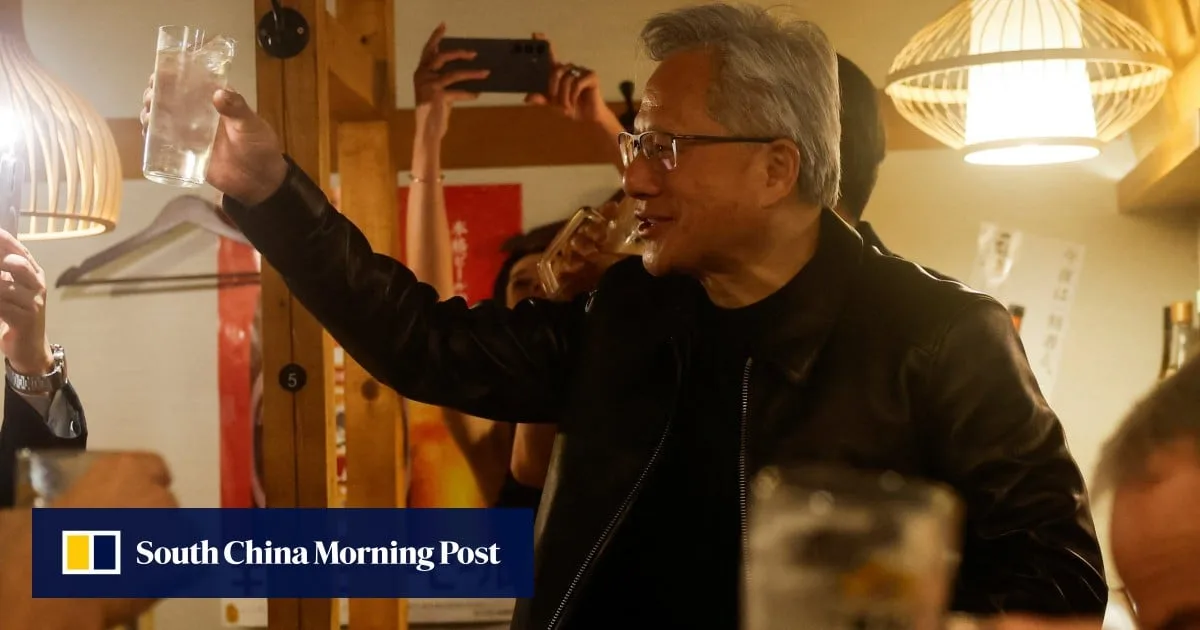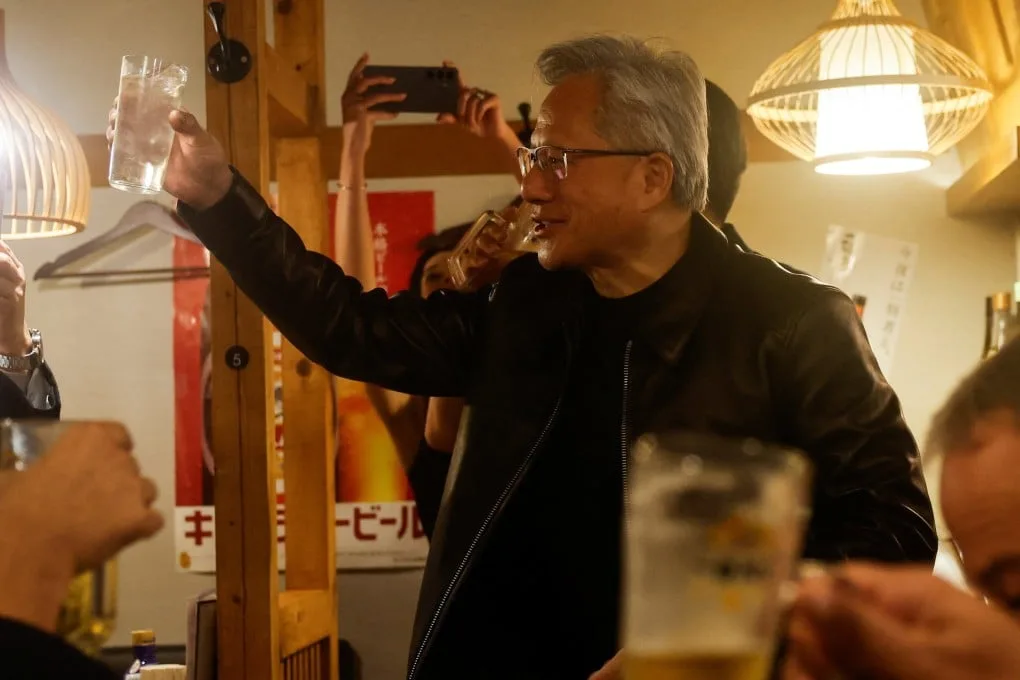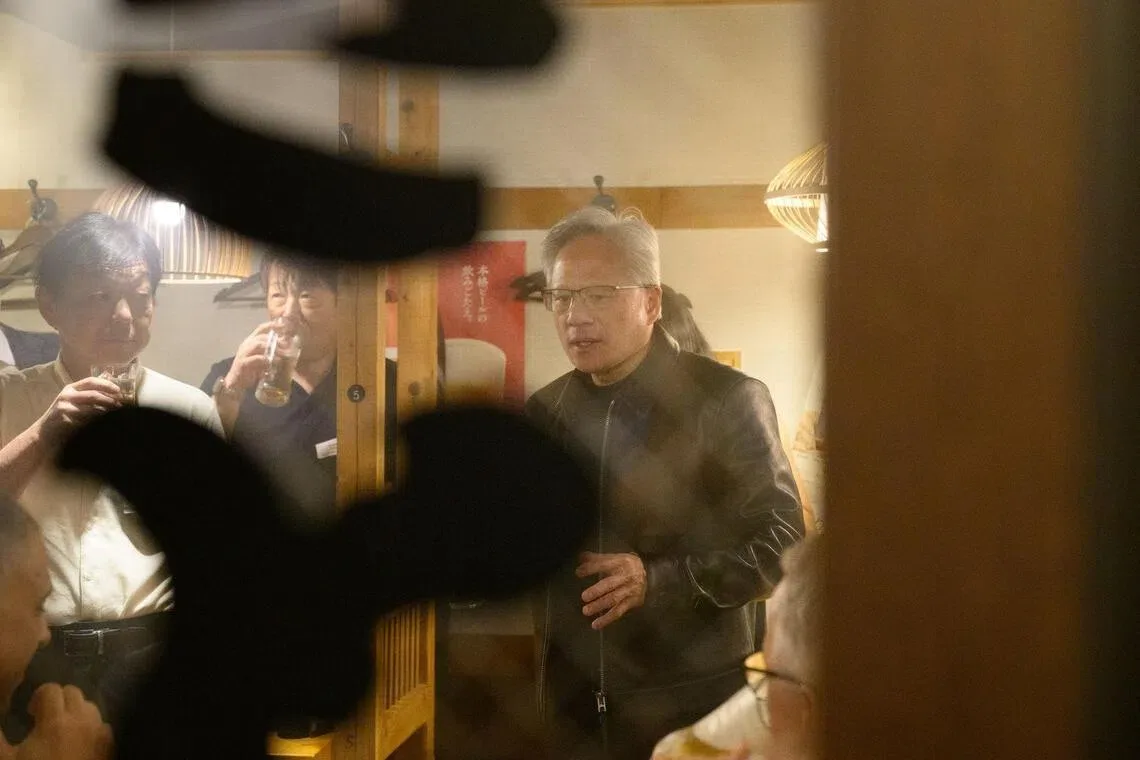
Nvidia CEO Jensen Huang met with top Japanese suppliers on July 15, 2026, at an izakaya in Tokyo's Kanda district to strengthen relationships crucial for AI chip production. The dinner included leaders from Kioxia Holdings, Shin-Etsu Chemical, Tokyo Electron, Ajinomoto, Sumitomo Electric Industries, Taiyo Yuden, and Panasonic [1, 2, 3].
Japanese companies provide key semiconductor materials and technologies essential to Nvidia's AI systems, including advanced memory, networking components, substrates, chemicals, and packaging [1, 2]. Huang highlighted the importance of Japan in the supply chain, saying, "The manufacturing is done around the world, but the fundamental technology, chemical technology, materials technology, the fundamental sciences? Here in Japan" [2].
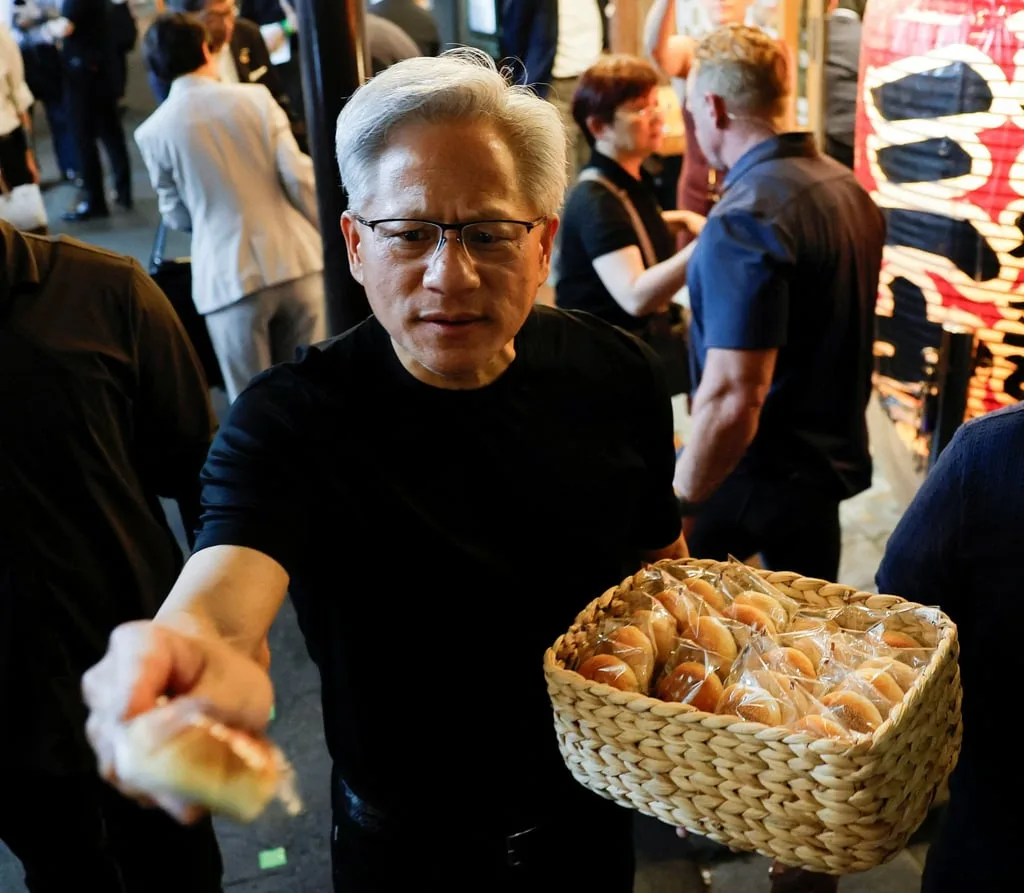
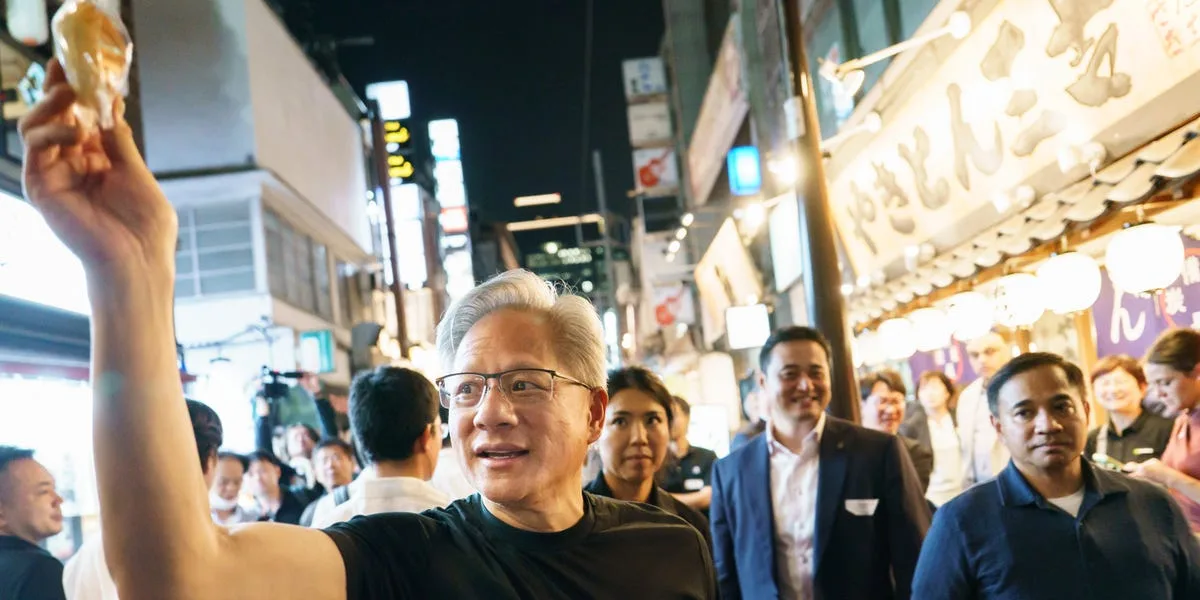
During the gathering, Huang handed out sake to attending executives and shared meals of pork skewers. He later gave red bean buns to bystanders waiting outside the izakaya, further endearing himself to locals [2, 3]. Huang's casual style, including his leather jacket worn that evening, earned him the nickname "kawajan-san" (Mr. Leather Jacket) among social media followers in Japan [1, 2, 3].
Huang has a history of engaging with local culture on his business trips, frequently eating street food and visiting local eateries during visits in Asia [4, 3].
On the following day, July 16, Nvidia announced a partnership with Japan’s Noetra Corp to build a 27,500-GPU "AI factory" focused on robotics within Japan [3]. Nvidia remains the world's most valuable company with a market value of US$5.1 trillion [2].
Further collaboration between Nvidia and its Japanese suppliers is expected as the company moves forward with its expanding AI manufacturing and innovation plans in the region.