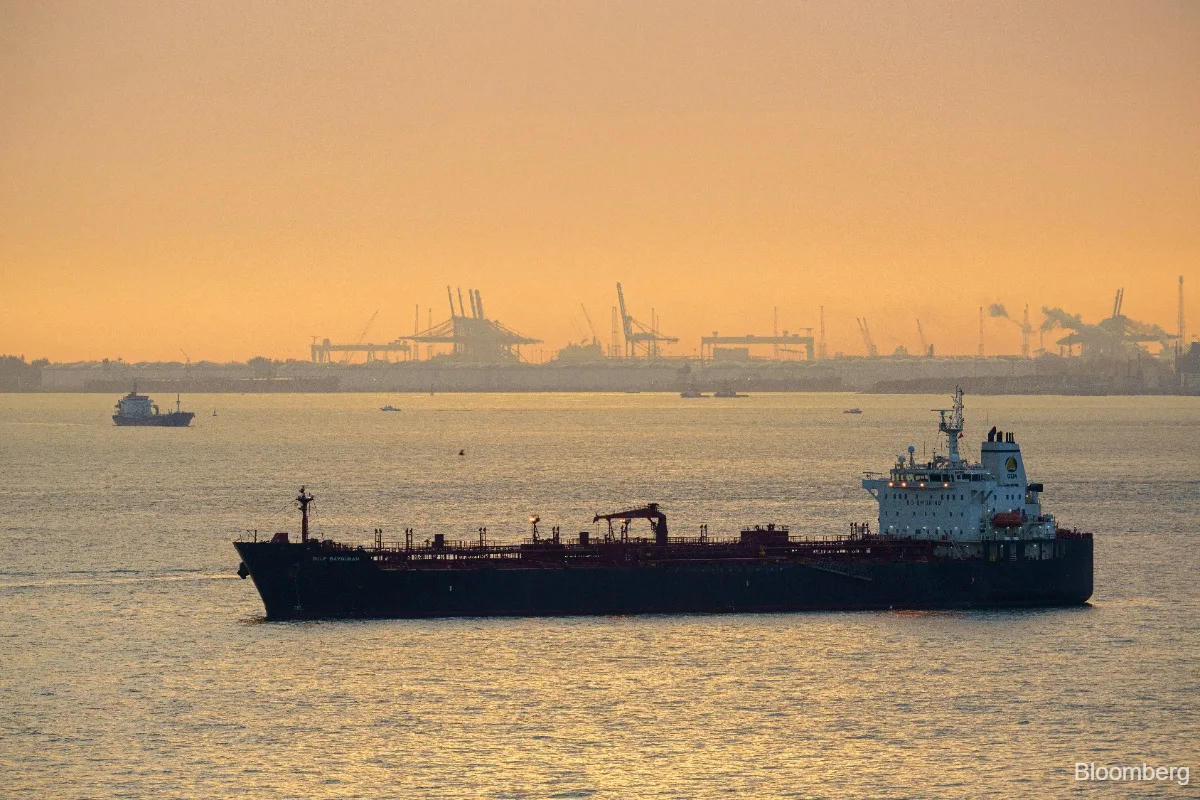
US Treasury Secretary Scott Bessent announced expanded secondary sanctions aimed at Iran and its trading partners on August 24, warning of the "toughest sanctions in history" to cut off Iran's economic lifeline [1, 2, 3]. The announcement added pressure to oil markets already unsettled by tensions in the Strait of Hormuz, a critical oil shipping lane where Iran has named 45 tankers violating its rules and threatened action [1, 4]. Amid this, Brent crude prices fell from prior weeks’ highs to around $92-$93 per barrel by August 24-26, reflecting investor caution about the sanctions and regional risks [1, 2, 4, 5, 6]. After an initial drop, prices steadied near $92 for Brent and $85 for WTI as hopes grew for resumed shipping through the strait [4, 5, 6, 7].
The geopolitical risks kept risk premiums elevated, with some analysts warning potential military flare-ups. BIMB Securities flagged a 20% chance of kinetic escalation causing Brent to exceed $100 per barrel after the recent arrival of a US aircraft carrier in the Middle East [8]. However, market watchers largely expect economic sanctions to be the primary US approach, which may help stabilize or lower prices [4, 5]. Vivek Dhar, a commodities analyst, cautioned, "If US measures do work as intended, Iran's ability to respond via increased violence becomes a growing risk for energy markets" [1].
Meanwhile, US financial markets reacted to the geopolitical uncertainty and bond moves. The US 30-year Treasury yield climbed to a 19-year high near 5.3% before easing after Treasury's plan to increase bond buybacks [2, 3, 9]. US stock indexes, including the S&P 500 and Nasdaq, fell on August 24, led by tech sector weakness and worries over Iran sanctions [10, 2, 3]. Asian shares were mixed and mostly flat on August 24-25, as investors awaited Nvidia’s earnings and Federal Reserve Chair Kevin Warsh’s upcoming speech at Jackson Hole [2, 5, 7].
Nvidia’s Aug 26 earnings report attracted major attention. Analysts forecast quarterly revenue near $92 billion and strong full-year guidance [2, 6, 7]. The semiconductor giant delivered a bullish sales outlook for fiscal 2028, with CFO Colette Kress stating, "We expect to grow revenue by approximately 70% in fiscal 2028"—well above analyst expectations [11]. Nasdaq futures rose about 1% following the results [6, 7]. As Siebert Financial CIO Mark Malek noted, "Nvidia is operating on all cylinders and they’re doing absolutely everything correctly at this point" [6].
Investors now focus on Fed Chair Warsh’s speech at the Jackson Hole symposium scheduled for August 28-29, hoping for signals on interest rates and monetary policy amid recent market volatility [2, 3, 9, 6, 7]. JPMorgan chief economist Bruce Kasman expects a muted response, noting, "Past chairs have not wanted to front-run Fed decisions at the event" [2].