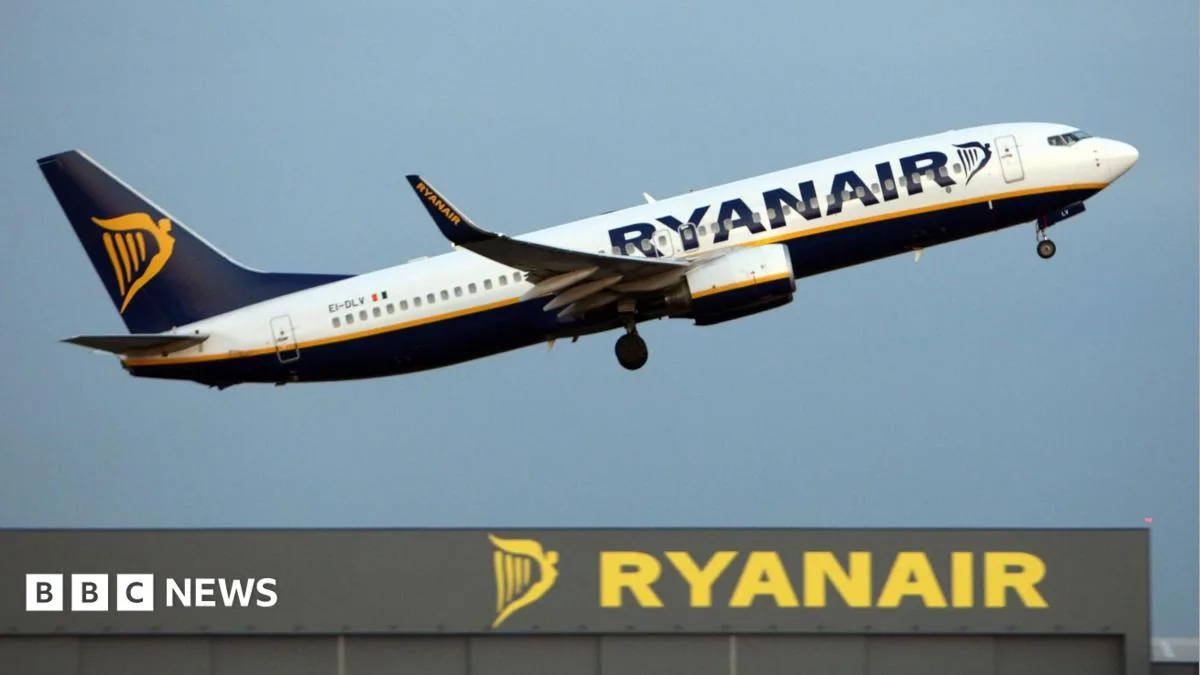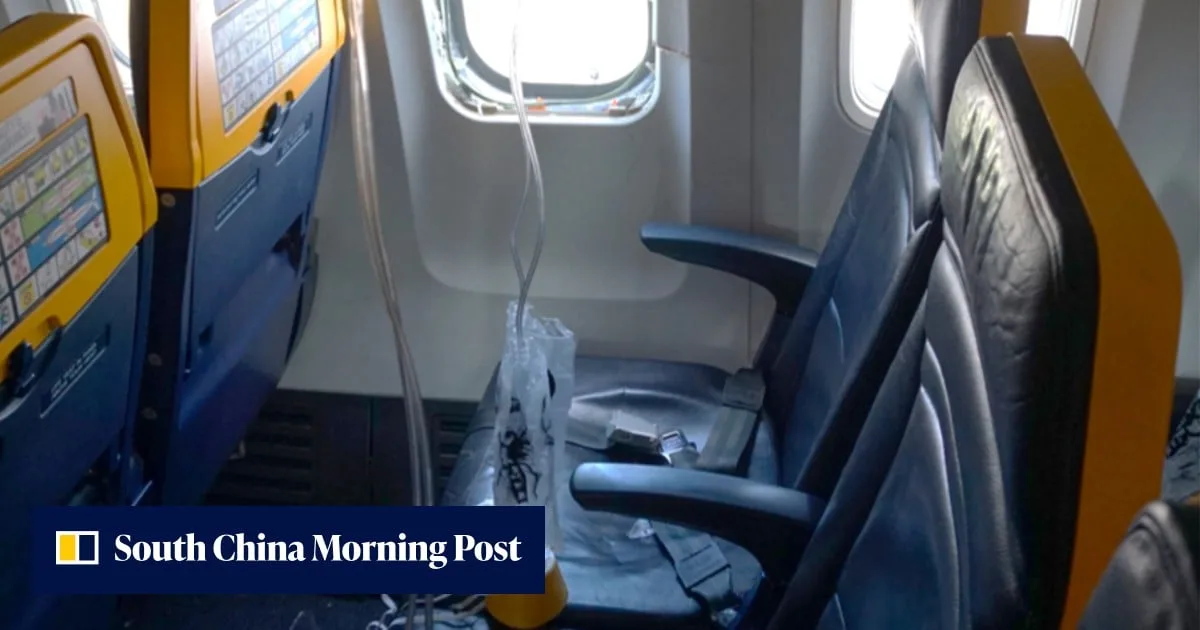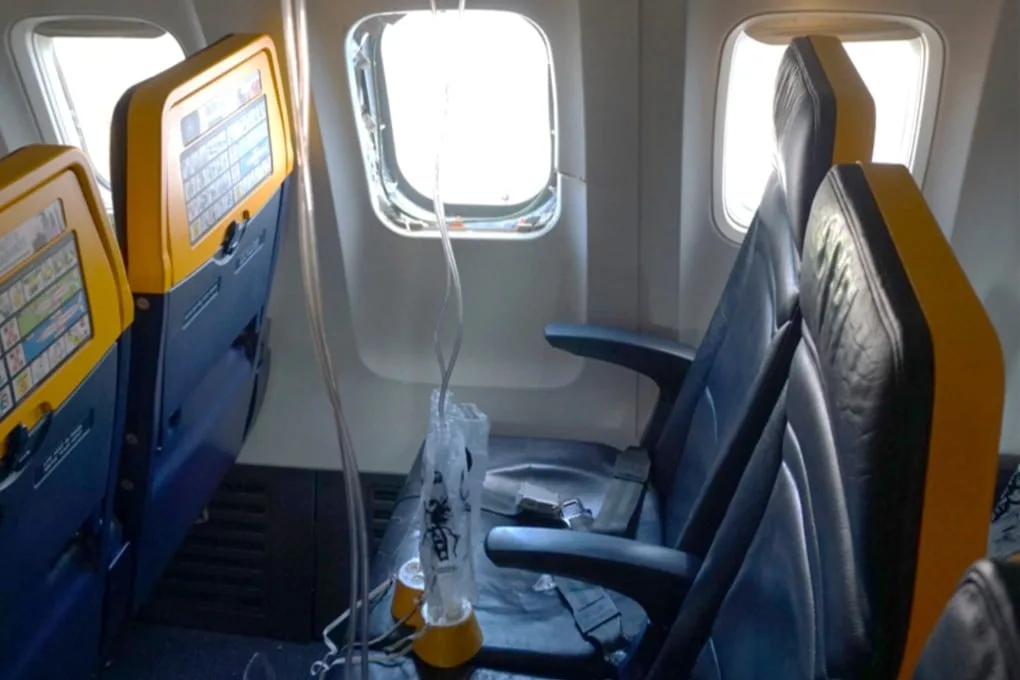
A Ryanair Boeing 737 NG flight operated by Malta Air from Thessaloniki, Greece to Memmingen, Germany, experienced a No. 2 engine fan blade failure shortly after takeoff on July 10, 2023 [1, 2, 3, 4]. A broken piece of the engine smashed a cabin window, causing Serbian passenger Ljubisa Karović to be partially sucked out, injuring his head and right shoulder and leaving him in shock [1, 4]. Other passengers, including his wife, held on to him and helped pull him back inside the cabin [1, 4].
Crew reports noted a 'high vibration' engine alert during climb, prompting reduced engine power. Vibrations then increased followed by a loud bang, leading to an emergency descent and a return to Thessaloniki airport for landing [1, 4]. Flight attendants reported smelling smoke and passengers calling for help after the window shattered [1].
The affected engine was a CFM model made by Safran and General Electric. It had undergone ultrasonic inspections on May 24, 2023, with no faults found [1, 2, 3, 4]. However, the flight crew reported four suspected bird strikes to the same engine in the 12 months before the accident, two of which had bird remains found, although no damage was detected by maintenance [2, 3, 4]. Bird remains and feathers were recovered from the damaged engine after the incident and sent to the Smithsonian Institution Feather Identification Lab for analysis [2, 3, 4].
Ryanair CEO Michael O'Leary said the incident may have been caused by 'foreign object damage' to the engine [1]. Former FAA accident investigation chief Jeff Guzzetti noted the National Transportation Safety Board (NTSB) investigation points to a likely bird strike causing the fan blade to break [4]. FAA Administrator Bryan Bedford said early indications suggest the incident does not mimic the 2018 Southwest Airlines engine failure that killed a passenger, stating, 'I don't think the early indications are that (the recent Ryanair problem) mimics what the Southwest incident was' [2].
An FAA airworthiness directive intended to strengthen engines against vibrations after a fan blade failure has not yet been implemented on this engine; the compliance deadline is July 2028 [4].
The NTSB released a preliminary report on August 13 detailing the findings, including the presence of bird remains in the damaged engine [2, 3, 4]. Investigators continue to examine the evidence as the probe proceeds.