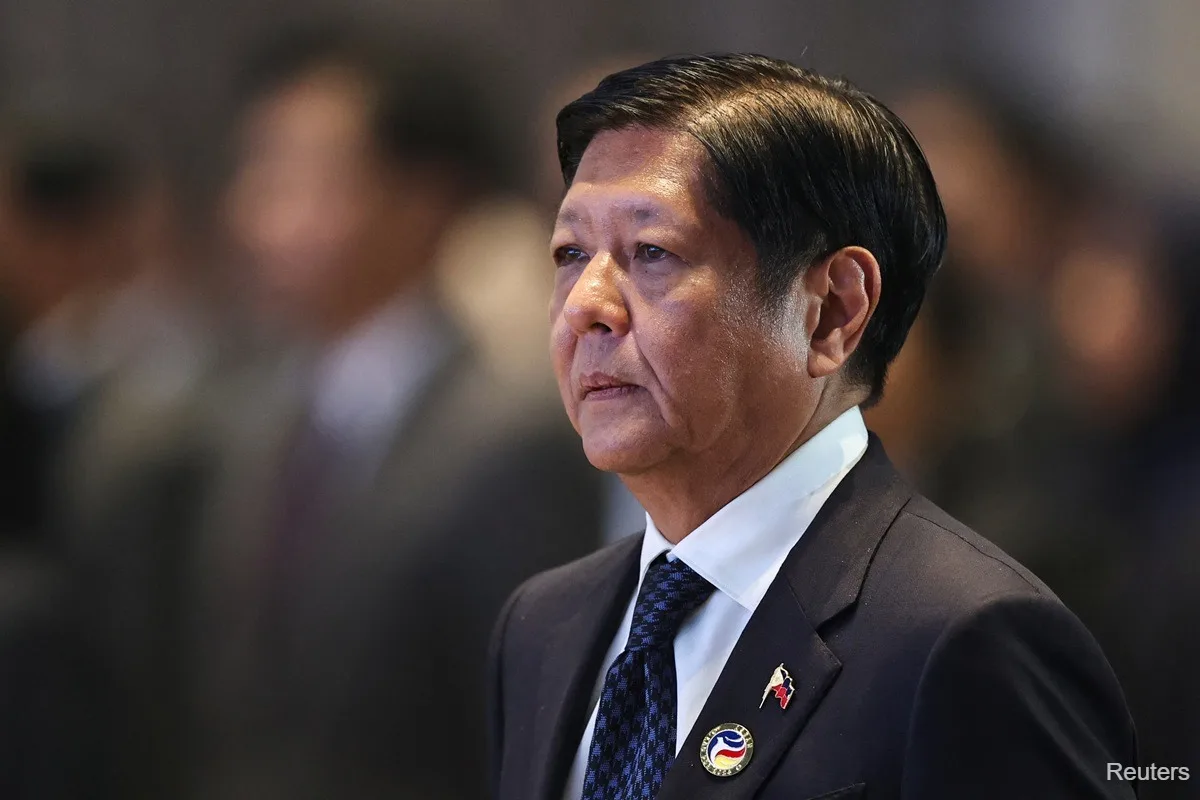
Philippine President Ferdinand Marcos Jr proposed a 7.2 trillion peso (around US$117-118 billion) budget for 2027, marking a 6% increase from the 2026 budget. The proposed budget represents about 21.7% of the country's GDP [1, 2].
The government plans total disbursements of 6.9 trillion pesos for 2027 against projected revenues of 5.2 trillion pesos, resulting in a 1.7 trillion peso fiscal deficit. This deficit will be financed largely through borrowing, which is expected to rise by 20% to about 3.3 trillion pesos (approximately $69 billion SGD) in 2027 from the revised 2.73 trillion peso borrowing plan for 2026 [1, 3, 4].
About 46% of the 2027 budget will be covered by borrowing. Of the gross borrowing, around 1.6 trillion pesos will be used for amortization, refinancing maturing debt, rather than new spending. "This means a substantial portion of the borrowings is simply intended to refinance maturing obligations rather than fund additional spending," said Domini Velasquez, chief economist at China Banking Corp [3].
Outstanding government debt stood at 19.07 trillion pesos as of June 2026, roughly 66% of GDP [3, 4]. The budget deficit-to-GDP ratio is targeted to rise slightly to 5.1% in 2027 from 4.8% previously [3, 4].
In allocations, education will receive the largest chunk with 1.15 trillion pesos, although this is 11.5% less than in 2026. Healthcare is set at 353.8 billion pesos, down 21% from this year’s 448.1 billion pesos. Agriculture funding also falls by 13% to 261.7 billion pesos from nearly 300 billion pesos in 2026 [1].
By contrast, the Department of Public Works and Highways budget will increase 22% to 644 billion pesos after cuts last year linked to a corruption scandal. Defense spending will rise 7.6% to 328.8 billion pesos from 305.5 billion pesos in 2026 [1].
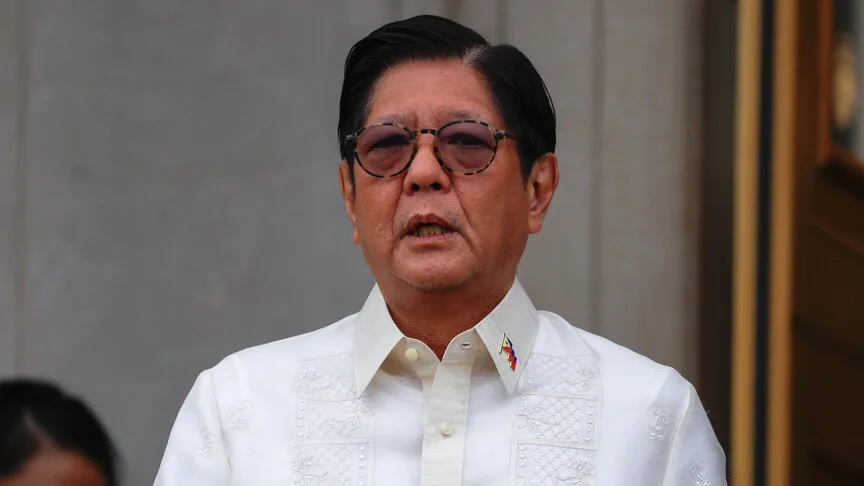
The budget aims to support infrastructure, human capital development, food and energy security, and social protection while maintaining fiscal discipline and transparency [2]. President Marcos emphasized the need to navigate global challenges, saying, "Amid continuing global uncertainties -- including geopolitical tensions, persistent inflationary pressures, and volatile energy prices -- we remain steadfast in pursuing growth that is both resilient and fiscally responsible" [2].
The government also plans to raise 915 billion pesos from foreign creditors, including multilateral lenders, up from 815.5 billion pesos in 2026 [3, 4].
President Marcos unveiled the 2027 budget proposal and borrowing plans on August 11, 2026 [1, 3, 4, 2].