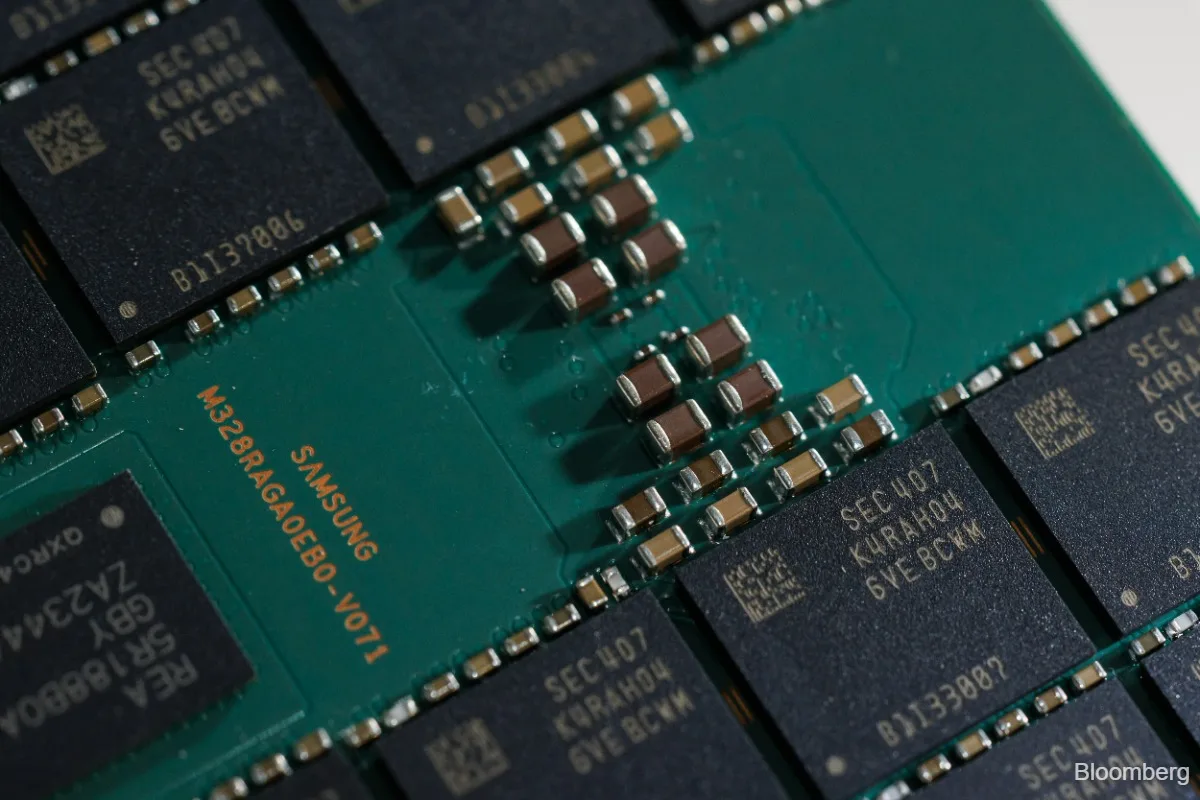
Samsung Group and SK Group plan to invest around 2,000 trillion won (about $1.3 to $1.7 trillion) over the next decade in South Korea’s semiconductor, AI data centers, and physical AI sectors. President Lee Jae Myung unveiled the plan today at a presidential event to launch the government’s "Three Mega Projects for the Great Leap Forward" [1, 2, 3].
Samsung Electronics and SK Hynix will each build four to five new semiconductor fabrication plants in the Gwangju area of southwestern South Korea. Samsung will also construct chip packaging plants in South Chungcheong province while SK Hynix expands NAND flash memory production in North Chungcheong province [1, 2, 3, 4].
The investments aim to position South Korea as a global leader amid competition from the United States, China, and Taiwan. President Lee said in a televised address, "Semiconductors, physical AI, and AI data centers are the triple axis for South Korea’s next industrial era. We must secure overwhelming production capacity in advance." He stressed the need to decentralize semiconductor investments beyond Seoul to other regions [5, 4, 6].
Samsung and SK’s combined investment in new fabs and chip production capacity in the southwest is estimated at 800 trillion won ($520 billion), with Samsung separately committing about 2,655 trillion won ($1.7 trillion) over 10 years, including 425 trillion won for the Honam region [7, 4, 6, 8]. A consortium including SK plans to invest 550 trillion won ($356 billion) specifically for AI data centers [6].
Citigroup analysts called the plans a boost for sustained growth of Korea's semiconductor supply chain, citing "promising AI demand outlook and accelerated green-field capacity expansion plans" [1]. Despite these optimistic views, some industry experts warn about profit sustainability given intensifying global competition and uncertain demand fluctuations in AI hardware sectors [4, 8].
Ahead of the announcement, Presidential Policy Chief Kim Yong-beom had previewed "very unusual figures" to be unveiled today, reflecting the scale of the government and corporate commitments [1].
South Korea aims to double its DRAM production capacity within five years as part of this industrial push. President Lee emphasized the government’s role "to invest its capabilities so that companies can invest without losses and with better prospects" [4, 6].