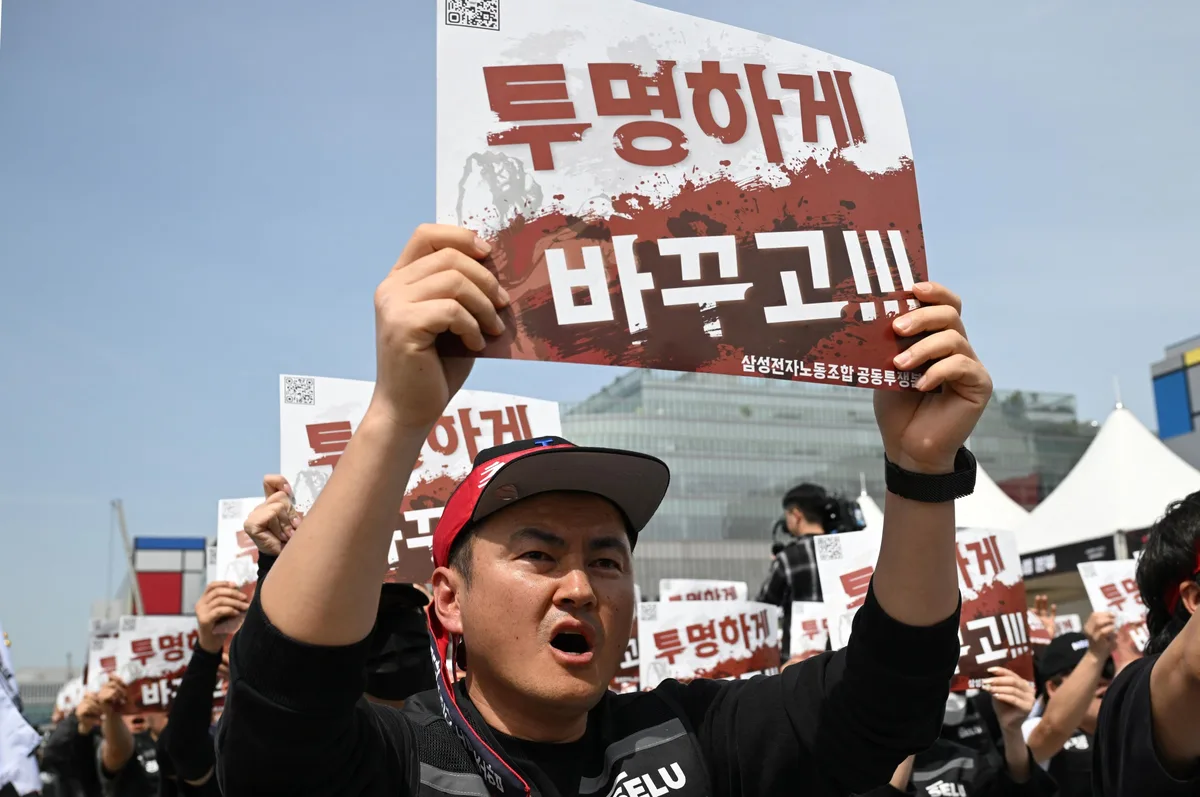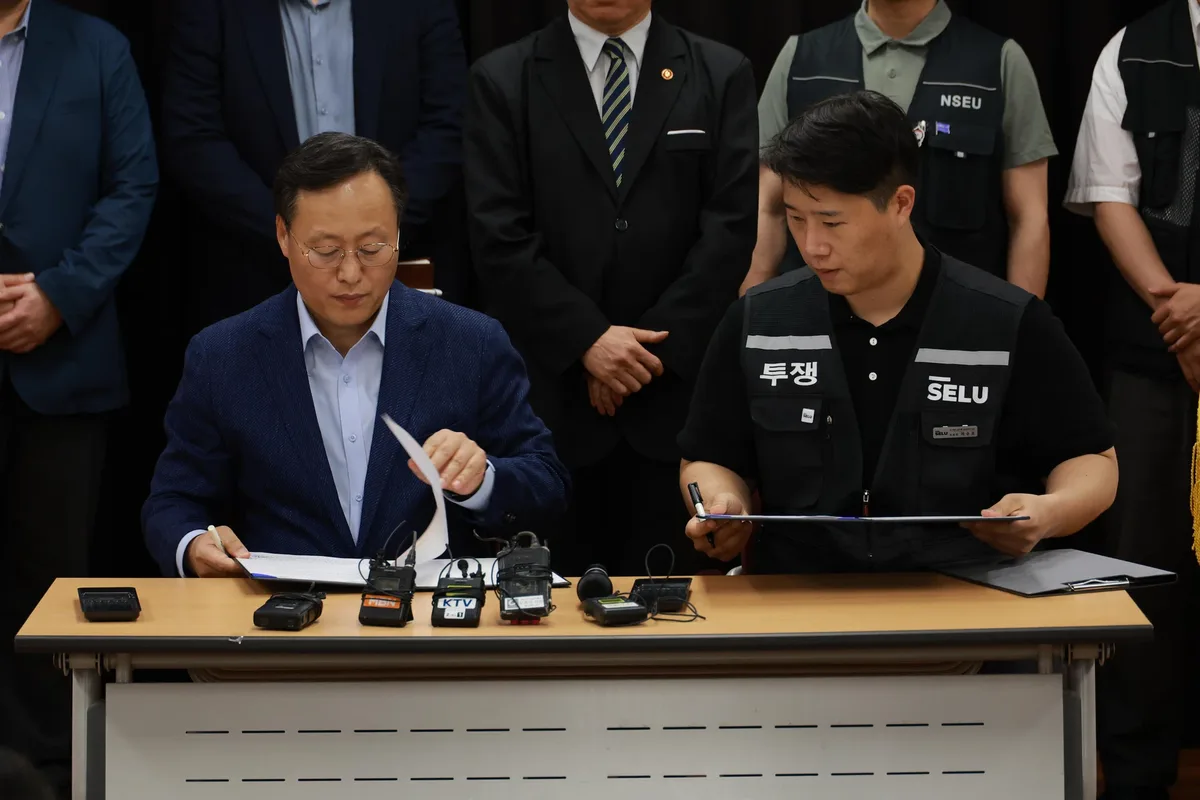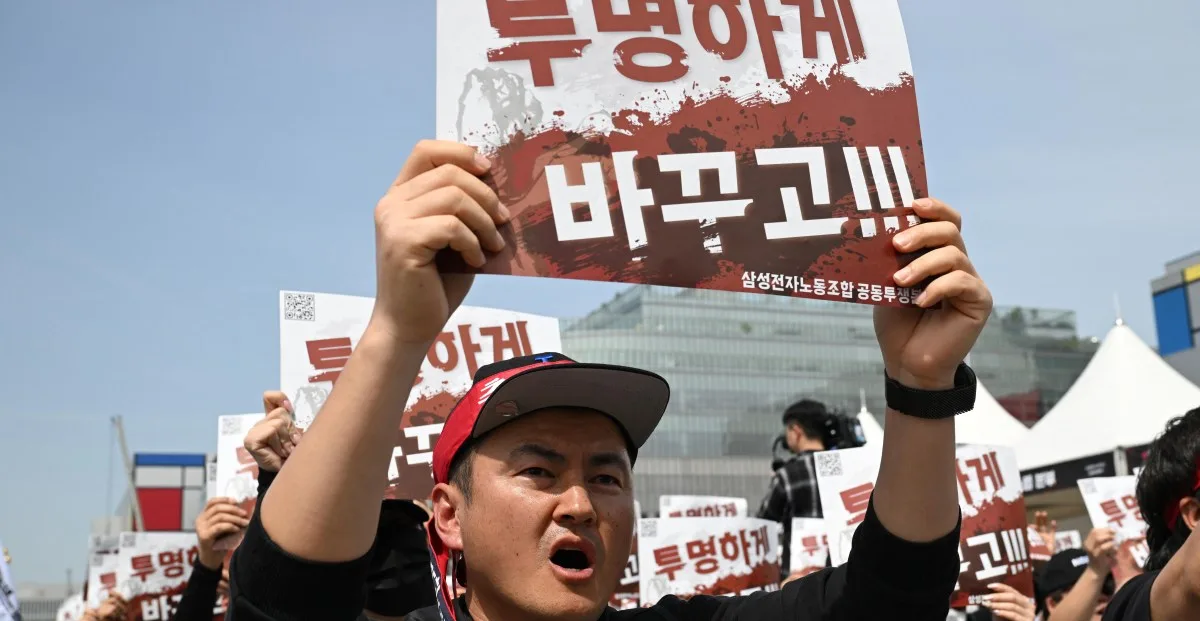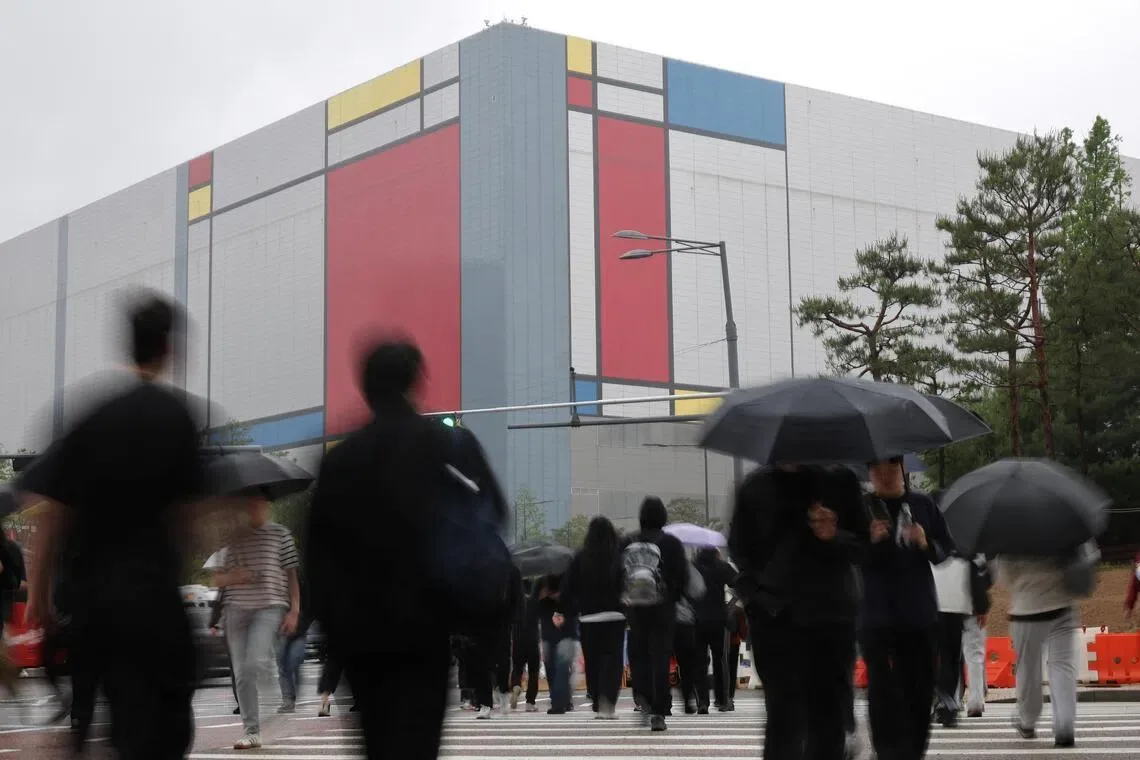
Samsung Electronics reached a last-minute deal with its South Korean union on May 21 to avert an 18-day strike involving about 48,000 members after prolonged negotiations [1, 2, 3]. The agreement includes setting aside approximately 10.5% of Samsung’s operating profits for special bonuses for employees in its chip division, which covers both memory and logic chip businesses [1, 2, 3].
Bonuses will primarily be paid in company stock over at least 10 years. Payouts are conditional on the chip division meeting profit targets from 2026 through 2035 — 200 trillion won annually from 2026 to 2028, and 100 trillion won annually from 2029 to 2035 [1, 2]. A memory chip worker earning a base salary of 80 million won (roughly US$416,000) could receive a bonus of about 626 million won in 2026, mostly in stock [1, 2]. However, one source quotes an average annual bonus closer to $340,000, reflecting differences in cash versus stock components and profit conditions [3].
The union deal prevented a strike that risked significantly disrupting South Korea’s economy and global chip supply, as Samsung accounts for about a quarter of the country's exports [1, 2, 3]. Following the announcement, Samsung shares and the KOSPI index surged nearly 8% in morning trading on May 21 [1, 2].
A senior analyst noted the deal raises Samsung’s labor costs substantially but paying bonuses mainly in stock lessens the company’s immediate cash burden [1, 2]. Samsung chip division chief Jun Young-hyun called for unity, urging employees to “leave behind this time of conflict” to strengthen competitiveness and growth [1, 2].
Rival SK Hynix has offered larger bonus payouts during the current semiconductor market boom, adding context to Samsung's agreement [3].
Union members are scheduled to vote on ratifying the deal between May 22 and May 27, with leadership expecting approval [1, 2, 3].