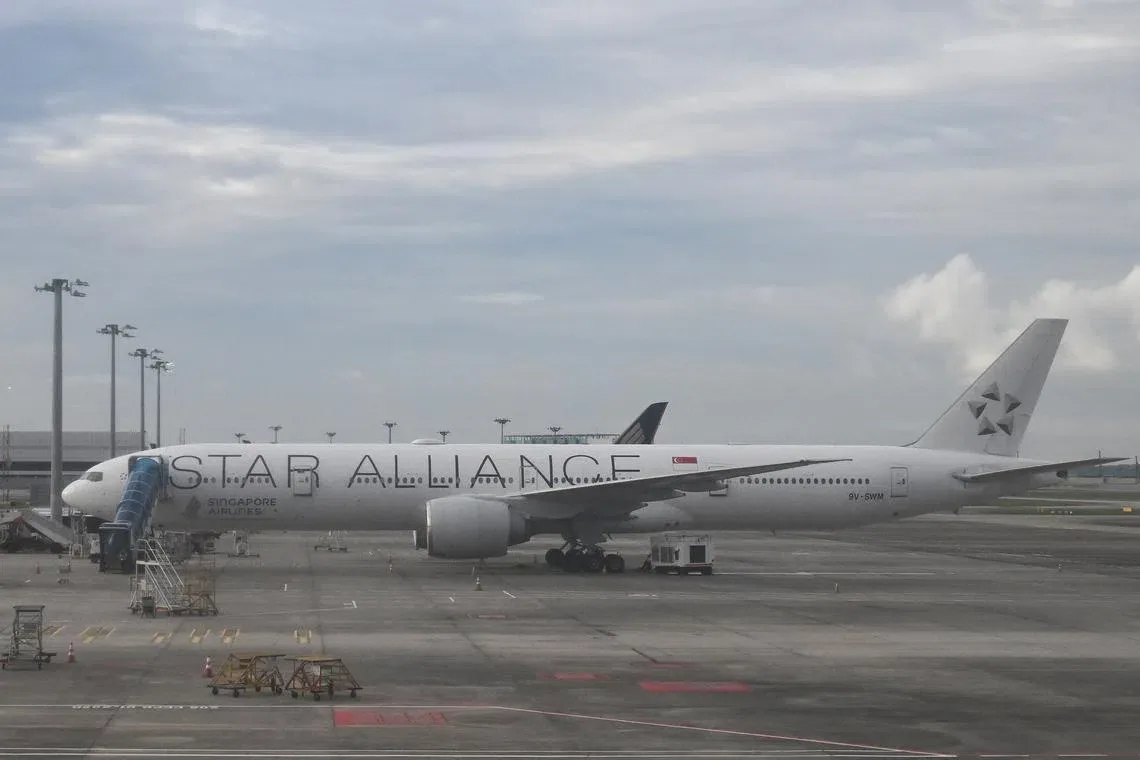
Singapore Airlines flight SQ321 encountered severe turbulence on May 21, 2024, while flying over south-west Myanmar, resulting in one passenger death and 79 injuries among passengers and crew [1, 2]. The Boeing 777-300ER had departed Heathrow Airport at 5:38 a.m. Singapore time, bound for Changi Airport [1, 2].
The deceased was a 73-year-old British passenger who died from heart failure and fluid buildup in the lungs following the turbulence [1, 2]. At the time of the incident, the aircraft was cruising at 37,000 feet and a speed of Mach 0.84, approximately 1,037 kilometers per hour [1, 2].
The flight crew included a 60-year-old pilot-in-command with over 21,922 flight hours, a 40-year-old senior first officer with 6,320 hours, and a 51-year-old augmenting pilot with more than 13,791 hours; both the pilot-in-command and augmenting pilot held captain rank [1, 2]. At 3:30 p.m. Singapore time, the senior first officer was resting while the pilot-in-command and augmenting pilot flew the plane [1, 2].
In the 15 minutes before reaching the waypoint over Myanmar, weather radar and flight instruments showed no precipitation or adverse weather in the flight path [1, 2]. Despite this, the pilots requested a route change from Yangon air traffic control citing weather concerns to obtain a more direct routing, although interviews later indicated no significant weather concern was present [1, 2].
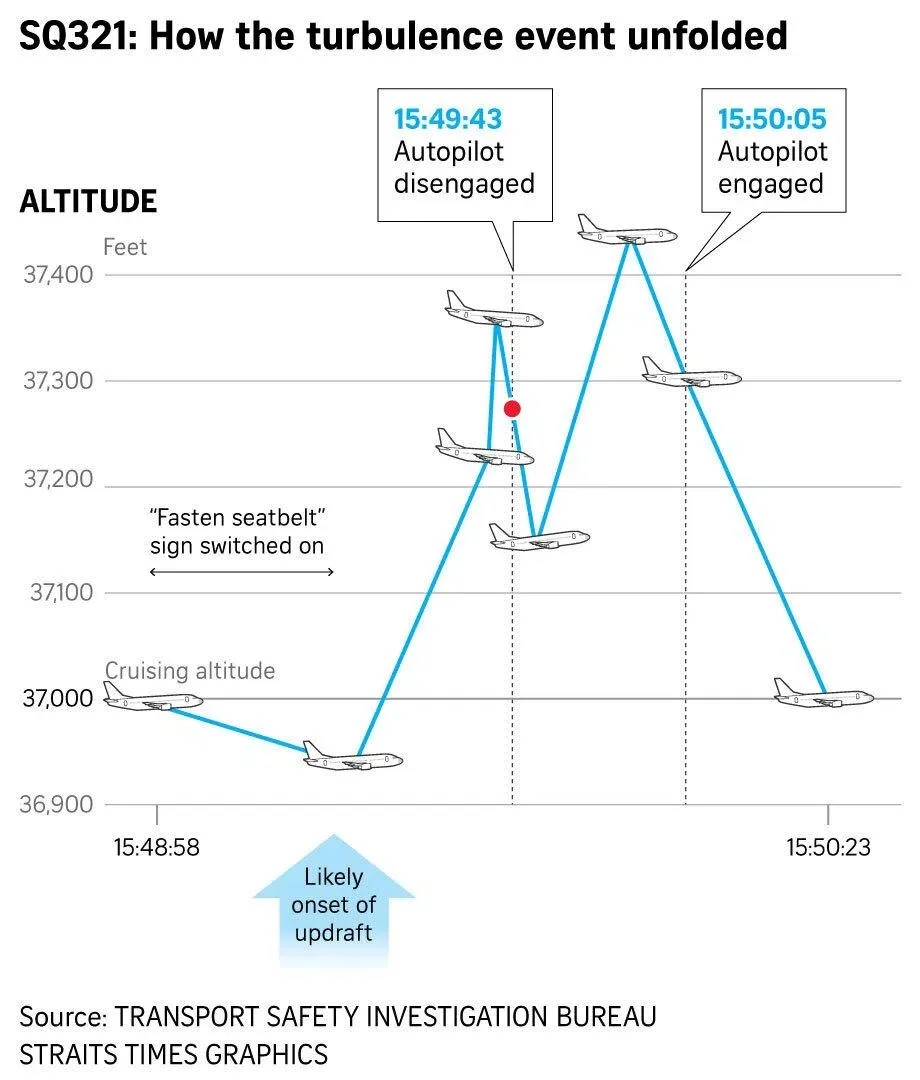
At 3:49:23 p.m., the plane encountered severe turbulence at cruising altitude and speed, causing the injuries and fatality [1, 2]. The Transport Safety Investigation Bureau (TSIB) released its final report on May 19, 2024, stating that the pilots’ actions were understandable and appropriate for the situation [1].
The flight's timeline shows it departed Heathrow at 5:38 a.m., was cruising at 37,000 feet near Myanmar by 3:30 p.m., requested rerouting at 3:44 p.m., and hit turbulence at 3:49:23 p.m. [1, 2]. TSIB’s final report was issued two days ago on May 19, 2024 [1, 2].