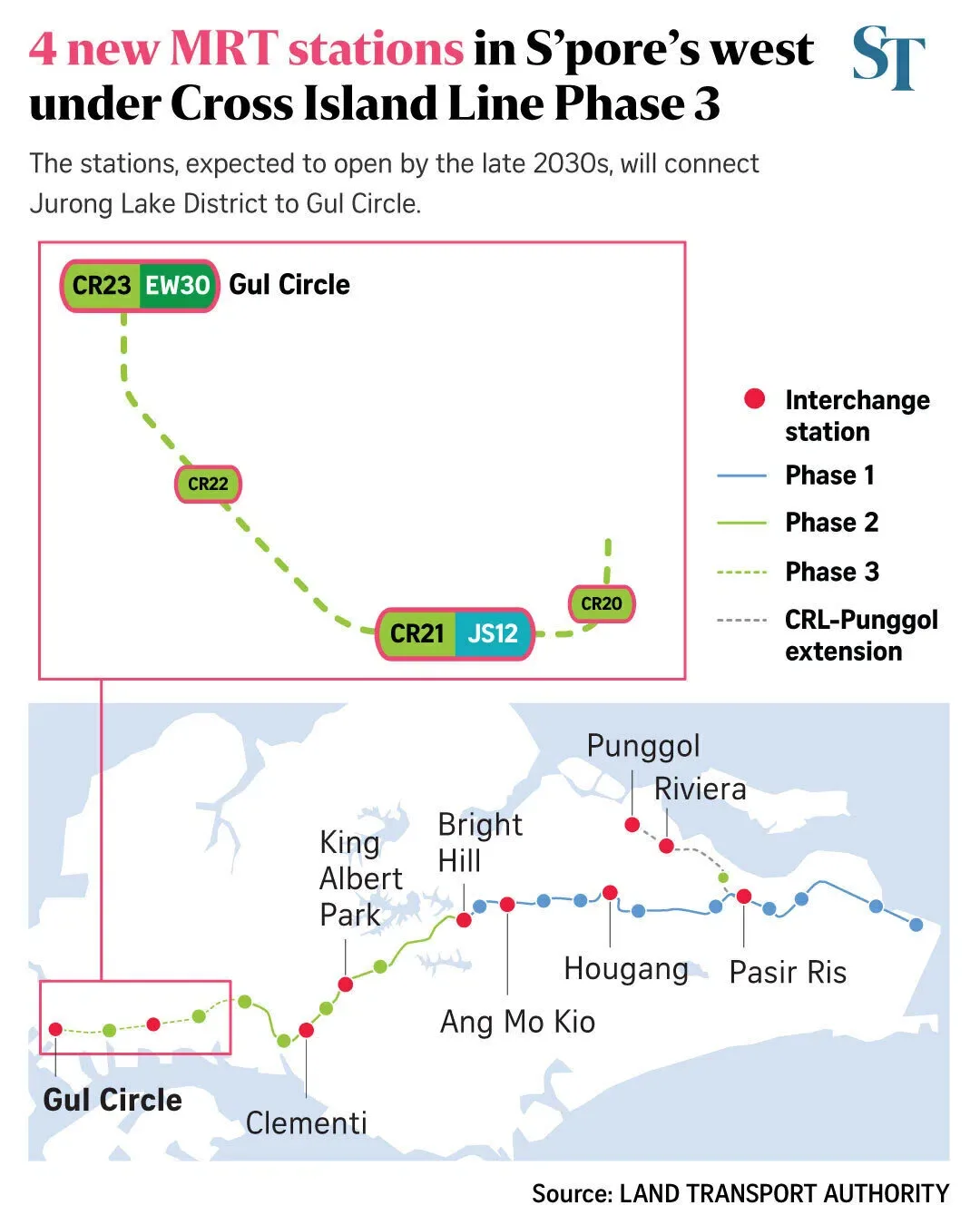
Singapore's Land Transport Authority revealed plans to build four new underground stations as part of the third phase of the Cross Island Line (CRL), serving residents of Taman Jurong and nearby western industrial areas [1, 2, 3, 4].
The Phase 3 extension will run about 10 km in length and is scheduled to open in the late 2030s [1, 2, 3, 4]. The new stations, provisionally numbered CR20 to CR23, will include key interchanges at Jurong Pier (CR21) and Gul Circle (CR23), the latter connecting to the existing East-West Line [2, 3, 4]. CR20 will serve Taman Jurong residents, CR21 will act as a gateway to Jurong Island and link to the Jurong Region Line, and CR22 will be located within the Jurong Industrial Estate [1, 2, 3, 4].
Phase 3 construction is expected to start in 2027 [2, 3, 4]. To facilitate works, authorities will fully acquire seven industrial properties and partially acquire eight others within the construction area [1, 2, 3, 4].
The Cross Island Line will become Singapore's longest fully underground MRT line after Phase 3 is complete, spanning roughly 67 km in total [1]. A second CRL rail depot will be built on the site of the former Raffles Country Club, sharing space with a multi-storey bus depot [1]. Transport Minister Jeffrey Siow said the new line "will significantly strengthen the resilience of our entire MRT network. During a service disruption, it means more commuters will have alternative routes to get to where they want to go, without having to leave the MRT network" [1].
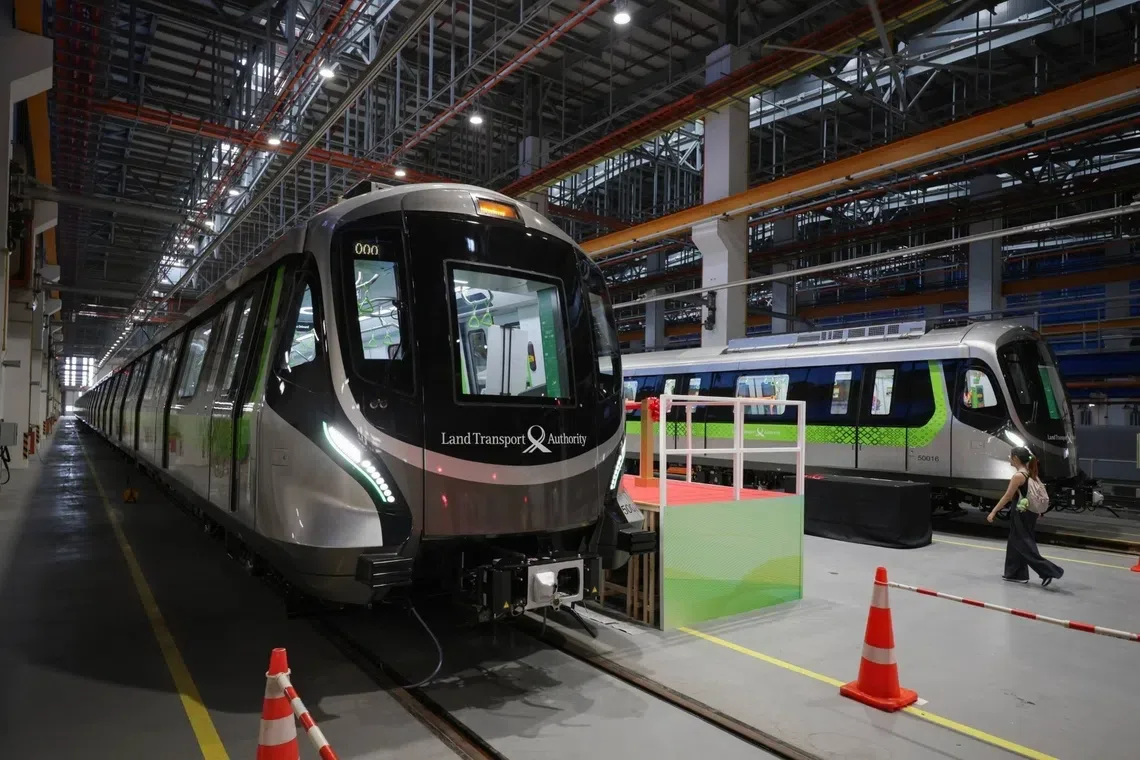
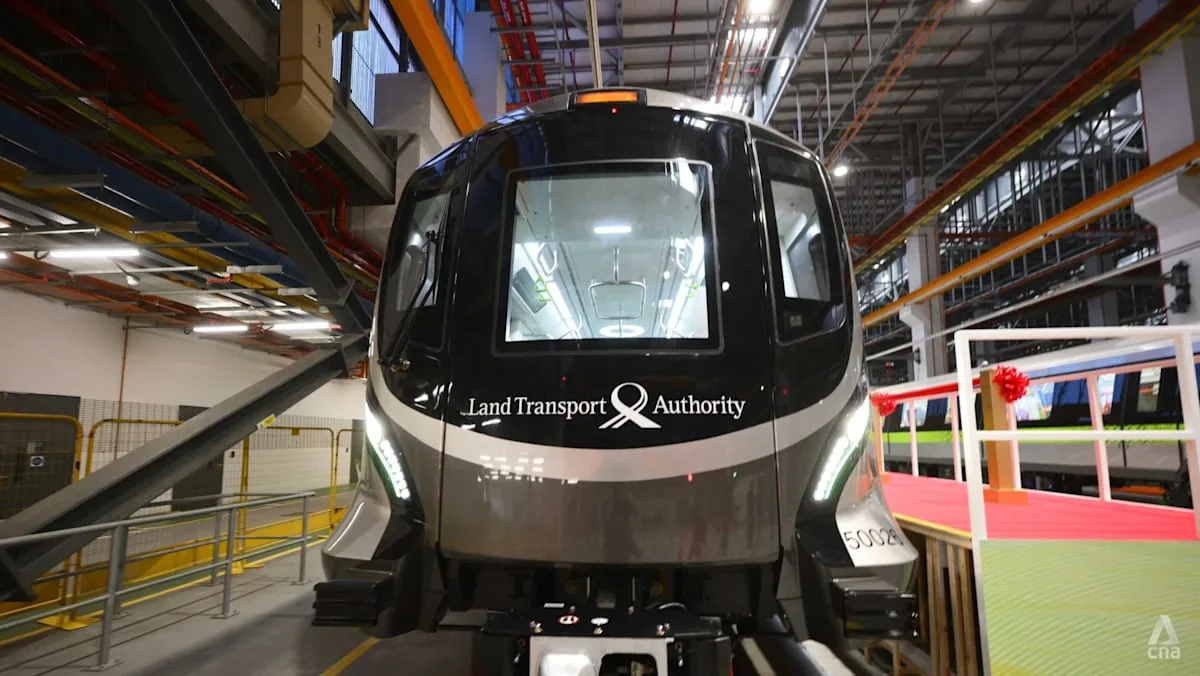
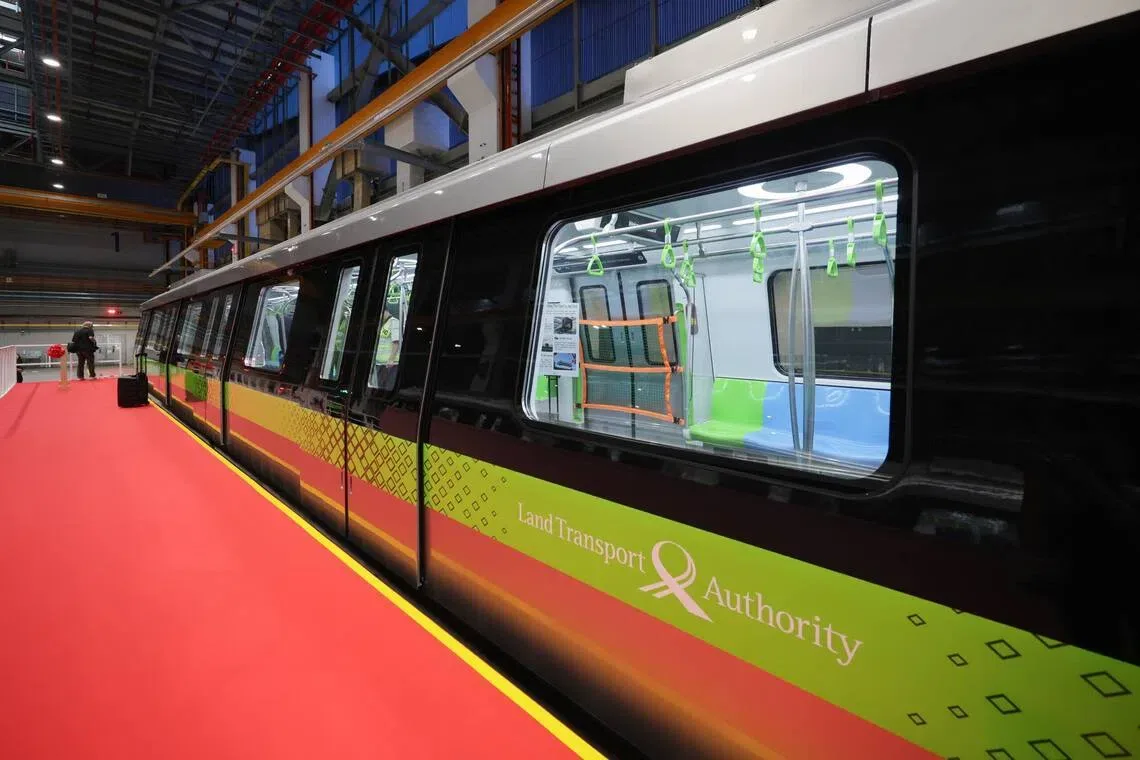
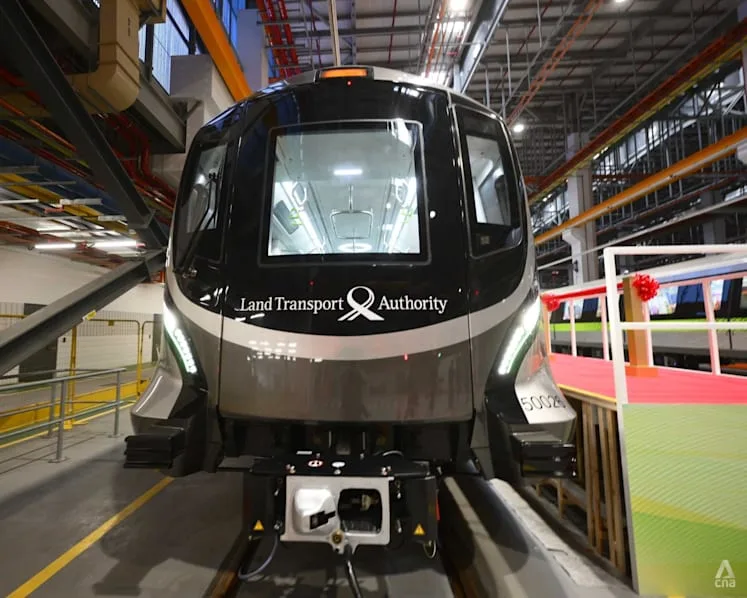
Earlier phases of the CRL have also advanced. The first phase is scheduled to open in 2030, bringing 44 fully automated six-car trains, with the option to purchase up to 11 more as ridership grows [5, 6]. The first CRL train arrived in Singapore on May 31, 2026, and is currently undergoing testing [5, 6]. These trains feature five doors per side with micro sliding plug doors for noise insulation, run on a 1,500-volt DC overhead conductor rail for energy efficiency, and use communications-based train control signalling for driverless operation [5, 6].
The LTA is also studying the feasibility of a Bus Rapid Transit system in Tuas South to link workers to MRT stations, but this plan remains under review [2, 3, 4].