Singapore's total employment increased by 10,700 in the second quarter of 2026, marking the 19th consecutive quarter of employment growth, the Ministry of Manpower reported on July 31 [1, 2, 3]. Employment growth was primarily driven by non-resident workers in the construction and manufacturing sectors, while resident employment grew more slowly, concentrated in essential and public services [1, 2, 3].
Retrenchments in Q2 2026 rose about 17 to 17.5 percent from the first quarter, increasing from 3,830 to 4,500 workers laid off. This was the highest quarterly level recorded since 2020, although some sources cite 2024 as the reference year for the previous high [1, 4, 2, 3]. The Ministry of Manpower attributed the rise mainly to business restructuring in outward-oriented sectors such as information and communications technology and manufacturing. It stated, "The increase was concentrated in some outward-oriented sectors, driven primarily by business restructuring" [1].
Despite rising layoffs, the overall unemployment rate in June 2026 held steady at 2.0 percent, with the resident unemployment rate at 2.9 percent, and citizen unemployment slightly declining to 3.0 percent from 3.1 percent in March [1, 2, 3]. Labour market surveys showed improved hiring sentiment in June, with about 43.9 percent of firms expecting to hire in the next three months, up from 40.6 percent in May. Firms also showed increased willingness to raise wages, reaching 29.3 percent [4, 2, 3]. The Ministry of Manpower commented that "Labour demand remains resilient, and surveys indicate an uplift in employers’ hiring sentiments" [2].
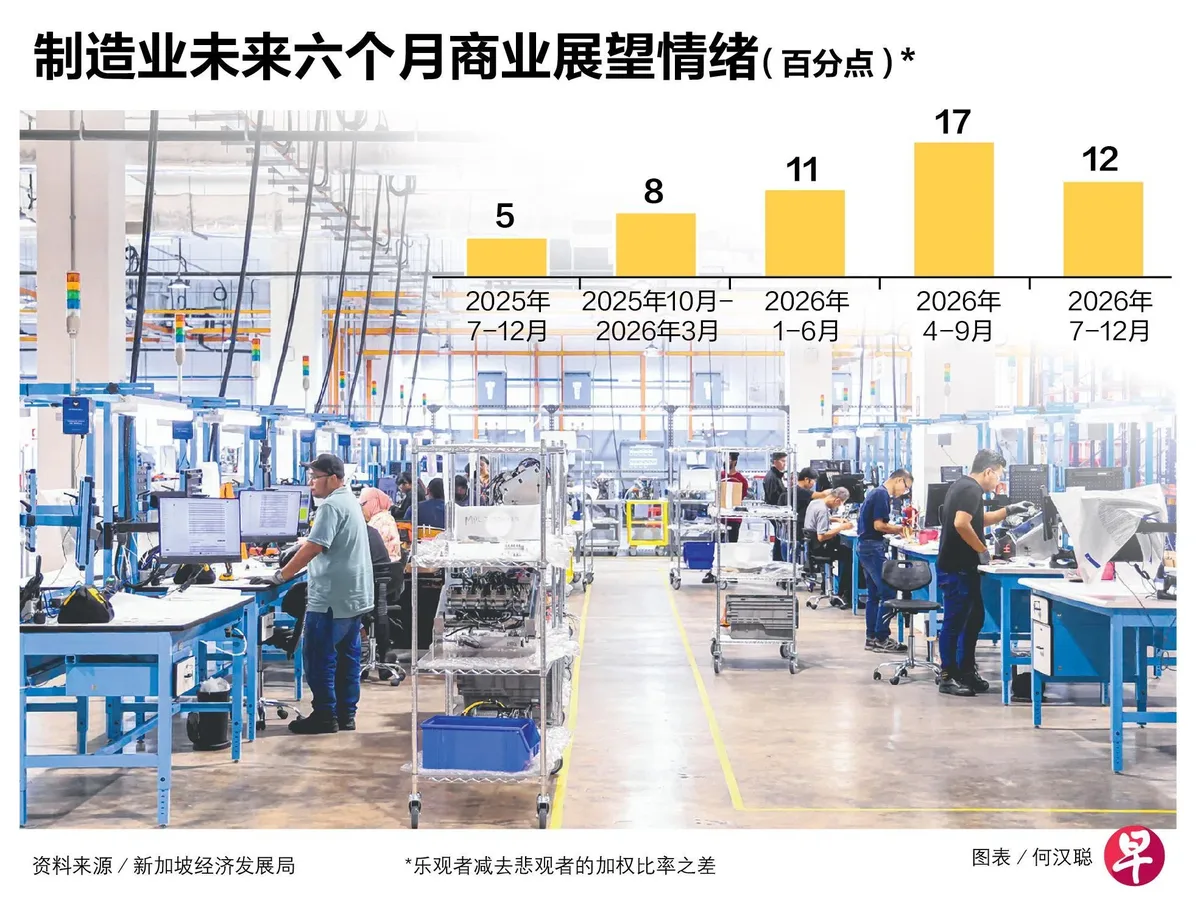
The manufacturing sector outlook remained optimistic for the second half of 2026, supported by a strong global investment surge in artificial intelligence, especially in precision engineering and electronics clusters. DBS Senior Economist 蔡汉廷 noted, "The global AI investment boom remains the main driver of manufacturing growth in Singapore, with strong investments in hyperscale data centers continuing to boost demand for storage chips, servers, and semiconductor equipment, benefiting precision engineering and electronics industries" [5]. However, the chemicals and general manufacturing sectors held a pessimistic outlook due to supply disruptions from conflicts in the Middle East and rising costs [5, 6].
The services sector outlook also improved for July to December 2026, with more firms expressing optimism aided by upcoming events and AI adoption [5, 6].
Despite the rise in retrenchments, quarterly layoffs in Q2 2026 remain well below levels seen during the 2009 Global Financial Crisis and the COVID-19 pandemic [1, 2, 3].
On July 31, the Ministry of Manpower released advance Q2 labour market data detailing these developments, alongside reports from the Economic Development Board and the Department of Statistics covering sector outlooks [1, 4, 5, 2, 3, 6].