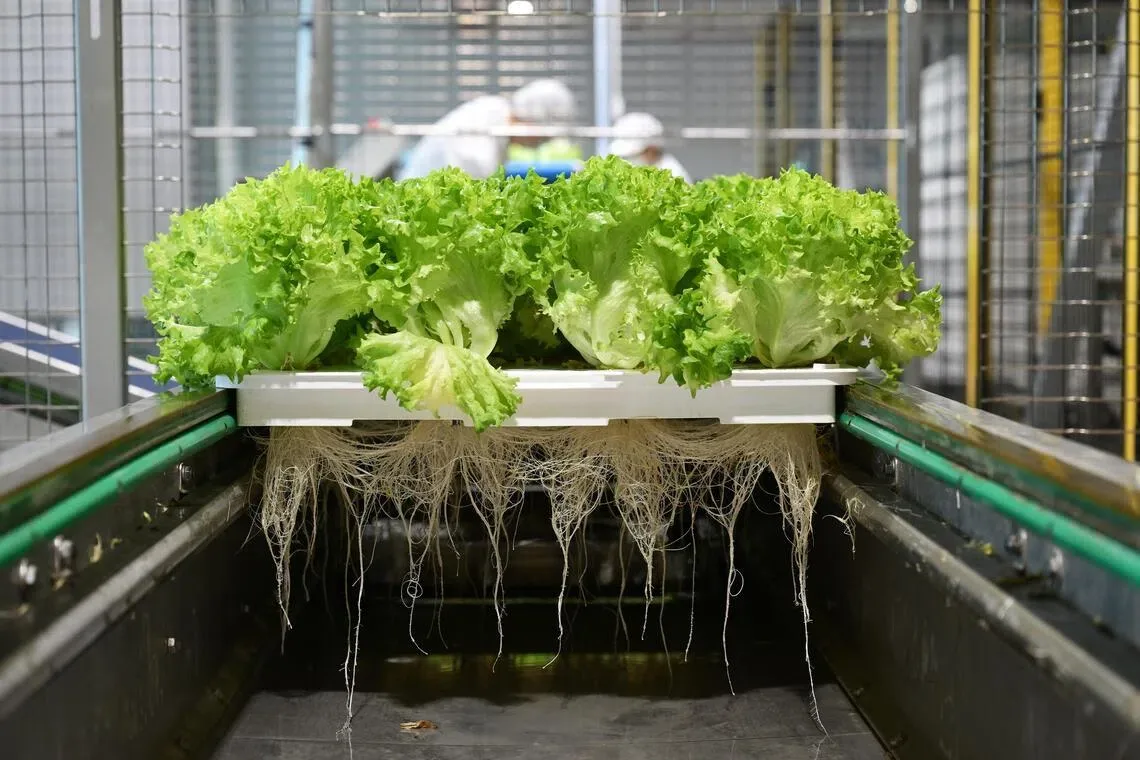
The Singapore Food Agency (SFA) announced that starting September 1, farms in Singapore can apply to grow a wider range of food types beyond their initial declarations to meet annual production targets [1, 2]. Approved diversification includes leafy and fruited vegetables, beansprouts, mushrooms, eggs, and seafood [1, 2].
New farm projects will have five years to complete construction and eight years to meet their production goals, up from previous limits of three and five years respectively [1, 2]. The SFA said the longer timelines recognize the complexity involved in developing agri-tech farms, allowing operators more time to build and scale effectively [1, 2].
These changes follow feedback from the industry and were announced by the SFA on May 29, alongside the release of new farmland parcels in Sungei Tengah and Lim Chu Kang. The land is designated for vegetable farming with 20-year leases [1, 2].
The agency added, "This gives farms greater operational flexibility to respond to market conditions while keeping production anchored to Singapore’s food security objectives" [1].
The new rules and extended lease durations aim to improve farm operations and strengthen Singapore’s food resilience [1, 2]. The adjustments come after Singapore dropped its 2030 goal to produce 30% of nutritional needs locally in November 2025, replacing it with new fiber and protein production targets set for 2035 [1, 2].
The enhanced policies will take effect from September 1, allowing farms to diversify production and take the extended timelines as they develop and meet output requirements [1, 2].