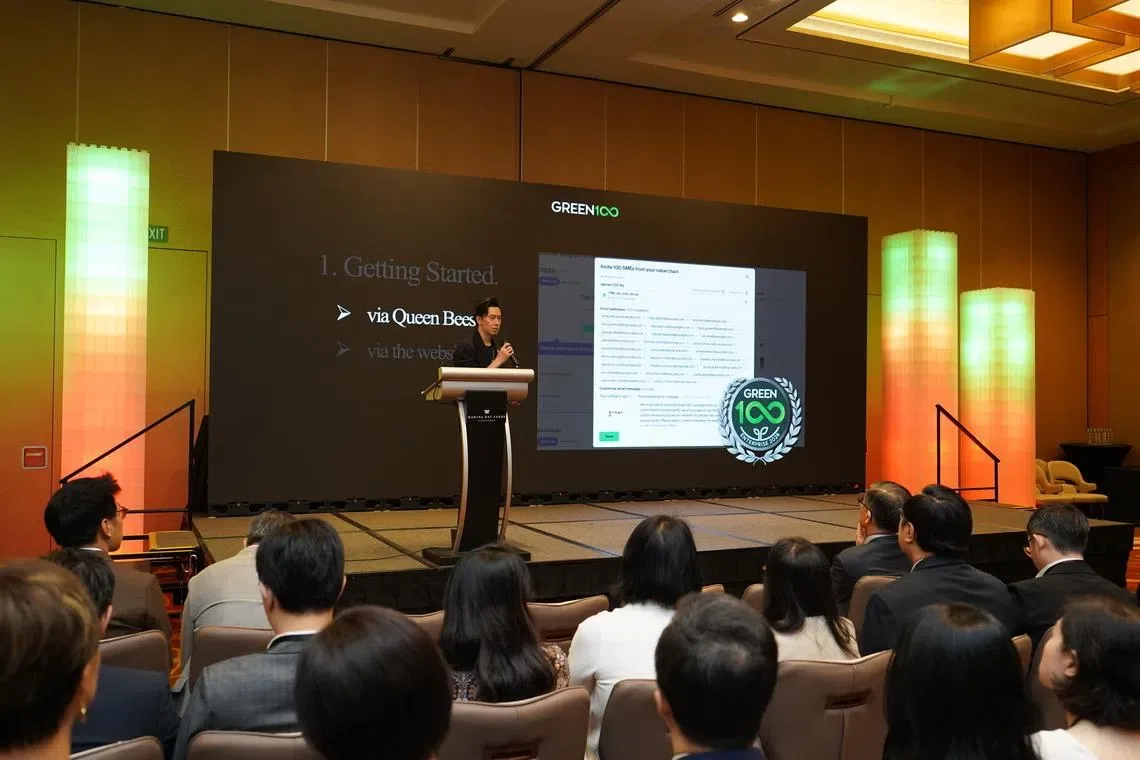
Singapore launched the Green 100 programme on May 21, 2026, to enable small and medium-sized enterprises (SMEs) to report their carbon footprint quickly and at no cost [1, 2]. The initiative allows SMEs to upload data on fuel consumption, electricity, water, and town gas usage to the Gprnt digital platform, which then automatically converts this into a carbon emissions report in about 10 minutes [1, 2].
To complete the first step and receive certification, SMEs must also commit to developing plans to reduce emissions, energy use, water, and waste [1, 2]. Certified SMEs gain listing on a Green 100 registry that improves their visibility to buyers and offers access to green procurement bids and sustainable finance options [1, 2].
Large listed companies on Singapore's Straits Times Index must begin reporting indirect emissions from their supply chains starting from the 2026 financial year, in addition to their current reporting of direct emissions and electricity use [1, 2]. Since supply chains mainly involve SMEs, indirect emissions account for 70 to 90 percent of a company’s total carbon footprint but have often been measured inconsistently [1, 2]. Green 100 aims to address this reporting gap by having at least 100 large corporate participants invite their SME suppliers and partners to join the programme [1, 2].
A 2025 report by Gprnt and PwC found only one in four SMEs in Singapore had started their sustainability efforts [1, 2]. Ravi Menon, Singapore’s Ambassador for Climate Action, said at the Green 100 launch that “when margins are tight, supply chains disrupted, and markets volatile, sustainability feels just like one more requirement, one more report, one more form to fill, one more cost” [1].
From the 2030 financial year, all listed companies with a market value below S$1 billion—potentially including some SMEs—will be required to submit climate disclosures [1, 2]. This adds pressure on smaller firms to improve transparency around their environmental impact.
Green 100 was jointly launched by the National Climate Change Secretariat and Singapore Business Federation. It offers a streamlined path for SMEs to begin measuring and reporting emissions in line with upcoming regulatory requirements [1, 2].