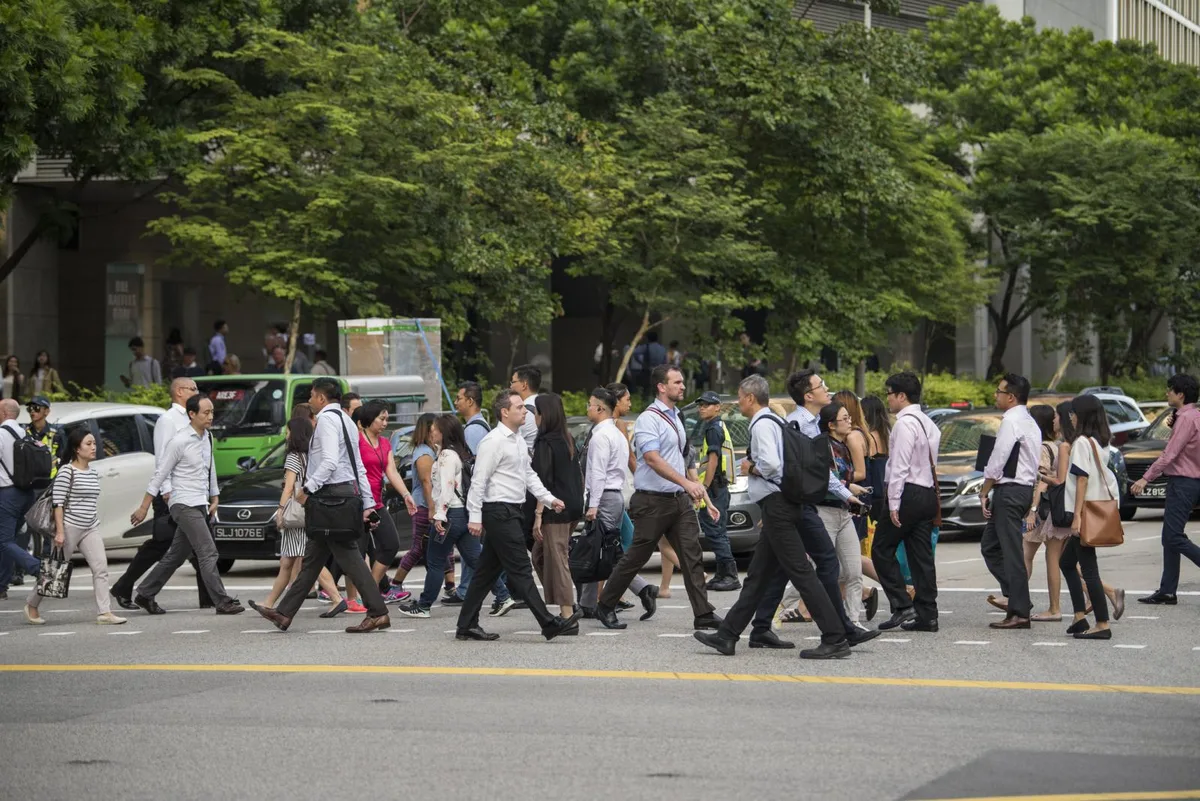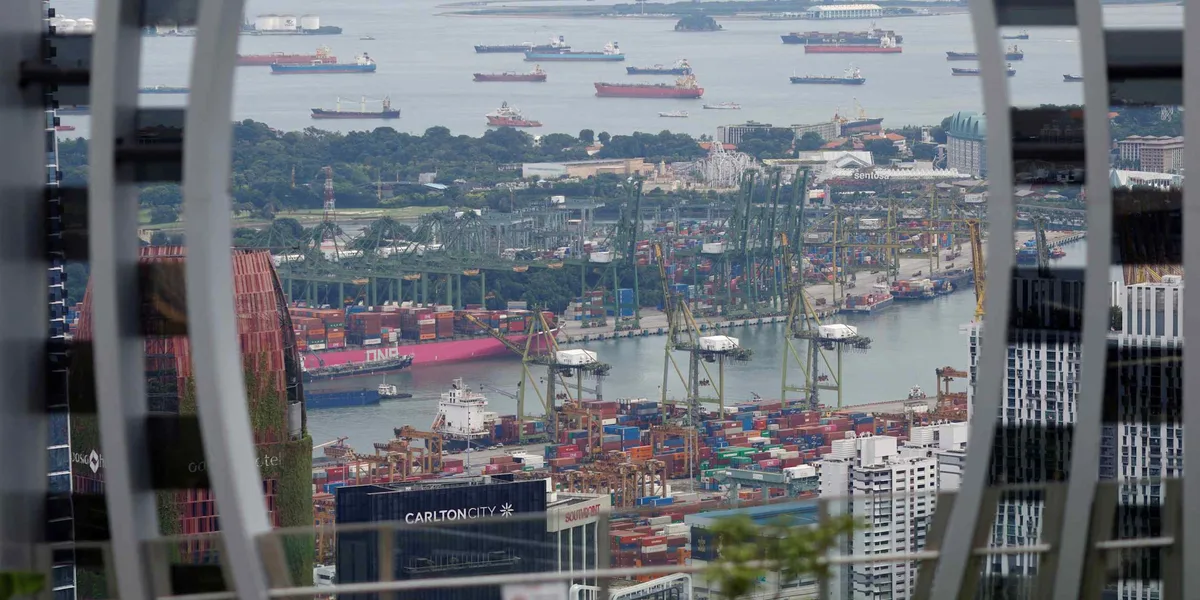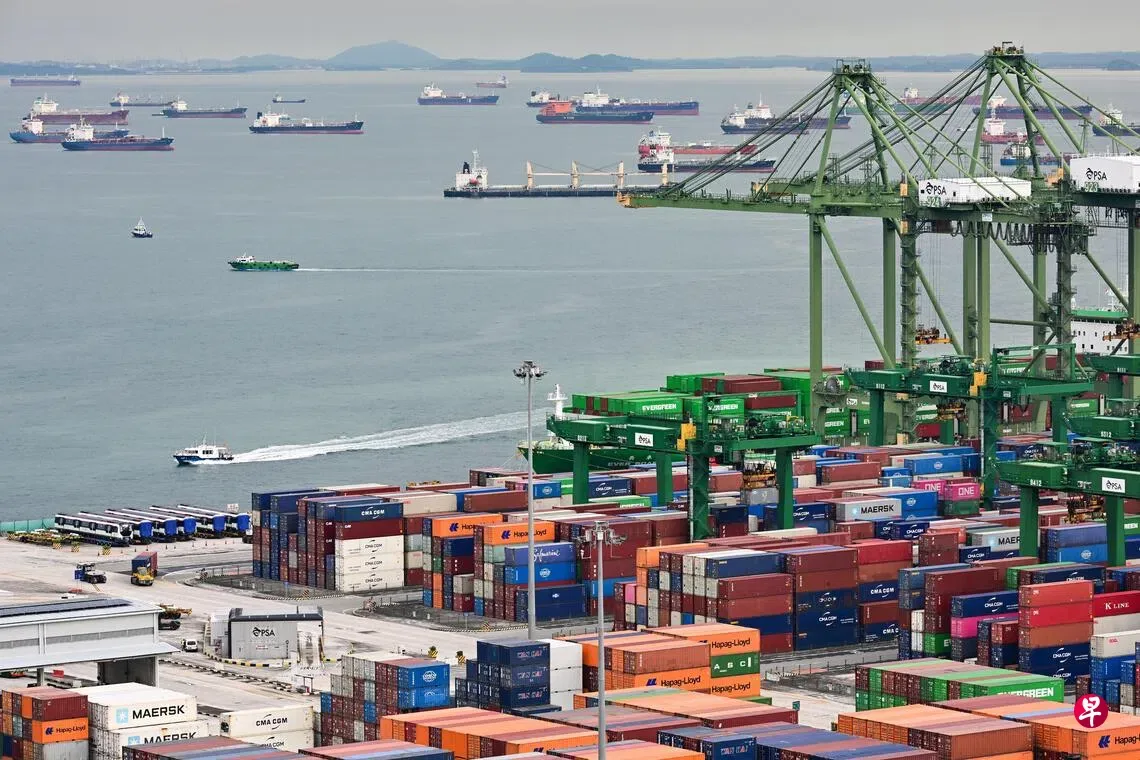
Singapore's economy grew 5.9% year-on-year in the second quarter of 2026, surpassing earlier estimates of 5.7% growth, the Ministry of Trade and Industry (MTI) reported on August 11 [1, 2, 3]. The strong expansion helped lift the full-year 2026 GDP growth forecast to 4.5%-5.5%, up sharply from the previous range of 2%-4% [1, 2, 3]. The economy also grew 6.1% in the first half of the year, reflecting robust momentum [1, 2, 3].
The Q2 growth was driven by manufacturing, wholesale trade, finance, and insurance sectors benefiting from rising global demand for AI-related products and services [1, 3, 4]. Non-oil domestic exports (NODX) surged 27.4% year-on-year, while electronics exports nearly doubled with an 88.1% increase, led by disk media (+182.5%), integrated circuits (+91.9%) and personal computers (+79.8%) [5, 6]. Key export markets including Taiwan, South Korea, and the US saw electronics exports jump 170%-250% [5, 6].
The Ministry of Trade and Industry cited stronger-than-expected global AI capital expenditure as a major factor behind the upward revision. OCBC chief economist Selena Ling said, "The upgraded forecast is certainly a bullish signal, largely attributable to the global AI investment boom" [4]. MTI permanent secretary Beh Swan Gin emphasized, "AI is a major contributor to the economy, but Singapore is not solely dependent on it," highlighting diversification in finance, insurance, pharmaceuticals, and construction sectors also supporting growth [4].
Meanwhile, risks remain from the Middle East conflict, which has disrupted supply chains and restrained some sectors such as food and beverage services due to reduced outbound travel [1, 3, 4]. The Monetary Authority of Singapore tightened monetary policy in July to address inflationary pressures linked to elevated energy costs from the conflict [2].
The Singapore Exchange (SGX) benefited from the strong economic outlook and AI sector optimism, hitting record stock index highs in August 2026 [7]. Portfolio manager Gary Tan said, "The growth upgrade is supportive for Singapore equities because it reinforces the earnings outlook for cyclical sectors and confirms that the economy is benefiting from stronger AI-related investment activity" [7]. SGX reported record full-year net income of SGD 698 million for the year ending June 2026, up 7.8% year-on-year, boosted by higher equities and commodities trading volumes [8, 9, 10, 11]. The exchange plans to expand its ETF offerings to include more single-stock and leveraged products, as announced by CEO Loh Boon Chye [8, 9, 10, 11]. He said, "We are focused on trying to create a wider choice of ETFs, with representation across the region, asset classes and sectors" [8].
Enterprise Singapore raised its full-year forecast for non-oil domestic export growth to 14%-16%, a sharp upgrade from 3%-5%, reflecting strong export demand [2, 5, 6]. The SGX also has over 50 IPOs in the pipeline for the next 12 months, signaling continued growth opportunities [8, 9, 10, 11].
The next key milestone is monitoring Q3 2026 economic data and further developments in AI investment flows as well as monetary policy adjustments amid global uncertainties.