Singapore’s National Research Foundation (NRF) released its first detailed Research, Innovation and Enterprise 2025 (RIE2025) report on August 31, 2026, reviewing progress over the past five years from April 2021 to March 2026 [1, 2, 3]. The RIE2025 plan operated on a S$28 billion budget of public funding for research and development during this period [4, 1, 2, 3].
Business spending on R&D in Singapore rose sharply, increasing 64% from S$5.5 billion in 2018 to S$9 billion in 2023, with companies spending S$1.87 for every S$1 of government funds, up from S$1.48 in 2018 [1, 2, 3]. The number of firms performing R&D grew by about 20%, from 855 in 2018 to 1,030 in 2023 [1, 2]. Industry R&D jobs increased 33%, reaching 32,509 positions in 2023, of which over 70% were held by Singapore residents [1, 2, 3]. The sector contributed S$161.2 billion in value-added economic output that year [1, 2].
Heng Swee Keat, chairman of NRF, said the report "shows how research and innovation have improved lives and secured Singapore’s future, from strengthening our Covid-19 response, to keeping Singaporeans healthy, building a more liveable city, and sharpening our companies’ competitiveness" [1]. He added the report "charts a clear path forward as we continue to invest in science and technology as a cornerstone of Singapore’s growth and resilience" [2].
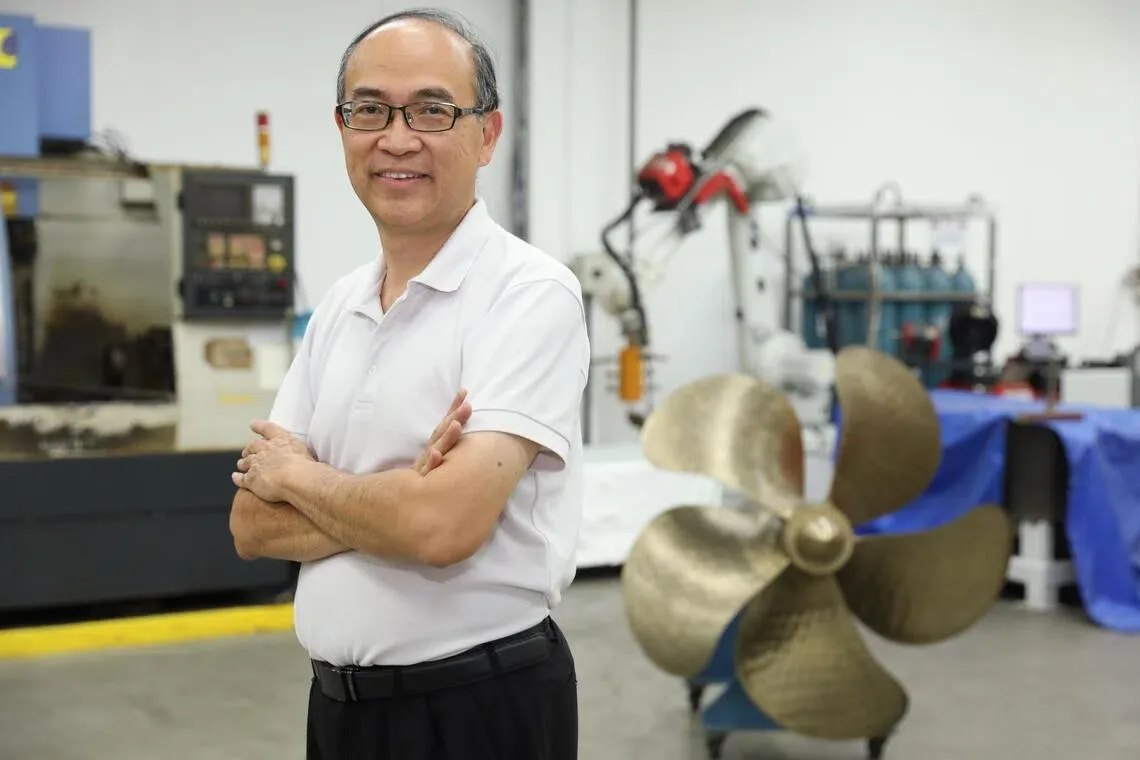
The RIE ecosystem delivered more than 250 impactful findings between 2021 and 2024. Examples include improved wind flow modelling for housing precincts and floating solar farm technology [3]. One standout innovation was Mencast Marine’s development of Singapore’s first 3D-printed marine propeller certified by Lloyd’s Register and the American Bureau of Shipping in 2023. Using RIE-supported 3D printing and AI tech, Mencast cut propeller production time from nearly a month to two weeks and reduced its carbon footprint by 36% [4].
On December 2025, Singapore announced its next RIE plan, RIE2030, with a record S$37 billion budget covering the next five years [2]. On August 31, 2026, NRF unveiled the full details, highlighting four priority domains with dedicated funding: Semiconductors (S$800 million), Longevity research (S$350 million), Transport and connectivity (S$800 million), and Decarbonisation (S$800 million) [3].
The RIE2030 plan will introduce a Research Translation Grant offering up to S$2 million per project, or up to S$3 million with early investor involvement, to accelerate research commercialisation [3]. The government will also inject S$1 billion into the Startup SG Equity scheme to support early-stage deep-tech startups [3].
Despite growth in business R&D, the report noted a decline in deep-tech deal activity since 2023 amid tighter financial conditions [3].
The new RIE2030 programme is set to begin in April 2026, marking Singapore’s largest ever research investment.