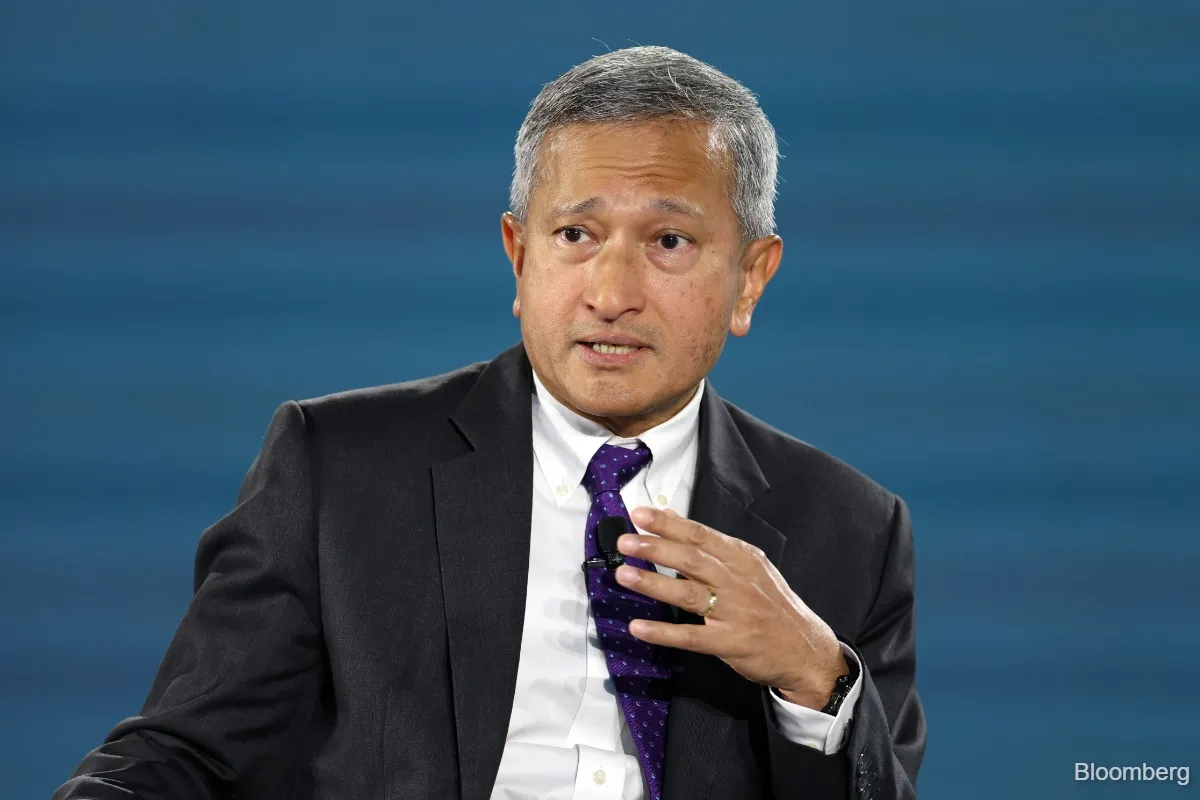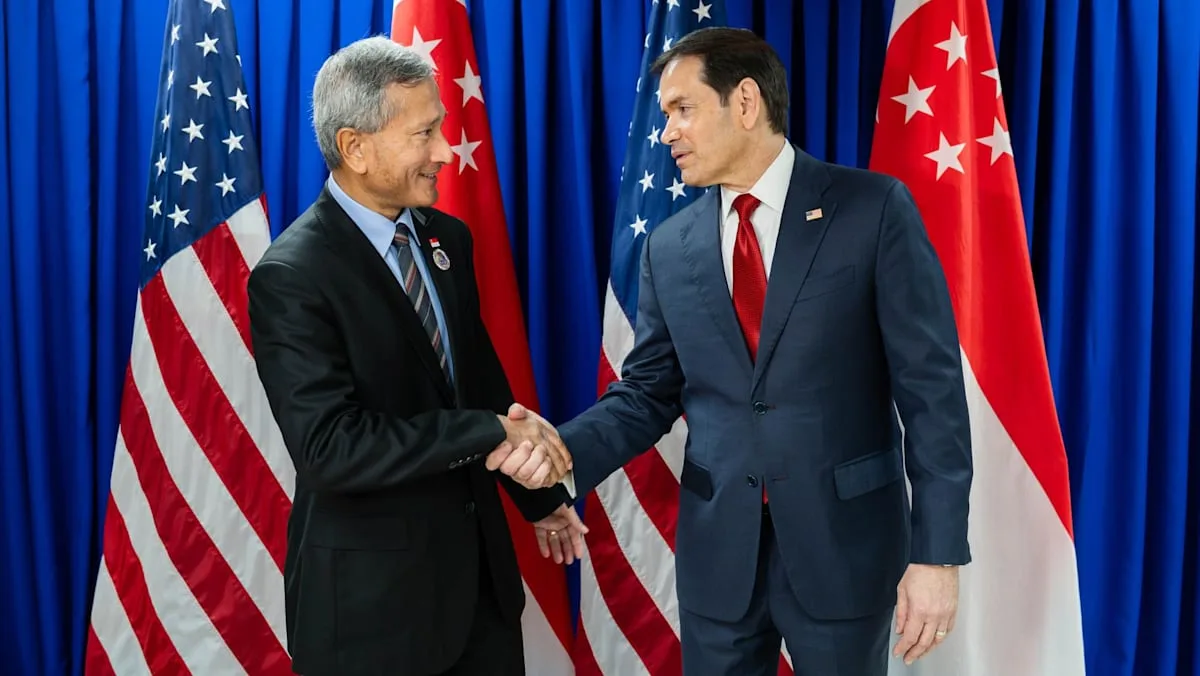
Singapore’s Foreign Minister Vivian Balakrishnan met with US Secretary of State Marco Rubio on July 23 to discuss US tariffs imposed on Singapore products amid a broader forced labour investigation under Section 301 of the Trade Act of 1974 [1, 2, 3, 4, 5]. The US imposed 12.5% tariffs on most Singapore goods the next day, extending levies on multiple trading partners including Singapore [5].
Balakrishnan emphasized that Singapore is not the target of the US tariff measures but aims to avoid becoming "collateral damage" amid broader US trade actions. He said, "Singapore is not a target of the US — not at all. But we also need to make sure we don’t become collateral damage in the overall scheme in which tariffs are going to be raised by the US with all its trading partners." [5].
He stressed there was no technical or economic basis for US tariffs on Singapore, noting the US runs a growing trade surplus against the city-state. "I made the point quite categorically that the US has a trade surplus against us, and in fact it is growing," Balakrishnan said, "and on that basis, there really is no technical or economic basis to impose tariffs upon us." [4, 1, 2, 3, 5].
Singapore strongly rejects forced labour allegations in its supply chains and told the US it does not tolerate such practices [1, 2, 3, 4, 5]. The tariffs arose from a US probe targeting around 60 economies linked to forced labour issues [1, 2, 3, 4, 5].
The discussions also covered wider geopolitical topics including US-China strategic competition and ASEAN regional priorities [1, 2, 3, 4]. Both the US and China reportedly engaged with ASEAN carefully, avoiding forcing countries to pick sides [1, 2, 3, 4].
Looking ahead, Singapore plans to focus on maintaining ASEAN centrality, building resilience, and strengthening integration as it prepares to chair ASEAN in 2027 [2, 3, 4].