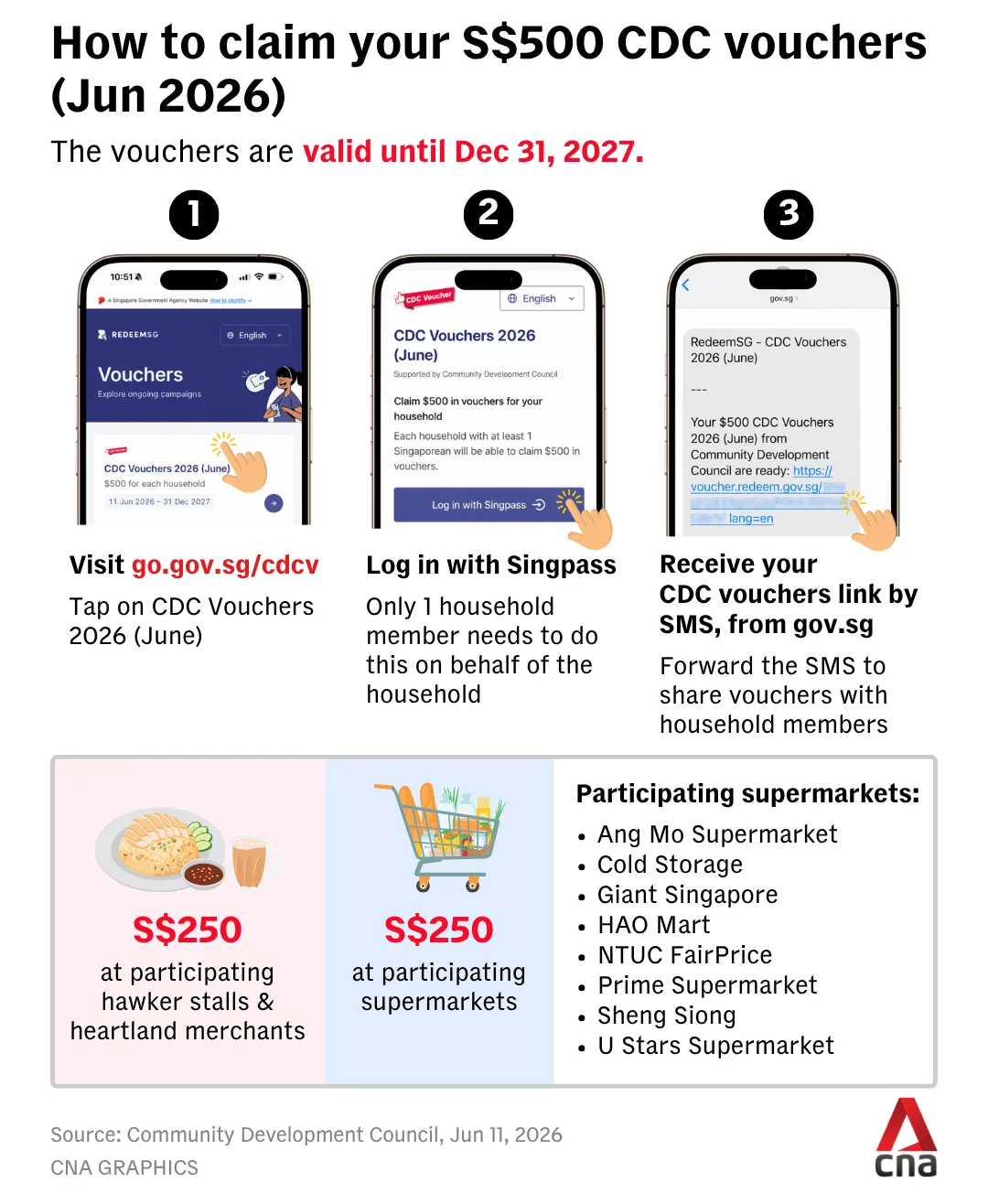
Singapore launched early distribution of S$500 Community Development Council (CDC) vouchers to about 1.38 million households starting June 11, 2026, ahead of the originally planned January 2027 schedule [1, 2, 3].
The government brought forward the disbursement by half a year in response to cost pressures linked to the ongoing Middle East conflict. Deputy Prime Minister Gan Kim Yong said the conflict's impact has been less severe than expected but the situation remains fluid. He added, "Imported cost pressures are expected to go up in the months ahead, as higher energy and other input costs pass through global supply chains. Inflation may rise in the months to come" [1, 2].
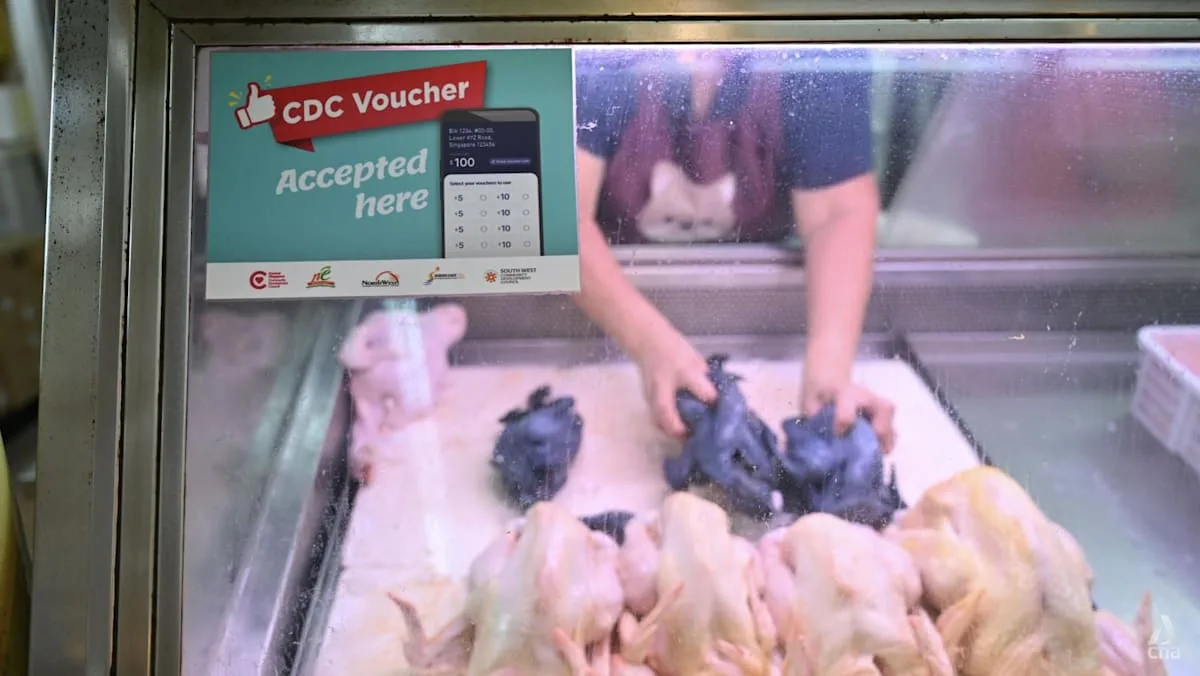
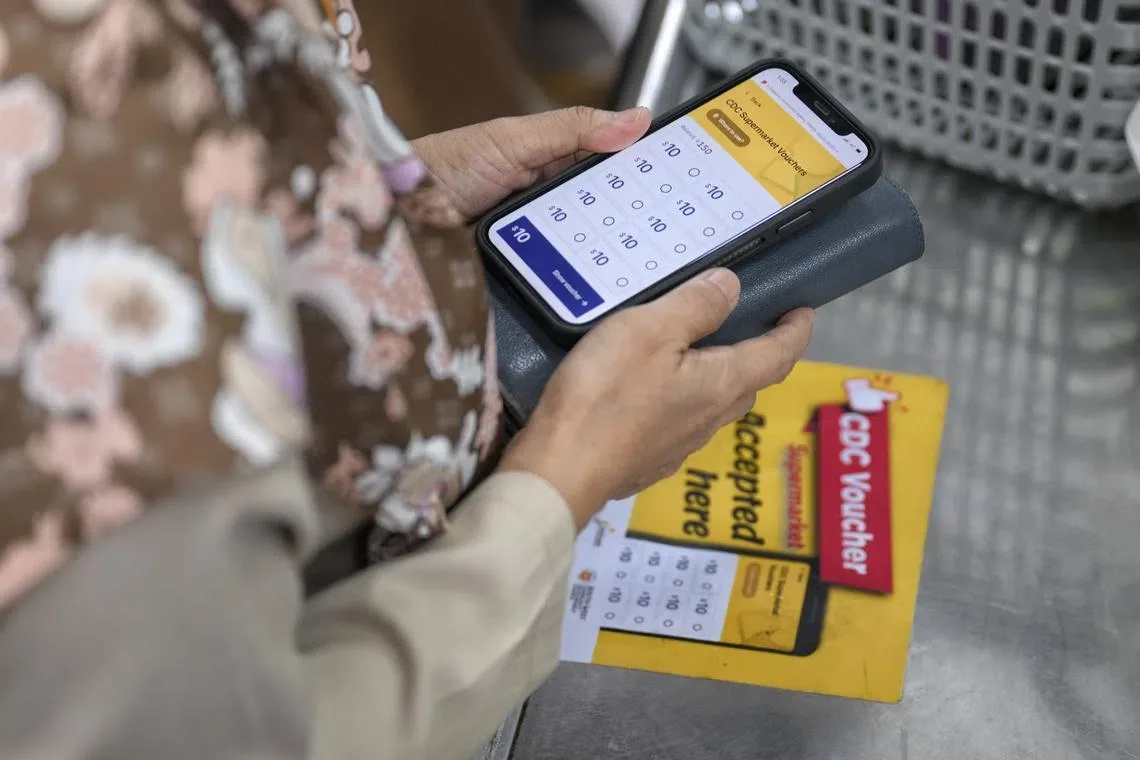
The vouchers are worth S$500 per household and will cost the government approximately S$700.07 million for this tranche. The amount is split equally for spending at participating hawkers, heartland merchants, and supermarkets [1, 2, 3]. Over 24,000 hawkers, merchants, and coffee shops, along with around 400 outlets across eight supermarket chains, will accept the vouchers [1, 2, 3].
The CDC vouchers remain valid until December 31, 2027 [1, 2, 3]. An earlier tranche disbursed in January 2026 saw 94.5% of vouchers claimed and 80.1% used, including S$151 million spent at hawker stalls and heartland merchants, and S$158 million at supermarkets [1].
Major supermarket chains are launching promotions to boost the vouchers’ impact. FairPrice, for example, is offering a S$6 return voucher for every S$60 spent using CDC or SG60 vouchers from June 1 to 17. FairPrice CEO Vipul Chawla said, "This latest wave of FairPrice Return Vouchers supplementing the Government’s CDC vouchers launch is our way of helping Singaporeans stretch their dollar even further, when and where it matters the most." FairPrice has also frozen prices on over 500 essential products from June 1 to August 31 [3].
Prime Supermarket is offering up to 50% off select items when customers spend S$20 in CDC vouchers, with bundle deals available until July 9 [3].
Singapore's core inflation eased from 1.7% in March to 1.4% in April 2026, while overall inflation remained at 1.8%. Deputy Prime Minister Gan stressed the government will closely monitor developments and stand ready to provide additional support as needed, saying, "The government will continue to monitor developments closely. And when the need arises, we will stand ready to do more, as we have always done so before" [1].