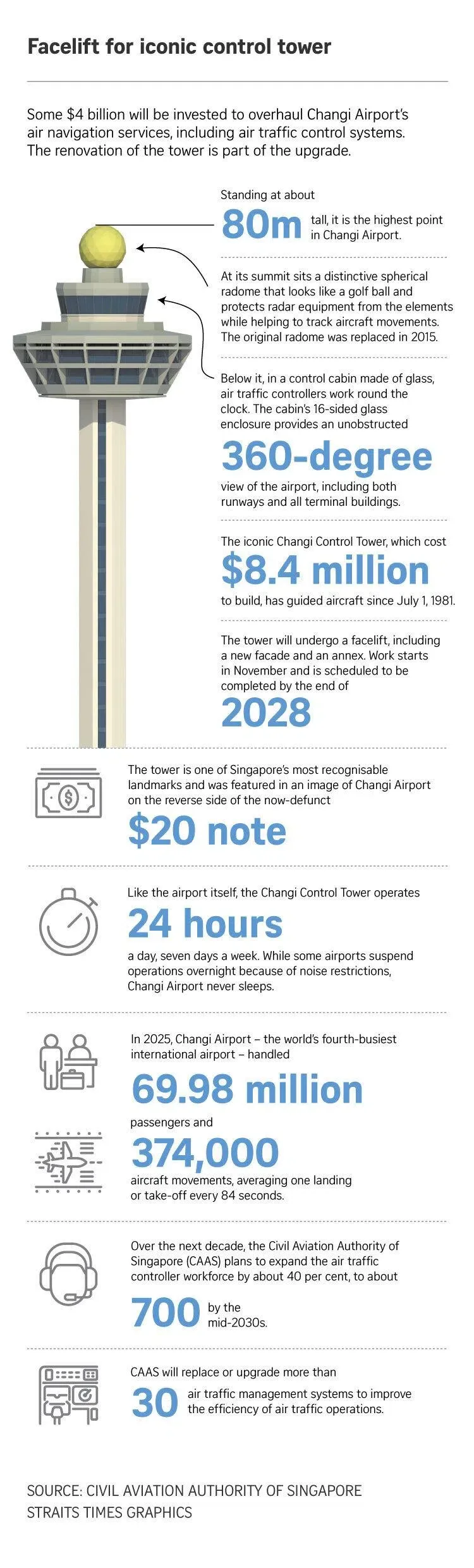
Singapore will invest S$4 billion over the next 15 years to overhaul air navigation services, including the air traffic control (ATC) systems at Changi Airport, the Civil Aviation Authority of Singapore (CAAS) announced in July 2023 [1, 2, 3, 4, 5, 6, 7, 8].
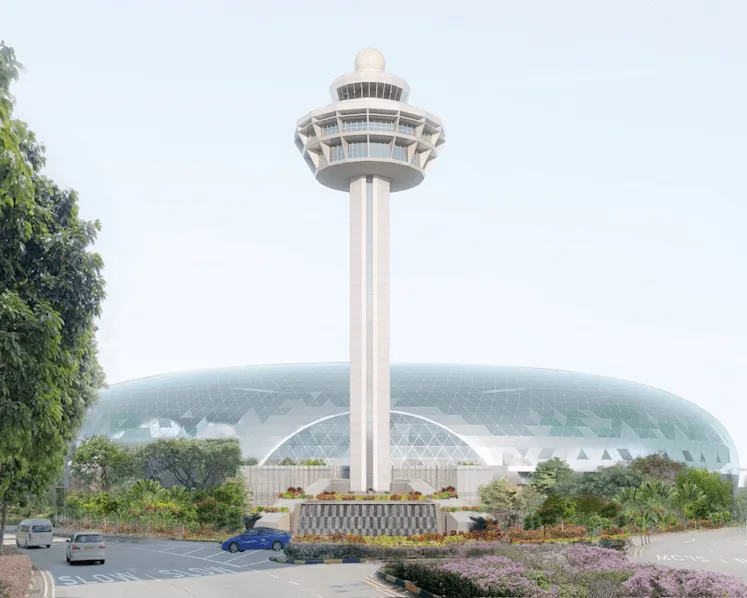
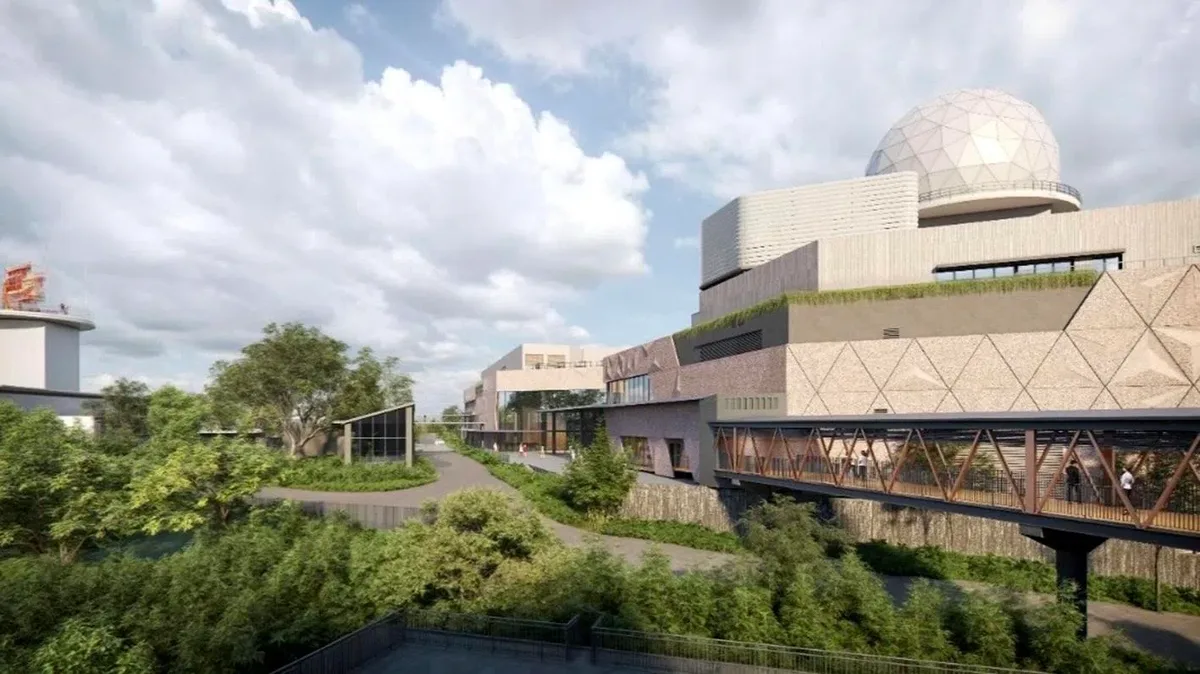
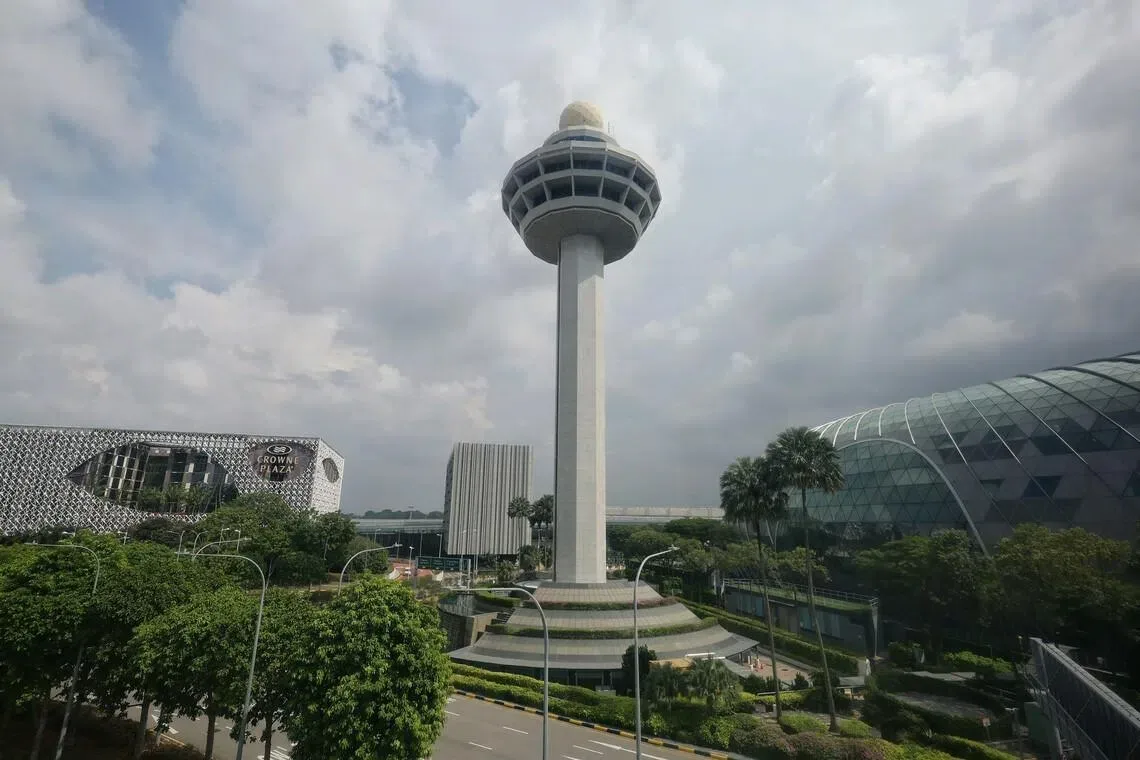
The plan includes refurbishing the iconic Changi Control Tower, which stands about 80 meters tall and last underwent an exterior recladding in 1997. The renovation involves recladding the tower facade and building a new annex between the tower and the Jewel shopping mall. Work began in November 2023 and is expected to be completed by the end of 2028 [1, 2, 3, 4, 5]. The recladding is needed to address safety issues from facade parts falling off and to support new ATC systems [1, 3].
The nearby Singapore Air Traffic Control Centre (SATCC) at Changi Village will also receive phased upgrades to host next-generation navigation systems while ensuring uninterrupted 24/7 operations [1, 2, 3, 4, 5].
Of the total S$4 billion investment, about S$3.2 billion will go toward system and infrastructure upgrades. Another S$500 million is allocated for workforce expansion and related initiatives. A further S$300 million will support operational research, AI deployments, and integration with regional traffic management [2, 6, 7, 8].
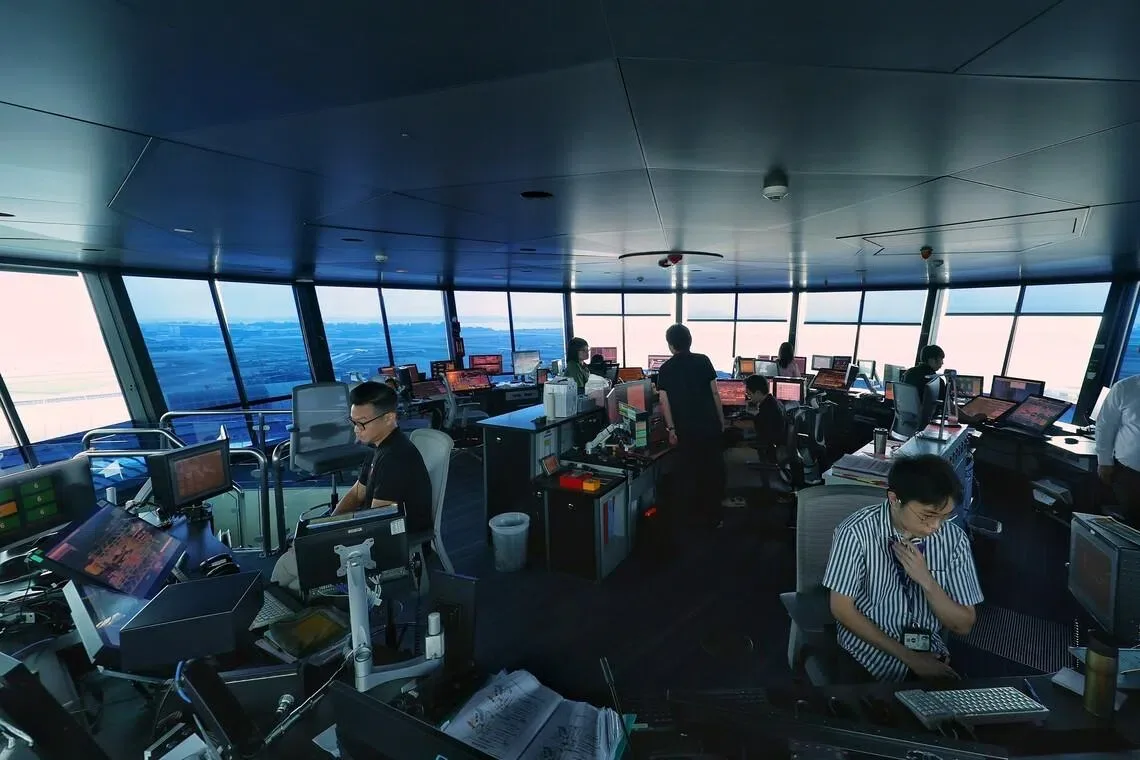
CAAS will grow the air traffic control officer workforce by about 40%, hiring 200 new controllers to increase from roughly 500 today to about 700 officers by the mid-2030s [2, 6, 7, 8]. New recruits receive a S$20,000 sign-on bonus paid in two installments during training and licensing [6, 7, 8].
Changi Airport handled nearly 70 million passengers in 2025, surpassing pre-pandemic levels. With the planned opening of Terminal 5 in the mid-2030s, which will add 50 million in annual capacity, the upgrades aim to double airspace capacity to one million aircraft movements annually from about 374,000 in 2025 [6, 7, 8]. The upgraded air traffic system will track up to 4,000 concurrent ground and airborne aircraft positions, doubling current limits [6, 7, 8].
Han Kok Juan, CAAS director-general, said: "It is important that we also build capacity in the skies, so that we are able to provide smoother, safer and more sustainable air services to travellers" [1]. CAAS added that the control tower will remain an iconic landmark while meeting operational needs [2].
The agency is also setting up an Engineering Development Centre to support air traffic research and development, including stipend top-ups for local PhD students under an S$800 million Research, Innovation and Enterprise funding program [6, 7, 8].
Work on the Changi Control Tower and SATCC upgrades is slated to complete by December 31, 2028 [1, 2, 3, 4, 5]. The expansion of the workforce and Terminal 5 opening are expected by the mid-2030s [6, 7, 8].