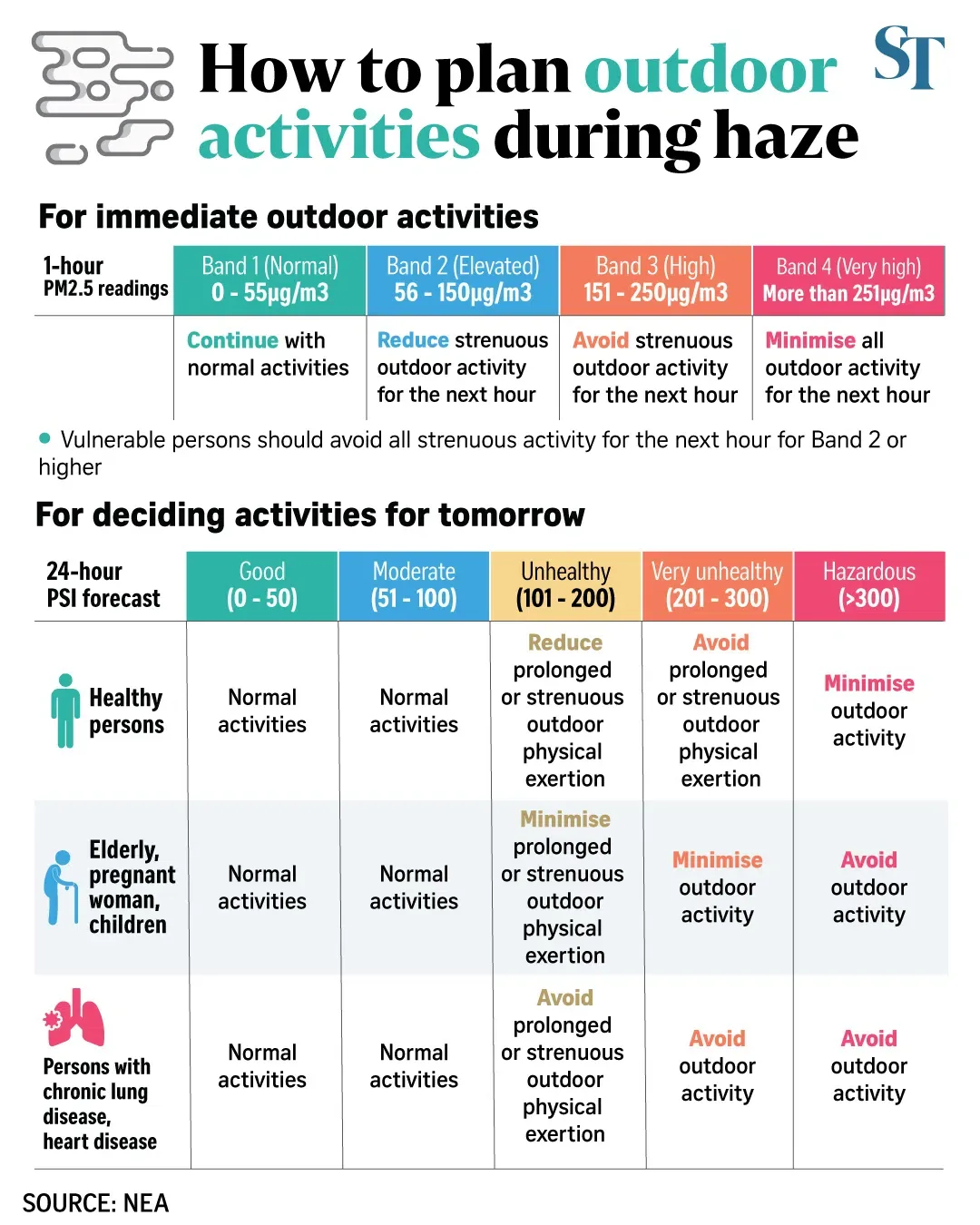
Singapore's air quality reached unhealthy levels on September 4, 2026, with the 24-hour Pollutant Standards Index (PSI) in the central region surpassing 101 for the first time since October 2023 [1, 2, 3, 4, 5, 6]. The PSI peaked at 104-105 in the morning of that day before gradually declining [5, 6].
The haze is caused by smoke drifting from forest fires in southern and central Sumatra, as well as parts of Kalimantan, Indonesia. Prevailing south-easterly and southerly winds have carried the smoke towards Singapore [1, 2, 3, 4, 7, 8, 9, 5, 6]. The 2026 Indonesian forest fires have burned for around a month as of early September and have released about 10% of the greenhouse gases emitted during the devastating 2015 fire season, according to NASA [10].
Indonesia has deployed at least 6,000 ground personnel to combat the fires and is also using water-bombing and weather modification methods to contain them [1]. Meanwhile, Malaysia’s Sarawak state has experienced severe haze, with the Air Pollutant Index in the town of Serian reaching a hazardous 408 on September 3 [1, 6, 10].
By September 5 and 6, Singapore's air quality fluctuated between the high end of the moderate range and the lower to middle unhealthy range [2, 3, 4, 7, 8, 9]. At 7pm on September 6, 24-hour PSI readings across Singapore were back in the moderate range, between 72 and 87 [7, 8, 9].
Singapore’s National Environment Agency (NEA) advised vulnerable groups, including people with chronic lung or heart conditions, pregnant women, seniors, and children, to minimise prolonged or strenuous outdoor activities while PSI levels are unhealthy [1, 2, 3, 4, 7, 8, 9]. The NEA also noted dry conditions and the ongoing super El Niño weather pattern, which is expected to peak in September and October, could worsen haze occurrences [1, 6, 10].
"The hotspot and smoke haze situation is expected to stay elevated in fire-prone regions experiencing prolonged dry conditions, with a continued risk of severe transboundary haze occurrence," the NEA said [1]. It warned that while some showers are forecast over Kalimantan, dry weather over Singapore and surrounding areas will likely persist, maintaining haze risks if the fires continue [9].
NEA forecasts for September 7 warn the 24-hour PSI could again reach moderately high to unhealthy levels if the forest fires are not contained [9].