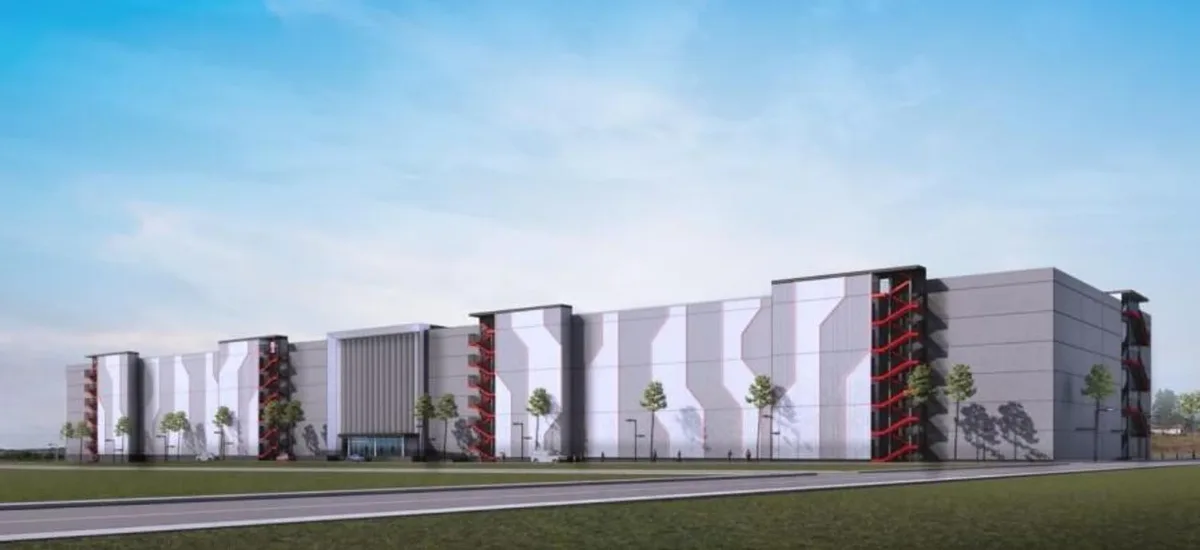
ST Telemedia Global Data Centres (STT GDC) announced an expansion of its Jakarta data centre campus on June 10, responding to Indonesia’s rising demand for cloud, AI, and digital infrastructure services [1, 2, 3, 4].
The expansion includes launching STT Jakarta 2, which offers 24 megawatts (MW) of IT load capacity, completing STT Jakarta 3, and starting construction of STT Jakarta 5 and STT Jakarta 6. Both Jakarta 5 and 6 will contribute 40 MW each under the next phase of development [1, 2, 3, 4].
STT Jakarta 3 is designed with energy efficiency improvements and uses low-global-warming-potential cooling systems, meeting green financing frameworks aimed at sustainability [2, 3, 4]. The full development pipeline aims to deliver more than 360 MW of AI-ready, sustainable IT capacity in Indonesia [2, 3, 4].
To ensure reliable power supply and reduce transmission losses, the project includes an on-site high-voltage substation to improve power quality for hyperscale and enterprise customers [2, 3, 4].
Indonesia is one of Southeast Asia’s fastest-growing digital markets, driven by accelerating AI adoption, cloud migration, and demand for local infrastructure. The country’s digital economy is projected to reach US$130 billion by 2026, while data centre capacity is expected to hit about 2.7 gigawatts by 2030 [1, 2, 3, 4]. Saribua Siahaan, director on Indonesia’s Investment Coordinating Board, said, “The potential for data centre development in Indonesia is highly significant, driven by the rapid pace of digital transformation and the increasing demand for reliable and secure information technology infrastructure.” [2]
STT GDC’s expansion is also expected to create high-skilled jobs and foster new enterprise services. The company is owned by a consortium led by global investment firm KKR and Singtel [1, 4]. Nearby initiatives include building a data centre lab and learning centre in West Java to further reinforce Indonesia’s digital ecosystem [1].
The next phase focuses on construction of STT Jakarta 5 and STT Jakarta 6, set to add 80 MW of IT capacity combined, supporting ongoing growth in the country’s AI and cloud infrastructure demand [2, 3, 4].