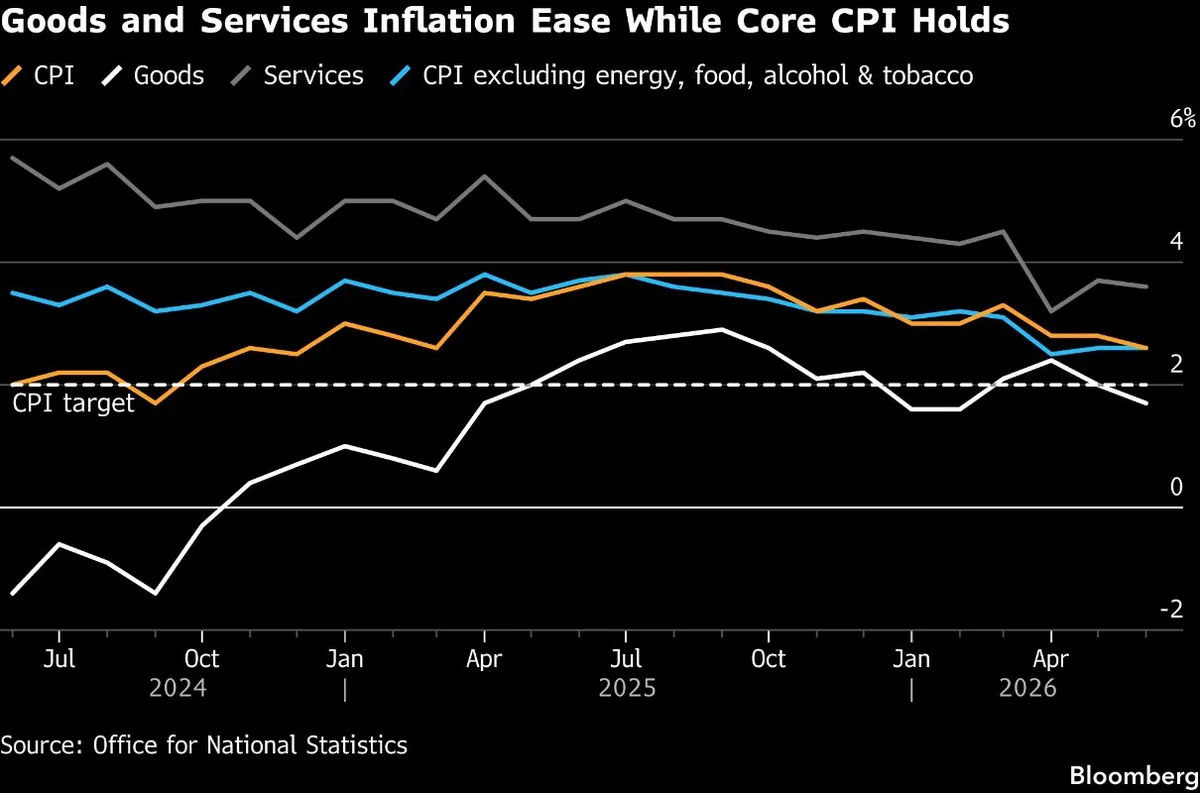
UK consumer price inflation slowed to 2.6% in annual terms in June 2026, marking the lowest rate since March 2025 and down from 2.8% in May 2026, the Office for National Statistics reported on July 21 [1, 2]. The figure was below economists' median forecasts of about 2.7% for the month.
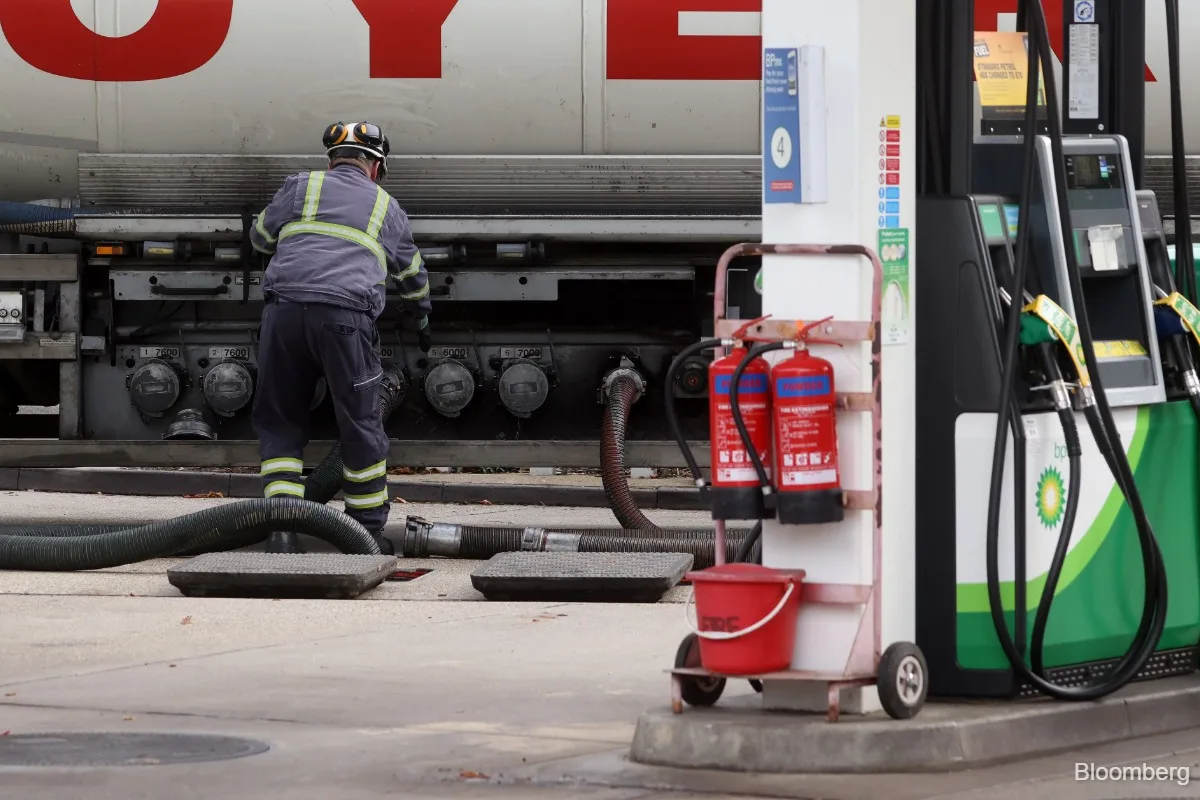
A key factor behind the easing inflation was a 3.1% drop in petrol and diesel prices in June, following a tumble in crude oil prices amid a brief easing of the US-Iran conflict in the Middle East. Grant Fitzner, ONS Chief Economist, said, "A fall in motor fuel prices, particularly diesel, helped ease inflation in June." Food inflation also eased to its lowest level since 2024 [1, 2, 3].
Clothing and footwear prices fell 1.2% due to summer sales discounts, further contributing to the slowdown [2]. Services inflation, which the Bank of England closely watches, eased slightly to 3.6% in June from 3.7% in May, though it remained somewhat above the forecasted 3.5% [1, 2, 3].
Despite the slowdown, UK inflation remains above the Bank of England's 2% target. The central bank expects inflation to rise again, possibly reaching around 3% in the third quarter of 2026 [1]. Financial markets anticipate the Bank of England will hold its benchmark interest rate steady at 3.75% in the near term but may raise rates by one or two 0.25-point increments by the end of 2026 [1, 3].
There are risks of renewed inflation pressures. The recent calm in the Middle East conflict temporarily lowered energy prices but fighting has since escalated again, raising uncertainty about future oil costs [1, 2, 3]. Yael Selfin, chief economist at KPMG UK, said, "June is likely to mark the low point for inflation this year, with higher energy bills set to complicate the short-term outlook." [2, 3]
UK Prime Minister Andy Burnham has prioritized reducing the cost of living, announcing plans to remove VAT on household electricity bills from October 2026. This measure is expected to slightly reduce inflation beginning in the last quarter of the year [2, 3].