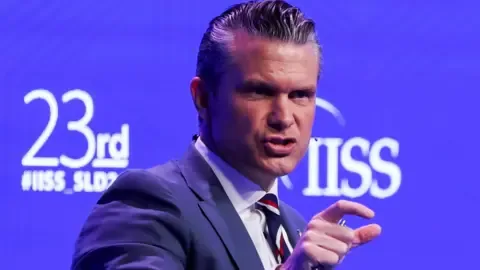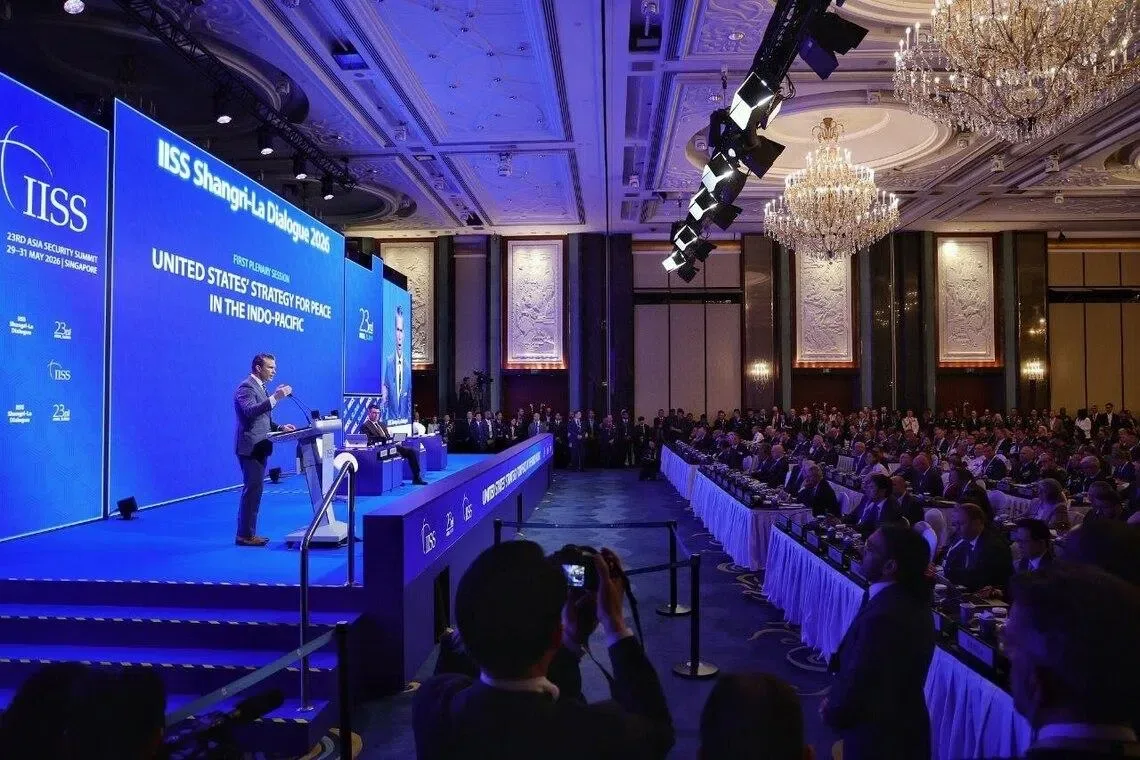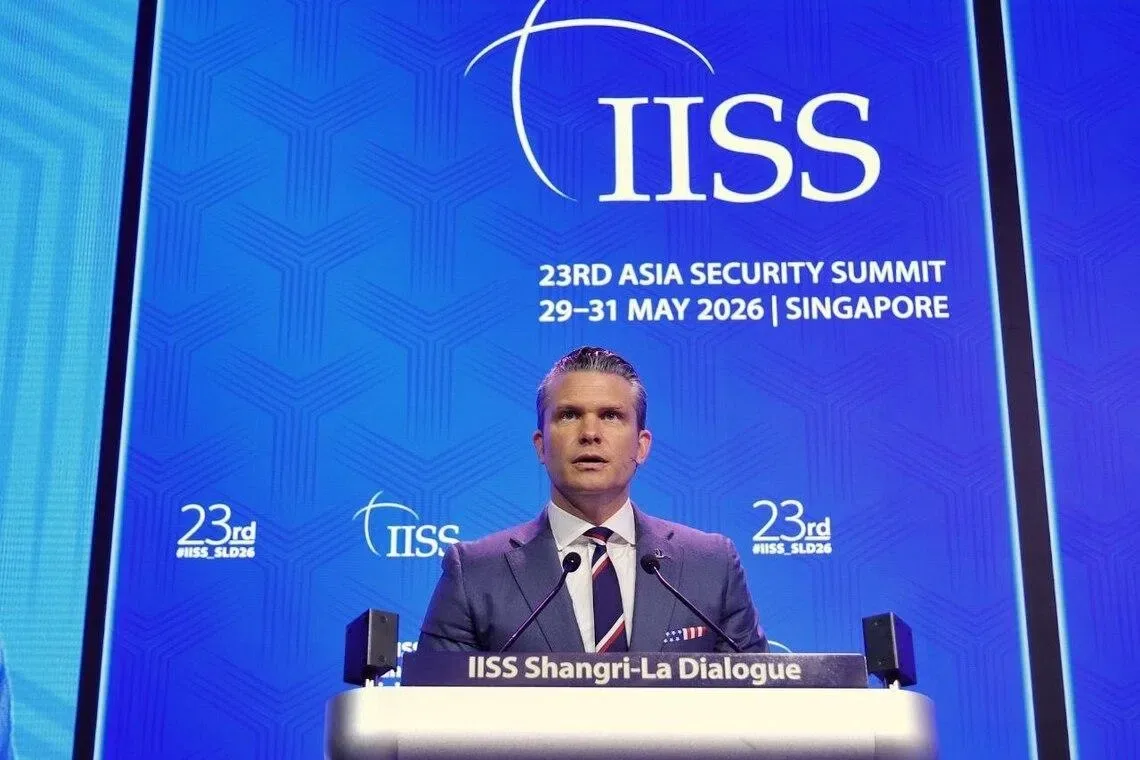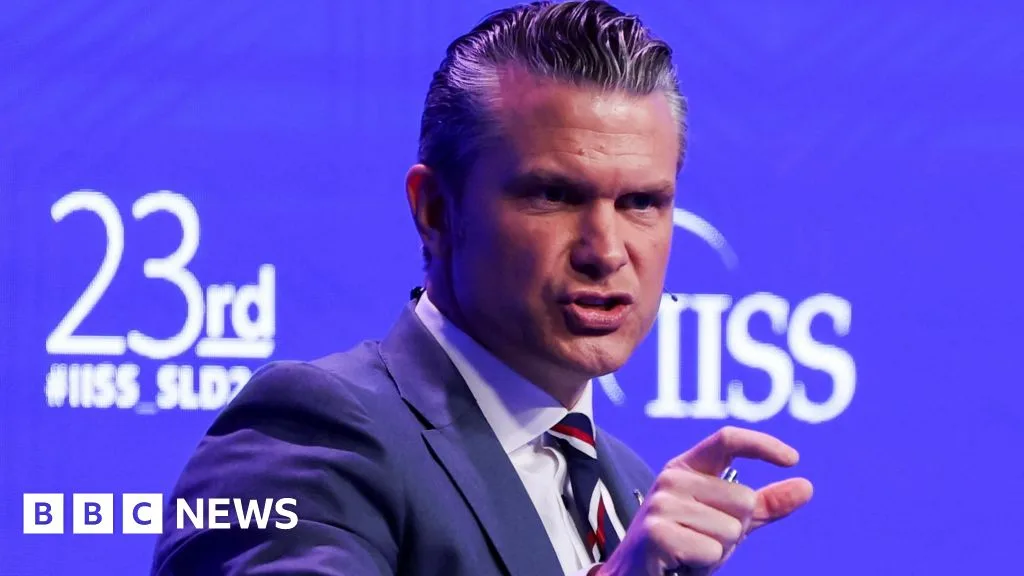
US Secretary of War Pete Hegseth delivered a major defense policy speech at the 23rd Shangri-La Dialogue security forum in Singapore on May 30, 2026 [1, 2, 3]. He commended Indo-Pacific countries for responding to the Trump administration's call for allies to spend at least 3.5% of GDP on defense [2, 3, 4, 5, 6]. Nations singled out for meeting this target included Australia, Indonesia, Japan, Malaysia, the Philippines, South Korea, Singapore, Thailand, and Vietnam [2, 3, 4, 5, 6]. Taiwan and New Zealand were notably absent from the list [2, 3, 4, 5, 6].
Hegseth said, "For those nations that rise to this challenge that embrace responsibility as true partners, the benefits will be clear," emphasizing the US expects every ally to match this level of resolve [2]. He outlined a US strategy that prioritizes "model allies" willing to share security burdens equitably, offering them expedited arms sales, closer industrial cooperation, and expanded intelligence sharing [2, 3, 4, 5, 6].
Despite ongoing global commitments, including the war in Iran and a suspended $14 billion arms package to Taiwan, Hegseth reaffirmed America’s dedication to Asia-Pacific security [1]. He called for avoiding unnecessary confrontation with China while acknowledging concerns about Beijing’s growing military build-up [1, 2, 3]. Hegseth highlighted the new framework for "constructive strategic stability" agreed between President Donald Trump and Chinese President Xi Jinping at their Beijing summit on May 16, 2026 [2, 3, 4].
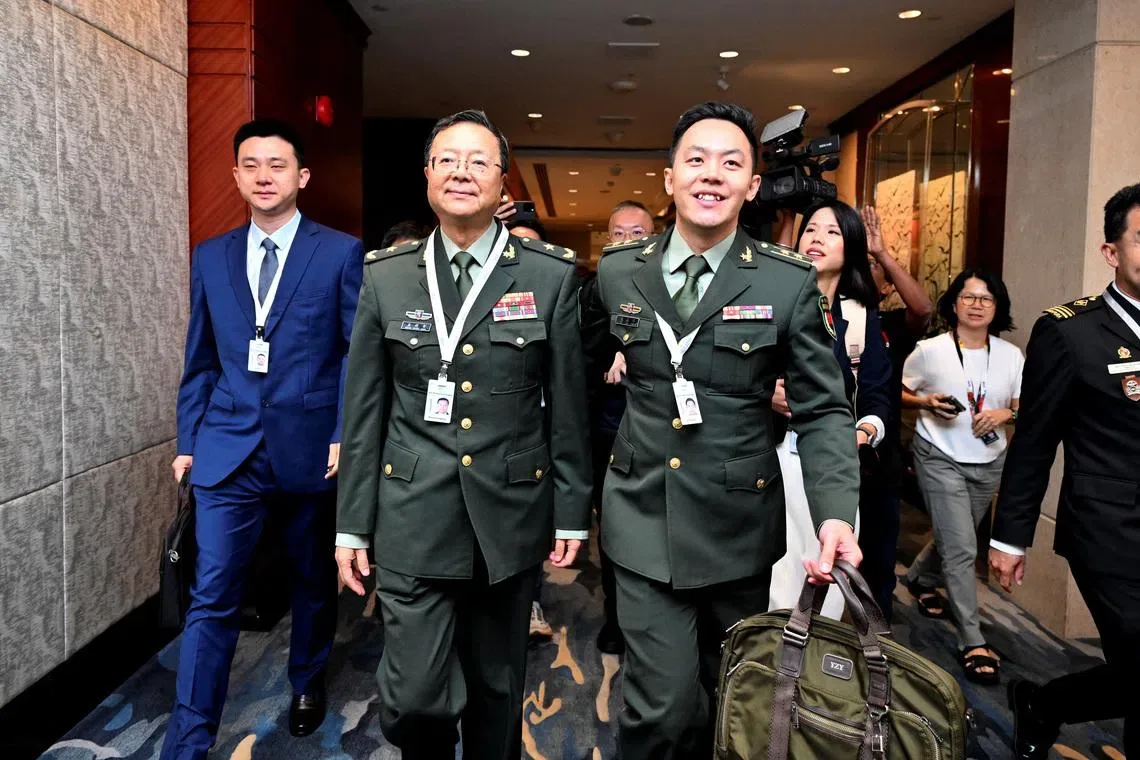
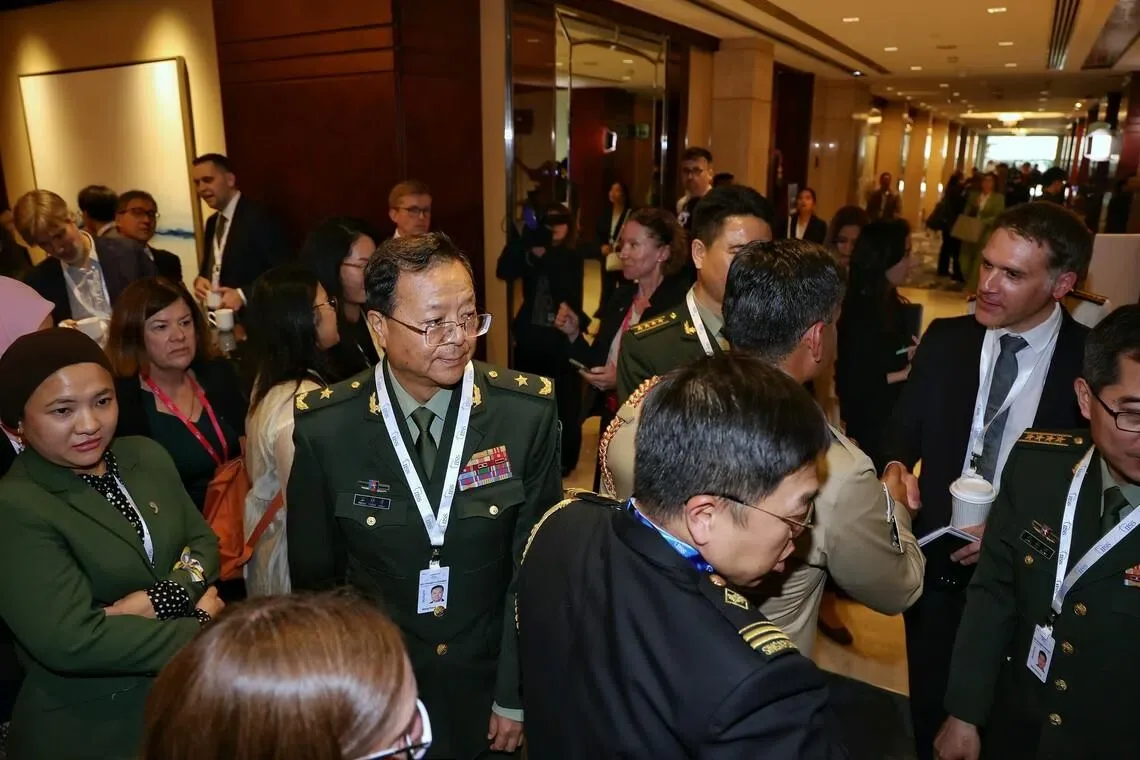
The Chinese delegation to Shangri-La consisted of lower-ranking officers rather than the defense minister, and no direct official Chinese response was given to Hegseth’s speech [7, 8, 9, 10]. Chinese scholars said the softer US tone reflected the recent Trump-Xi summit agreement but criticized US calls for increased ally spending as evidence of a weakening US hegemony and intolerance toward perceived free-riders. Professor Wang Dong commented, "Hegseth’s speech reflected a fundamental shift in the logic of US hegemony: from a generous provider of public goods to a power that’s increasingly counting pennies and intolerant of any perceived free-riders" [7]. Major General Meng Xiangqing urged implementation of the summit consensus to maintain healthy military ties [7].
Taiwan’s former defense minister Andrew Yang highlighted Taiwan’s omission from Hegseth’s list, saying, "It’s clear that the question of the US’ support for Taiwan can only be answered by President Trump" [2]. This underscored some ambiguity over US backing as Washington suspended the $14 billion arms package intended for Taiwan [1].
On May 16, President Trump and President Xi met in Beijing and agreed on the new "constructive strategic stability" framework, setting the tone for recent US-China interactions [2, 3, 4]. Hegseth’s Shangri-La speech on May 30 followed this summit, detailing US partnerships in the region [1, 2, 3].