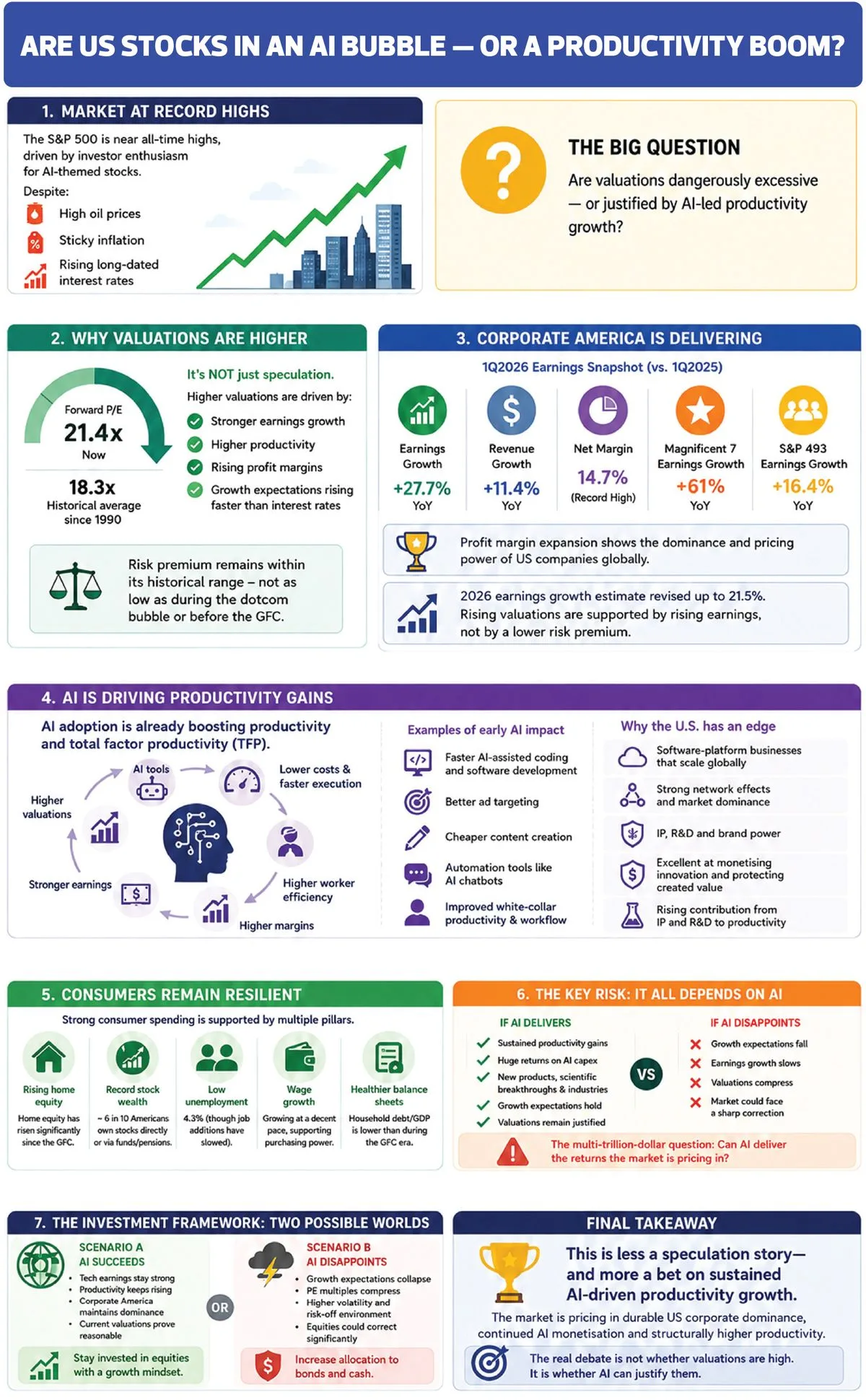
The S&P 500 Index is close to its all-time high, fueled by strong enthusiasm for AI-themed stocks amid rising inflation and high oil prices in the US market [1]. Stock valuations remain elevated, with the S&P 500 forward price-earnings (PE) ratio reaching 21.4 times, significantly above the historical average of 18.3 since 1990 [1]. This elevated valuation occurs even as the 10-year US Treasury yield steadies near 4.6%, increasing discount rates and exerting valuation pressure on growth stocks [2].
Since late 2023, the gap between earnings yield and the 10-year Treasury yield has nearly disappeared, prompting concerns about stocks being overvalued relative to bonds [1]. However, expected earnings growth has surged faster than risk-free rates, mathematically compressing the discount rate minus growth (r-g) differential and supporting the higher PE multiples [1]. This dynamic has sustained investor appetite for equities despite macroeconomic headwinds.
The Nasdaq 100 Index is testing a critical technical resistance zone between 29,400 and 29,700 points after showing improved momentum. Technical indicators include a bullish MACD crossover and the 20-week exponential moving average (EMA) rising above the 50-week EMA, signaling a longer-term upward trend [2].
Nvidia underscored the strength of AI demand with robust Q1 fiscal year 2027 results, reporting revenue of US$81.6 billion and announcing an increase in its quarterly dividend, reinforcing investor confidence in AI infrastructure companies [2].
These developments follow an analysis published in late May by The Edge Malaysia Weekly, which highlighted the US equity market rally driven by AI enthusiasm alongside concerns over stretched valuations [1]. Early August saw continued Nasdaq testing of resistance levels concurrent with Nvidia’s strong earnings report [2].
Looking ahead, investors will closely monitor movements around the Nasdaq 100 resistance zone and any shifts in Treasury yields that could impact valuation dynamics in the coming months.