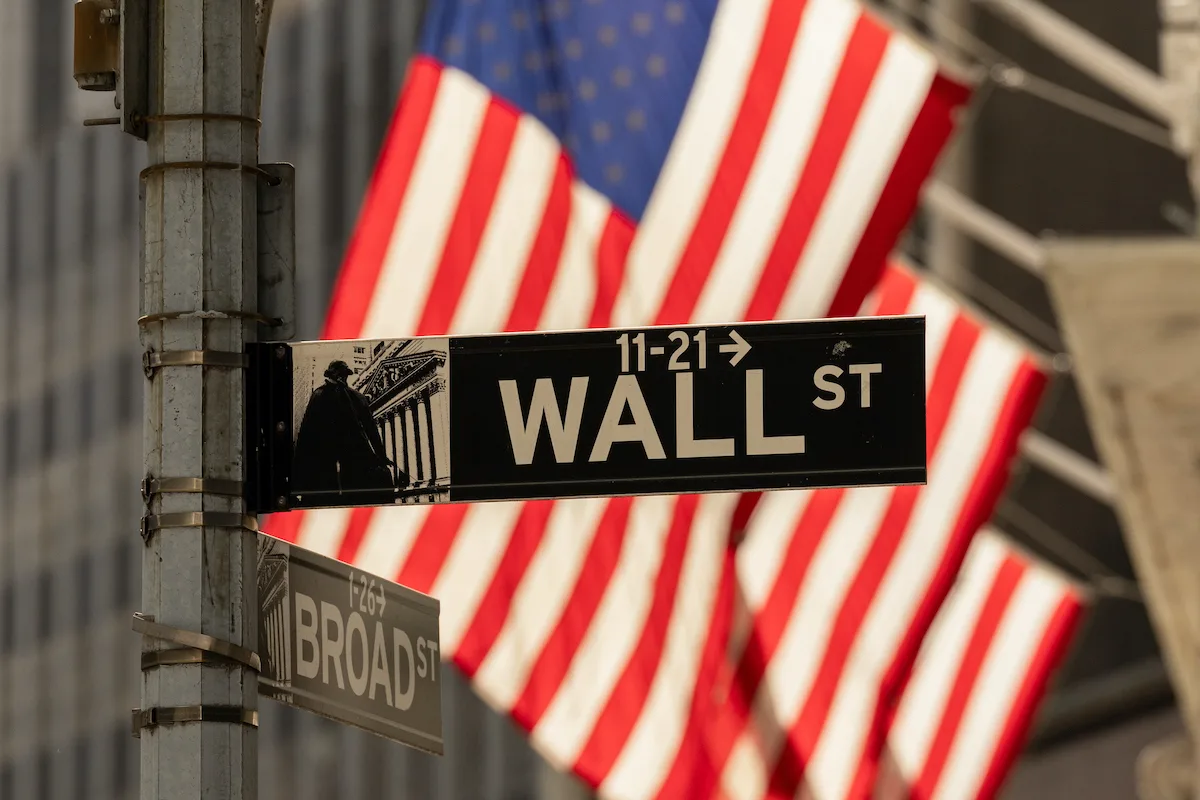
US stock markets opened and closed higher in early August 2026, with the Dow Jones Industrial Average rising about 693 points to a record close of 53,178.41 on August 3 [1, 2, 3]. The S&P 500 gained roughly 110.78 points, closing near a record at 7,600.50, while the Nasdaq Composite climbed nearly 540 points to 25,913.90 [1, 2, 3].
The rally was driven by investor optimism over potential talks to de-escalate tensions between the US and Iran, alongside falling crude oil prices. Crude settled down about 5% after President Donald Trump announced that talks to reopen the Strait of Hormuz could happen as soon as August 3, although Iran disputed that such talks were planned [1, 2, 3]. Trump said, "We’re talking about the strait, the opening of the strait, having it open literally by tomorrow, completely open, and that’s phase one," adding that phase two would include denuclearization discussions [4].
Easing geopolitical risks helped push US Treasury yields lower, which also supported stocks [1, 2, 4, 3]. Market strategist Art Hogan at B. Riley Wealth noted the importance of oil and bond yields, saying, "Every day, everybody wakes up and looks at the price of a barrel of oil and the yield on the 10-year, and if that’s going lower, the market’s OK, and if it’s going higher, the market’s not good whatsoever" [1].
Among sectors, the S&P 500 communication services group led gains with a 4.3% increase thanks to strong performances from Meta Platforms and Alphabet [1, 2, 3]. Conversely, the energy sector fell by about 1.2% amid the drop in oil prices [1, 2, 3].
Amazon shares rose over 4.5%, pushing its market value past the US$3 trillion mark for the first time [5, 1, 2, 4, 3]. Meanwhile, SpaceX shares jumped nearly 5.6% ahead of the company’s first quarterly earnings report since going public, scheduled for August 4 [1, 2, 3].
S&P 500 companies reporting through July 31 showed earnings growth of 29.3%, with 85.2% beating analyst expectations, providing further market support [1, 2, 3]. However, caution remains after July’s market pressures from concerns over AI, US-Iran tensions, and interest rate hikes [1, 2]. Strong manufacturing data in July, with activity expanding at the fastest pace in over four years, added to the positive sentiment [4].
Citadel Securities’ Scott Rubner commented, "Markets are transitioning from a flow-driven environment back to one increasingly dictated by earnings, corporate demand, and the macroeconomic backdrop" [4]. Macro strategist Michael Ball highlighted that limited guidance from Federal Reserve officials means upcoming data, oil prices, and bond market moves will heavily influence policy expectations [4].
The market will closely watch SpaceX’s earnings report on August 4 as investors seek further company-specific signals amid the optimistic backdrop [1, 2, 3].