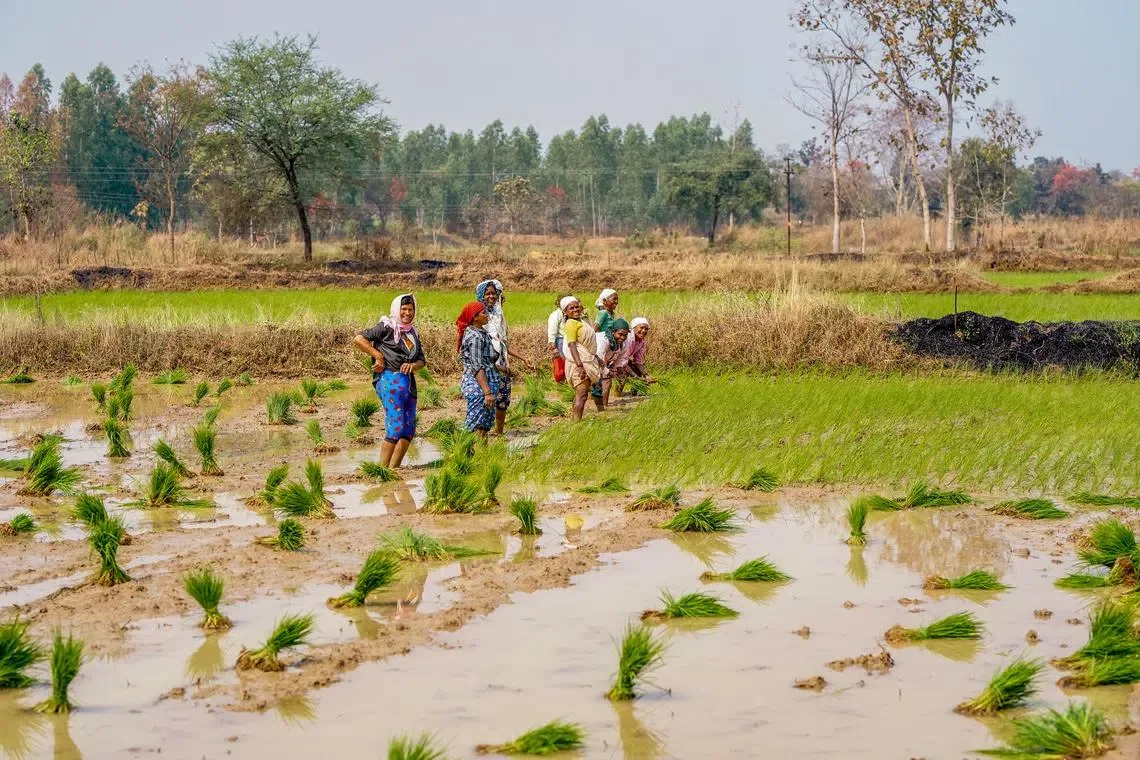
Value Network Ventures received the Economic Development Board’s Carbon Project Development Grant on May 22, 2026, to support a trial of eco-friendly rice farming techniques aimed at reducing methane emissions [1, 2, 3]. The trial involves periodically drying paddy fields instead of continuous flooding, a method shown to lower methane release, a greenhouse gas with about 80 times the warming potential of carbon dioxide [1, 2, 3].
The reduction in methane emissions can be converted into carbon credits that may be sold to entities paying carbon taxes or to the Singapore Government itself [1, 2, 3]. The rice farming method also conserves water, enabling production in regions facing drought or water scarcity [1, 2, 3].
Currently, Value Network Ventures operates with two management-level staff in Singapore but plans to hire additional employees to support documentation, credit issuance, and project management related to their carbon projects. Sandeep Roy Choudhury, co-founder, said, "We need the new hires to build up skills in documentation, issuing credits and managing projects. Singapore is a hub for carbon markets, but not so" [1, 2, 3].
The grant, whose total amount was undisclosed, backs early-stage carbon project development and financing activities that could generate high-quality carbon credits [1, 2, 3]. A $20 million fund injection was made to this grant program in 2025 by EDB and Temasek Trust’s philanthropy advisory arm [1, 2, 3]. The first round of recipients that year included 3Degrees, Climate Bridge International, and The Nature Conservancy [1, 2, 3].
Grant recipients will conduct feasibility trials in 11 countries with existing or emerging carbon trading agreements with Singapore, including the Philippines, Vietnam, and Rwanda [1, 2, 3]. The trial for Value Network Ventures will focus on rice paddy methods that balance emissions reduction with sustainable water use.
Another May 22 grant recipient was US-headquartered Anew Climate, which recently opened a Singapore office and has two decades of experience in carbon projects [1, 2, 3].
One carbon credit represents one tonne of emissions prevented or removed from the atmosphere through either technological or nature-based solutions [1, 2, 3].
Value Network Ventures’ next steps include hiring local staff to handle project documentation and credit issuance as it advances its trial and aims to create market-ready carbon credits.