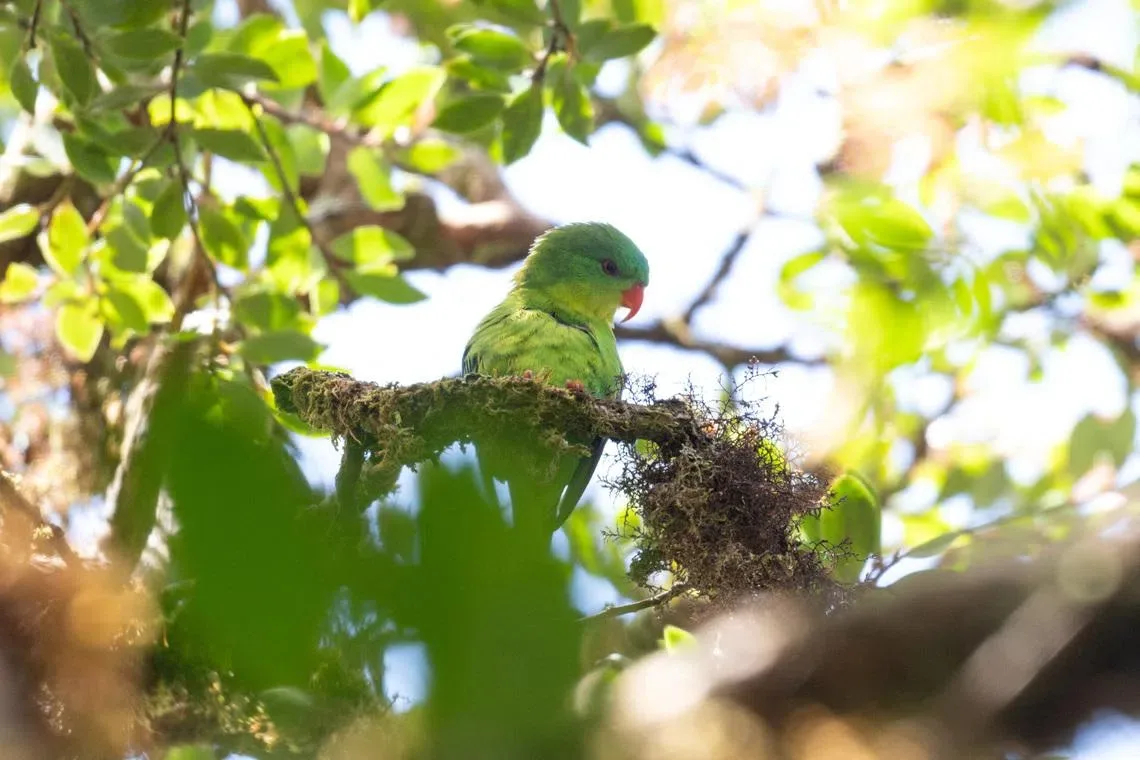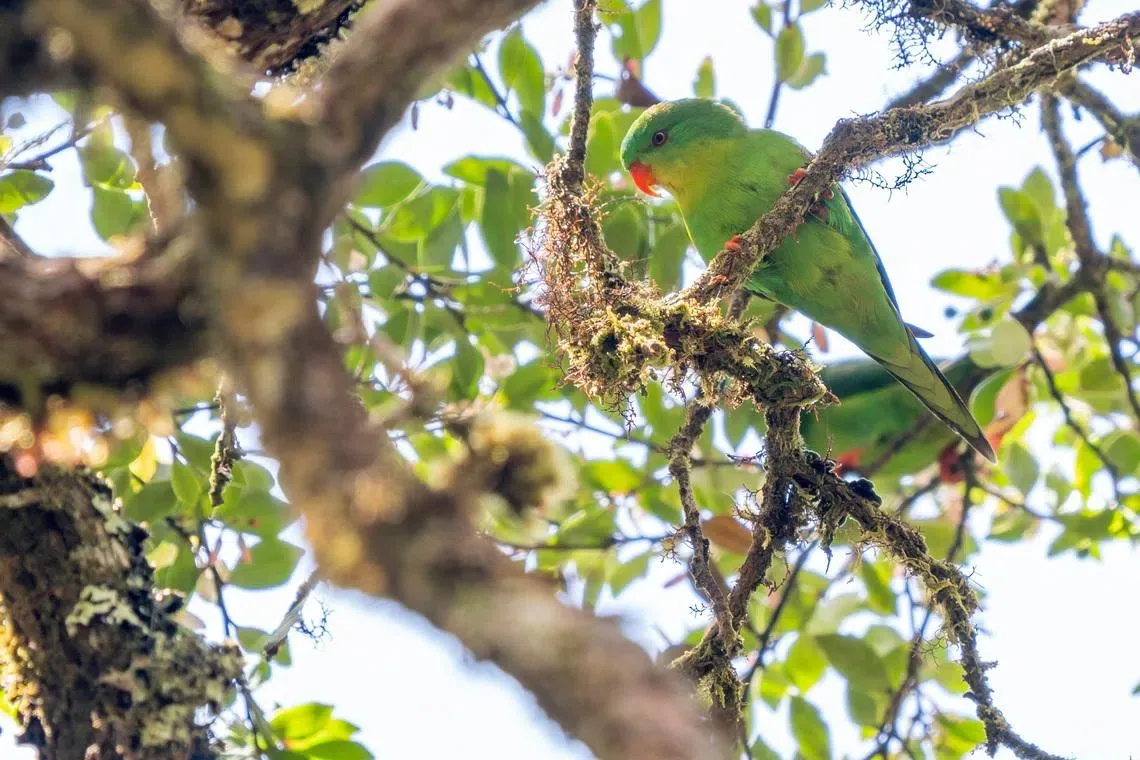
The Blue-fronted Lorikeet, a bird endemic to Indonesia's Buru island, was rediscovered by an Indonesian mountaineering expedition on the island's highest peak in April 2026 [1, 2, 3]. This marks the first confirmed sighting since the species was last photographed 12 years earlier in 2014, a rare event given the bird is found nowhere else on Earth [1, 2, 3].
During the expedition, the team observed at least nine lorikeets and obtained the first sound recordings of the species' distinctive high-pitched calls [1, 2, 3]. John Mittermeier, a member of the group, said, "When you are looking for a bird that has only been documented once in the past century, it feels like a long shot" [1]. He added that the lorikeet's unique appearance made identification straightforward: "There are no other birds on the island that look like the lorikeets, so when we saw them we knew immediately what they were" [1].
The Blue-fronted Lorikeet was first described in the 1920s based on seven specimens collected at that time [1, 2, 3]. Prior to the 2014 photograph and recent rediscovery, very few observations of the bird existed, making it one of the rarest and least known species in the region [1, 2, 3].
The bird has a bright green body, an orange bill, a blue hindcrown, and a pointed tail [1, 2, 3]. Access to their habitat is difficult due to the terrain on Buru's highest peak, which includes sharp limestone formations, cliffs, boulders, and a lack of water sources [1, 2, 3]. James Eaton from the expedition noted, "The rain, jagged limestone, river torrents and lack of trails meant anyone trying to reach the peak needed a strong – or crazy – reason to even attempt it" [1]. He said, "This bird was our reason for doing so" [1].
The previously unsuccessful searches for the lorikeet were likely due to its preference for these remote high mountain forests on Buru island, which remain challenging to explore [1, 2, 3].
The team’s findings represent a significant advancement in knowledge about the species. Researchers plan to continue studying the lorikeet’s habitat and behavior to better understand and protect it in the future [1, 2, 3].