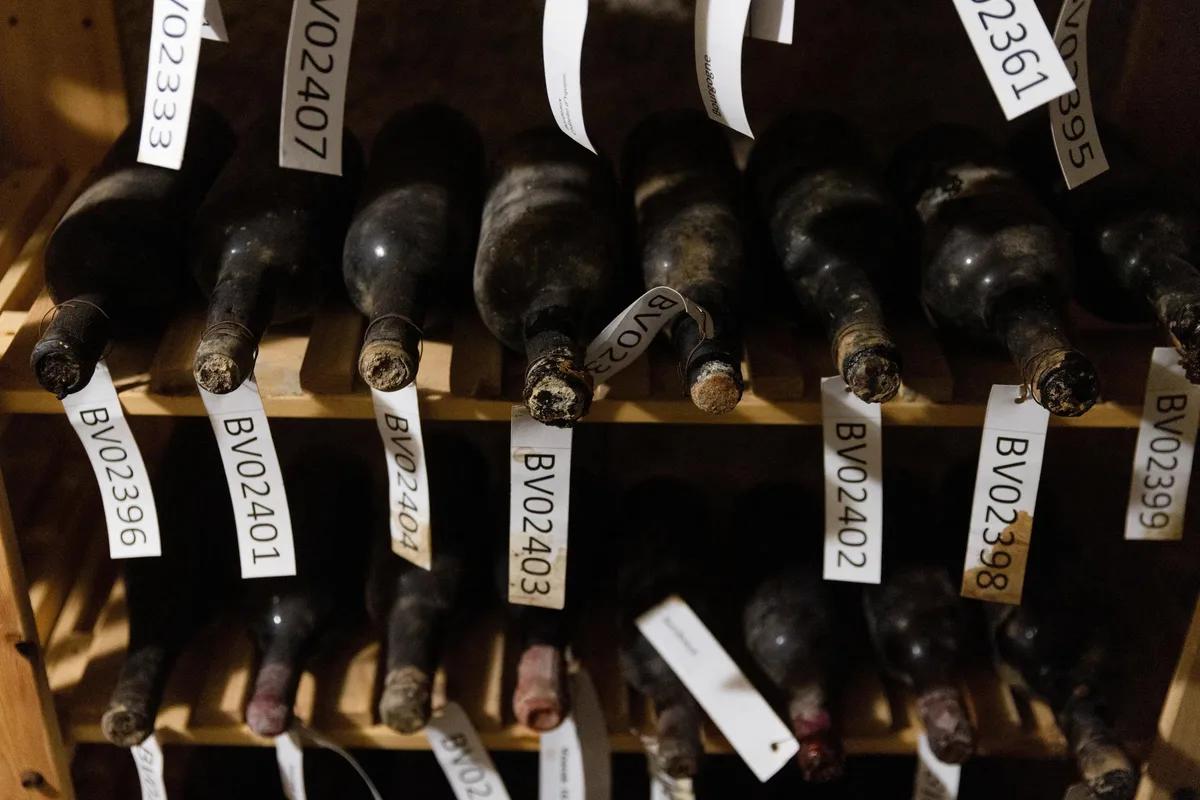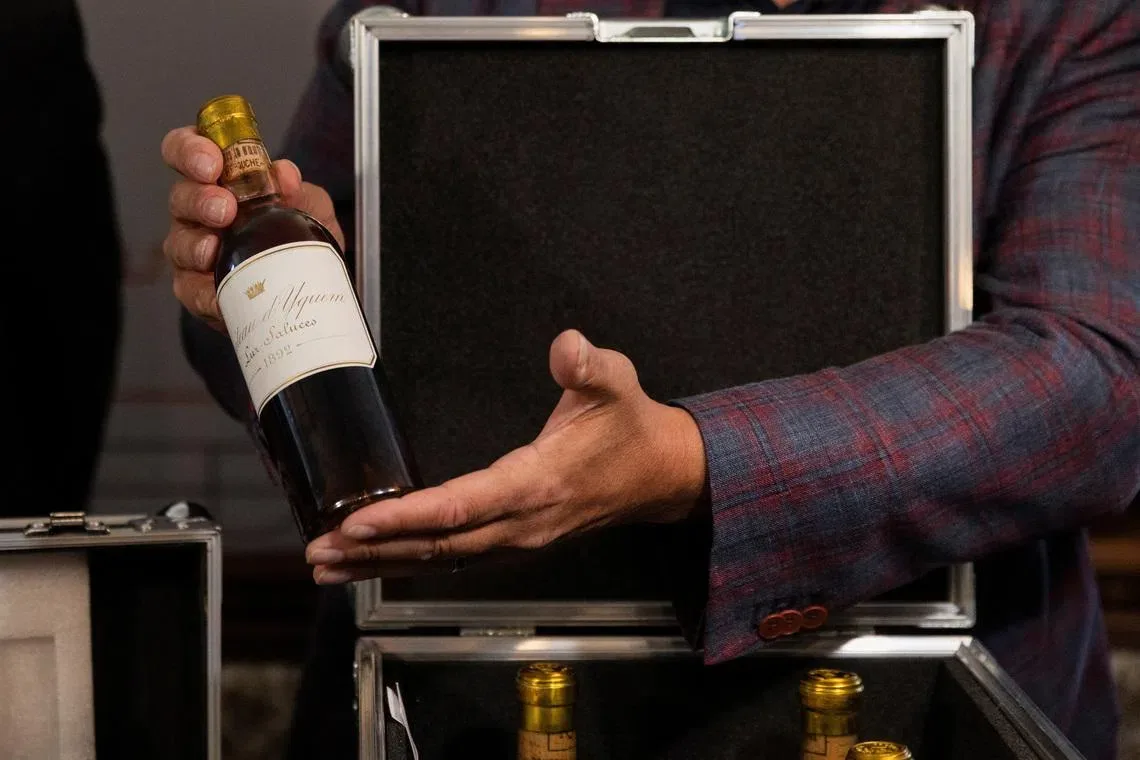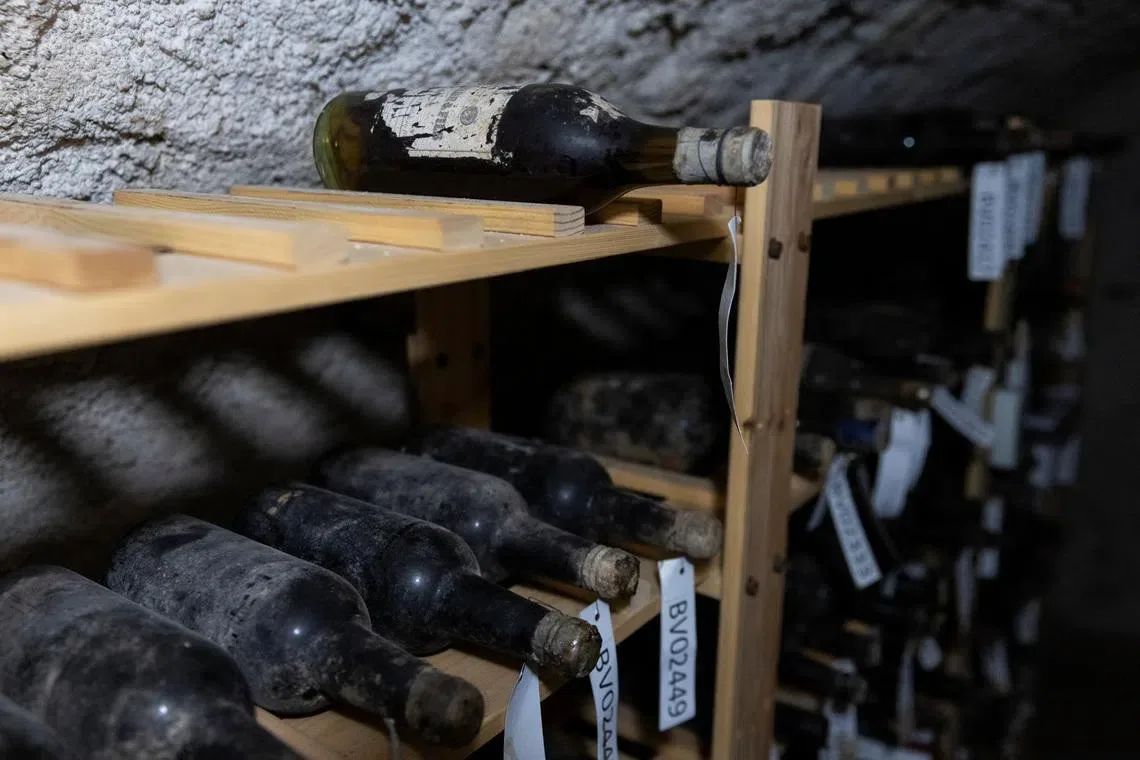
A collection of 133 bottles of wine dating mostly from 1892 to 1899, hidden under the chapel floor of Becov castle in the Czech Republic, is now available for public viewing after careful restoration [1, 2].
The cache was concealed at the end of World War II by the Beaufort-Spontin family, the castle’s owners at the time, who fled amid allegations of Nazi sympathies. Alongside the wine, they hid the reliquary of St. Maurus inside the castle [1, 2].
The hidden location beneath thick chapel walls, underground and humid, maintained a stable temperature and moisture level that preserved the wine exceptionally well. Toni El Khawand, cellar master at Château d’Yquem, said, "It benefited from very good conditions of conservation, in this old chapel, I think very humid and very cold, with thick walls, and also underground so it preserved the moisture and temperature in a very constant way. Those were excellent conditions to store a wine." [1]
In 1984, the Beaufort-Spontin family enlisted American businessman Danny Douglas to apply for permits to recover the hidden treasures. Authorities initially did not know what he was seeking, but after a permitting process, the collection was discovered in 1985 [1, 2].
Testing of the wine’s quality took place in 2016 using a Coravin device, which extracts wine samples through the cork without damaging the bottles, allowing the vintages to be evaluated without opening them [1, 2].
Château d’Yquem undertook painstaking restoration of the collection, aiming to preserve authenticity, including retaining the original dust on the bottles [1, 2]. These 133 bottles now form a rare exhibit at Becov castle, offering visitors a glimpse of well-preserved late 19th-century wines hidden for decades [1, 2].
The public display is the latest stage in the collection’s journey from wartime concealment to restored heritage treasure.