Nearly half of Singapore residents—47.6%—identify most with English or Singlish as markers of their identity, a rise from about one-third (33.8%) in 2013, according to the latest survey by the Institute of Policy Studies (IPS) conducted in 2024 with 4,000 respondents [1, 2, 3]. Identification with mother tongue or heritage languages declined from 65.1% in 2013 to 50.4% in 2024 [2, 3].
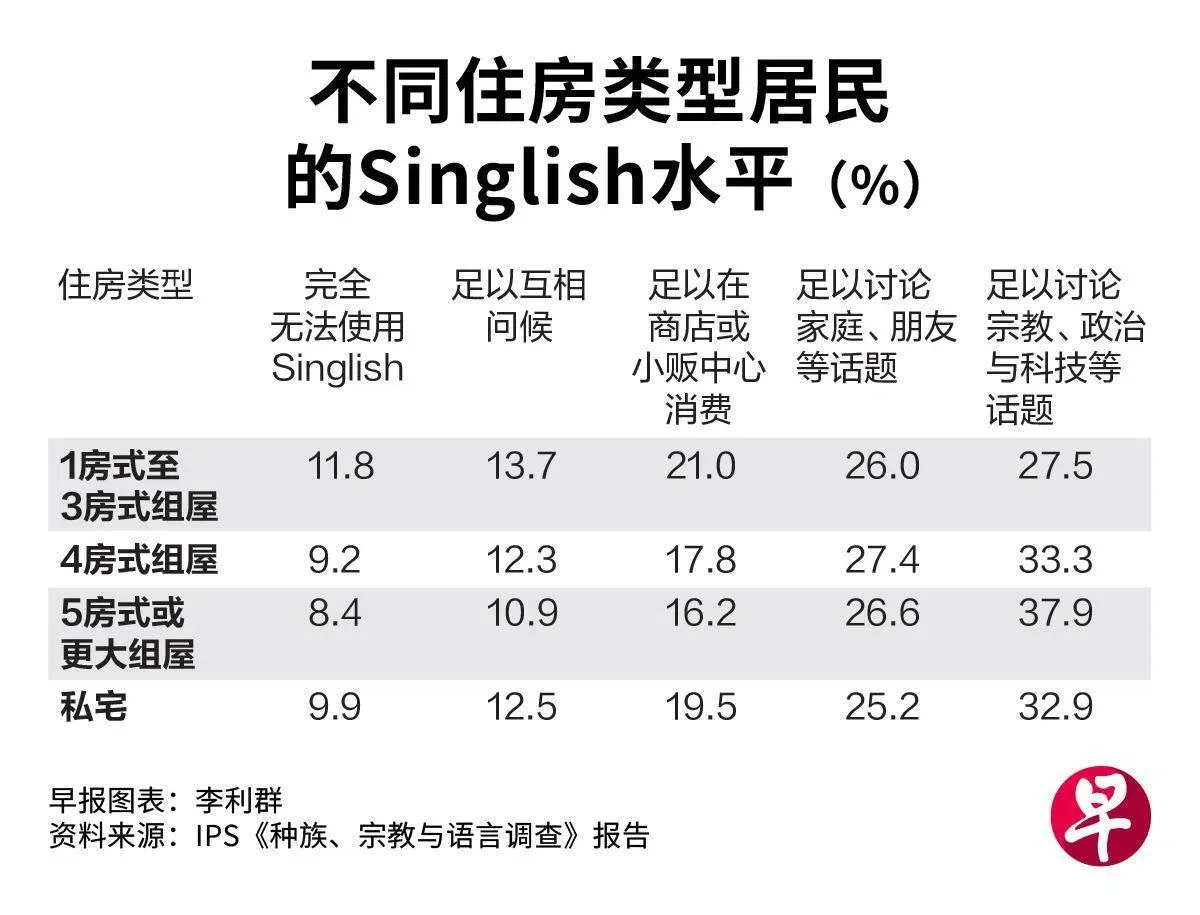
Singlish proficiency also increased over the same period. In 2024, 57.8% reported speaking Singlish "well" or "very well," up from 46.8% in 2013 [1, 3]. The share unable to speak Singlish at all fell to 9.4% in 2024 from 14.5% eleven years earlier [1]. English proficiency rose as well, with 81.5% saying they spoke English "good" or "very good" in 2024, compared with 71.9% in 2013 [1]. Mother tongue language proficiency has remained broadly stable over the years based on self-reports [2, 3].
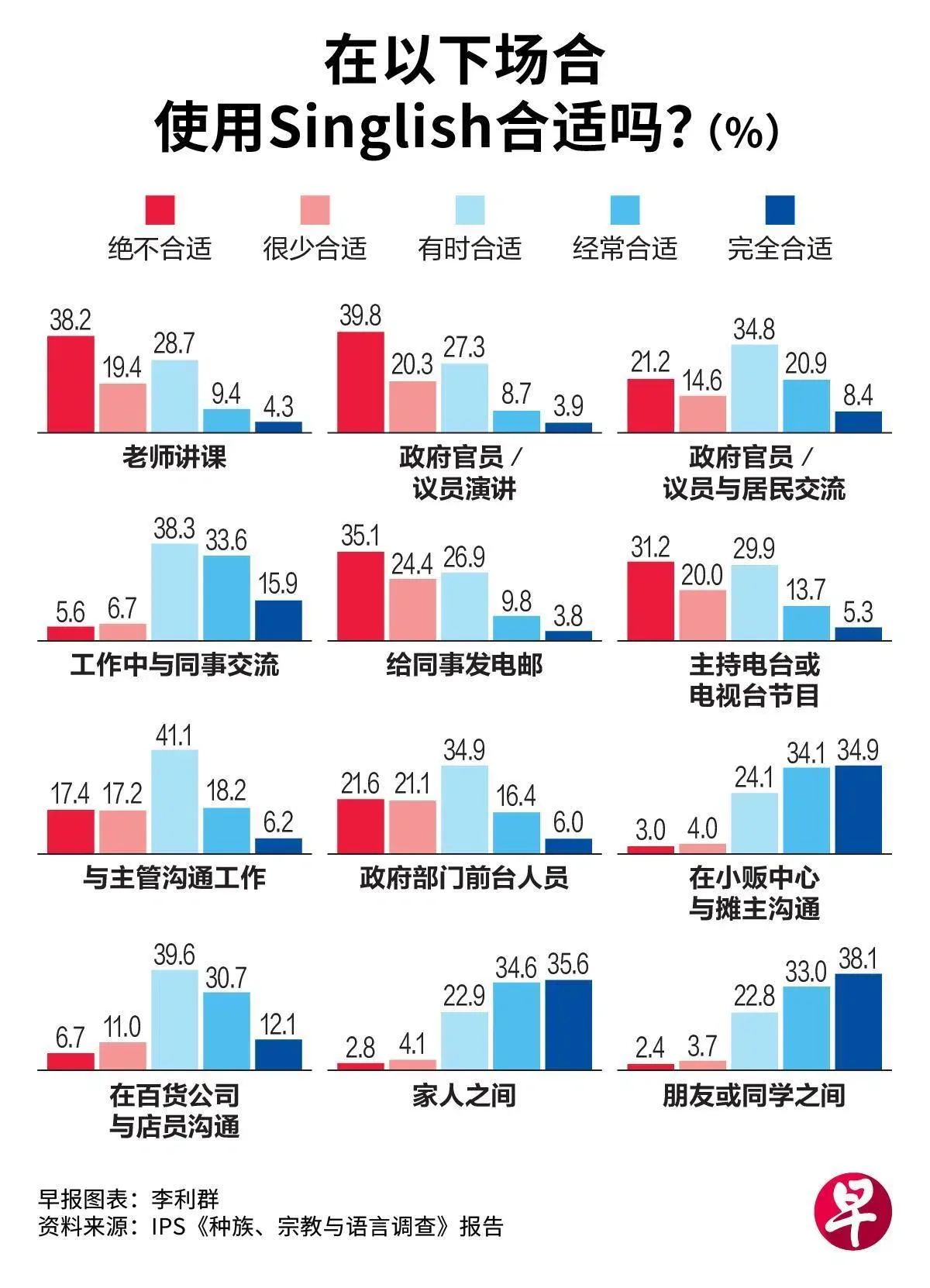
More than half of respondents (57.8%) agreed Singlish gives Singaporeans a sense of identity, compared with about 50% in 2018 [1, 2, 3]. Over half also considered Singlish an important part of local culture that should not be lost [1, 2, 3]. Singhlish is generally accepted as suitable in informal social settings but viewed as inappropriate in formal or professional occasions [1, 3].
Singlish reflects Singapore’s multicultural heritage, incorporating features from multiple languages, said Dr Matthew Mathews. "This is Singapore’s uniqueness, and different ethnic groups all contributed to its formation. The increasing public recognition and emotional connection to Singlish represents an expression of national identity," he said [1]. He added that growing communication and work in English contributed to rising affinity with the language [2].
Singlish use and proficiency are highest among younger Singaporeans and middle-class public housing residents. Lower-income and wealthier groups tend to use it less [1, 3]. Employers' recognition and support motivate people, especially older adults, to improve their English skills [1].
The government launched the Speak Good English Movement in 2000-04 to discourage Singlish use in formal contexts, but Singlish remains a vibrant informal marker of identity [1].
The next comparable survey will clarify if these trends continue beyond 2024.