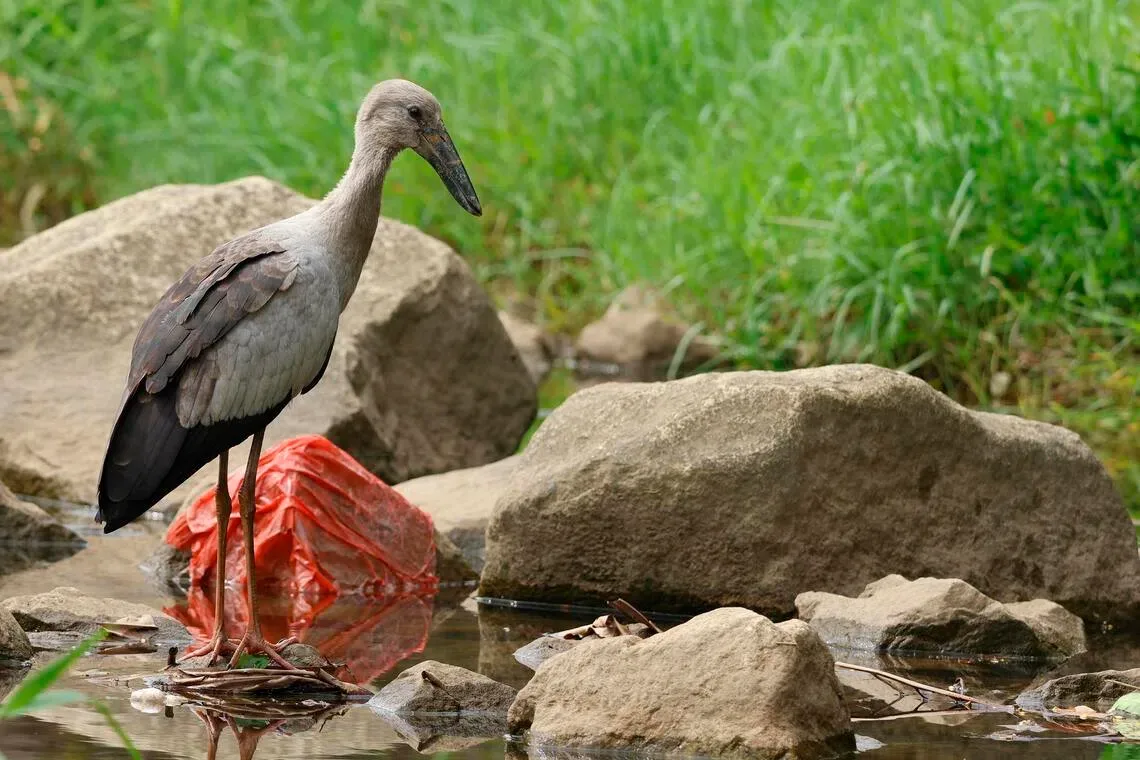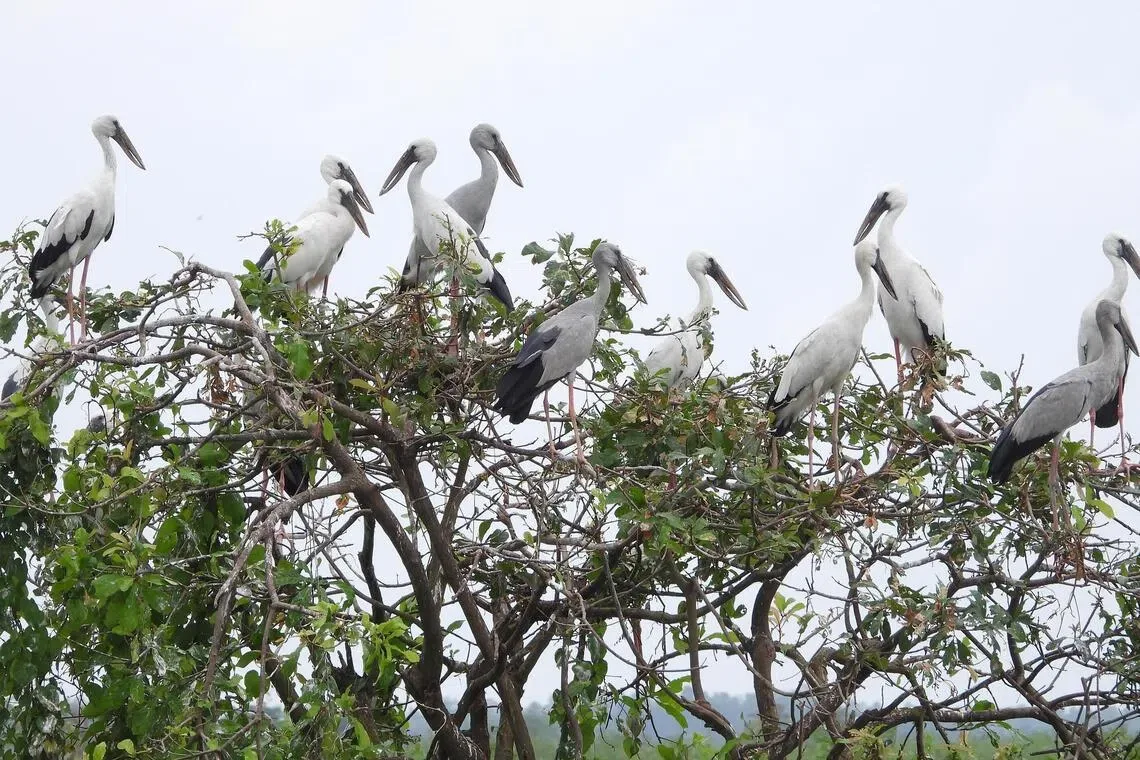
Asian openbill storks (Anastomus oscitans) were first spotted in Singapore in 2013 when six individuals appeared in a flooded field at Seletar [1, 2, 3]. By around 2019, their numbers had grown to hundreds, spreading widely across parks and fields from Lim Chu Kang to Tampines [1, 2, 3]. The birds likely originated from breeding colonies in Penang and Malacca, Malaysia [1, 2, 3].
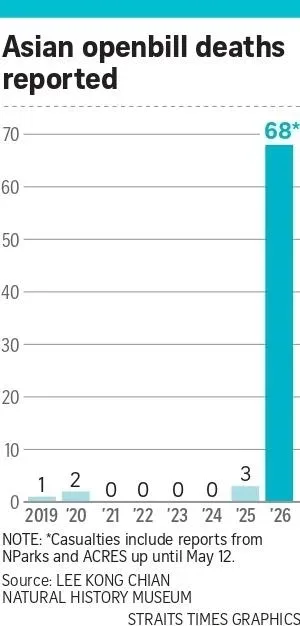
This species is among the fastest-spreading avian migrants in the region. It feeds mainly on snails avoided by other birds and adapts well to freshwater habitats altered by human activity [1, 2, 3]. However, the recent surge has brought fresh challenges. In the first five months of 2026 alone, the number of Asian openbill carcasses reported in Singapore has reached a record high, overwhelming the hotline at the Lee Kong Chian Natural History Museum at the National University of Singapore (NUS) [1, 2, 3].
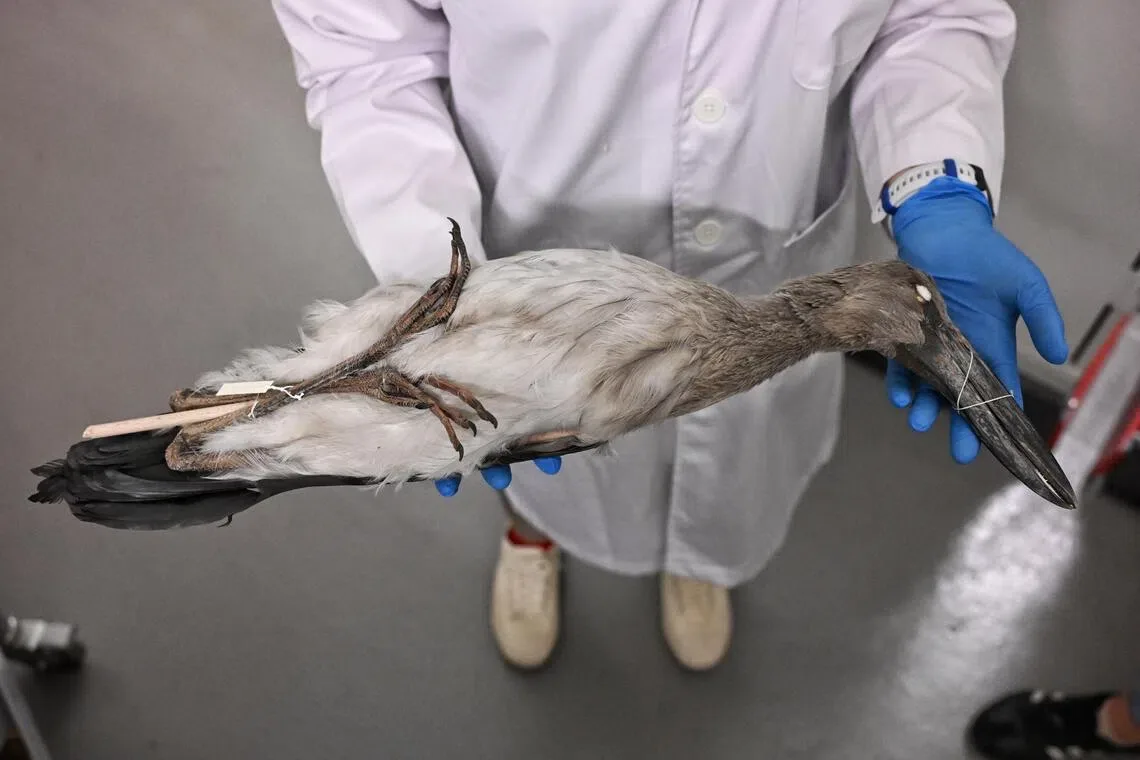
Since January 2026, Dr Tan Yen Yi of the museum has conducted post-mortem examinations on 68 dead Asian openbills reported by the hotline and animal rescue groups [1, 2, 3]. All examined carcasses were juveniles, who face higher vulnerability due to less experience foraging for food [1, 2, 3]. Dr Tan said, "It's really quite scary to see. We are struggling to cope with the storage for these specimens, so I have to pick and choose to get a good representation of the birds coming through Singapore." [1]
This influx has made the Asian openbill the third most common avian migrant carcass reported to the museum since 2020, after blue-winged pitta and yellow-rumped flycatcher [1, 2, 3]. The exact reasons for their spread into Singapore remain unclear. Possible drivers include a highly successful breeding season pushing young birds out, dry spells affecting rice fields, land use changes causing habitat loss, or food scarcity [1, 2, 3].
The museum is currently challenged by the high volume of specimens and must select representative individuals for storage [1, 2, 3]. Authorities and conservationists are tracking the situation as the Asian openbill continues to reshape Singapore's urban wildlife.
The post-mortem work on carcasses will continue through 2026 as the museum collects data to better understand the bird's ecology in Singapore [1, 2, 3].