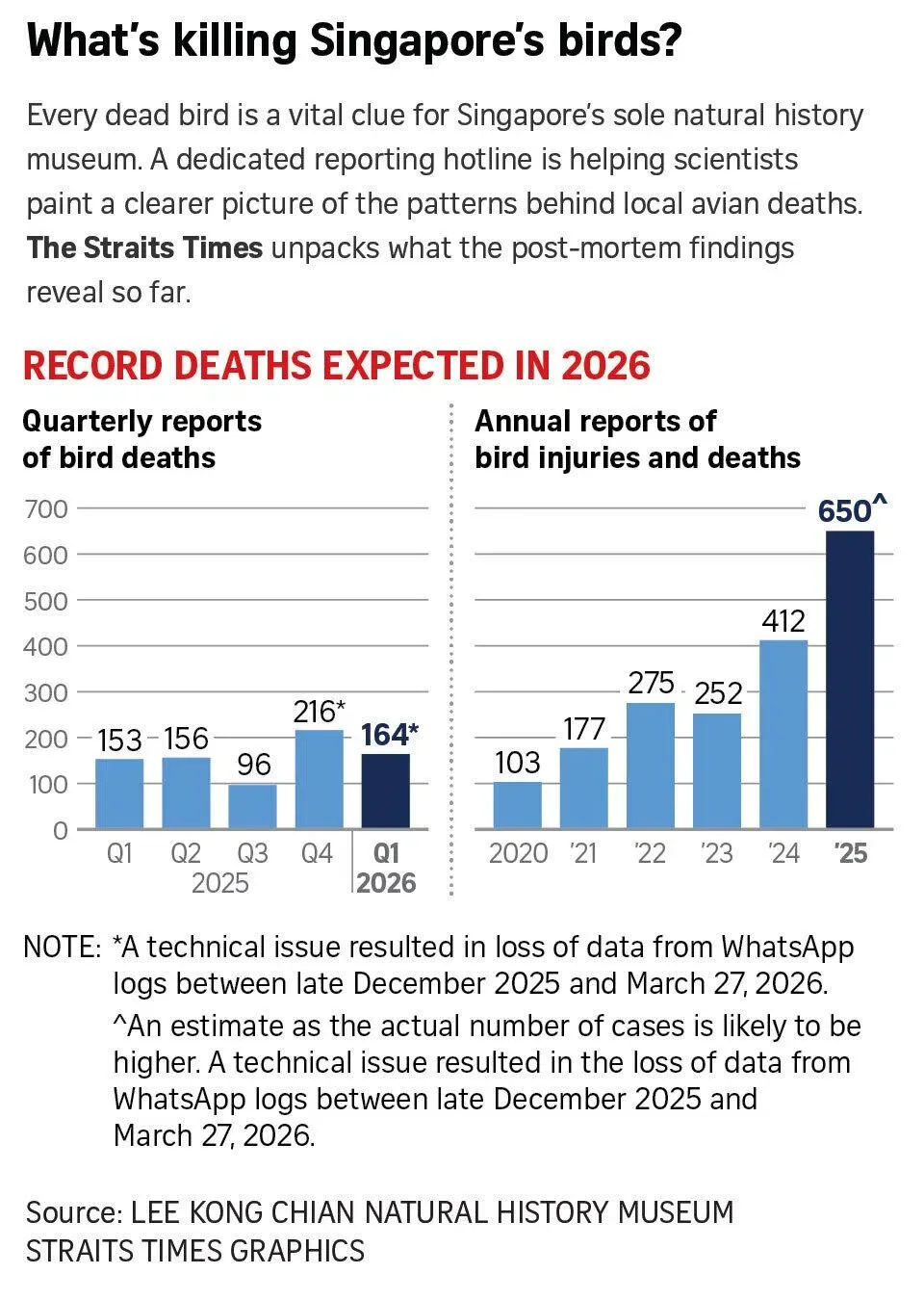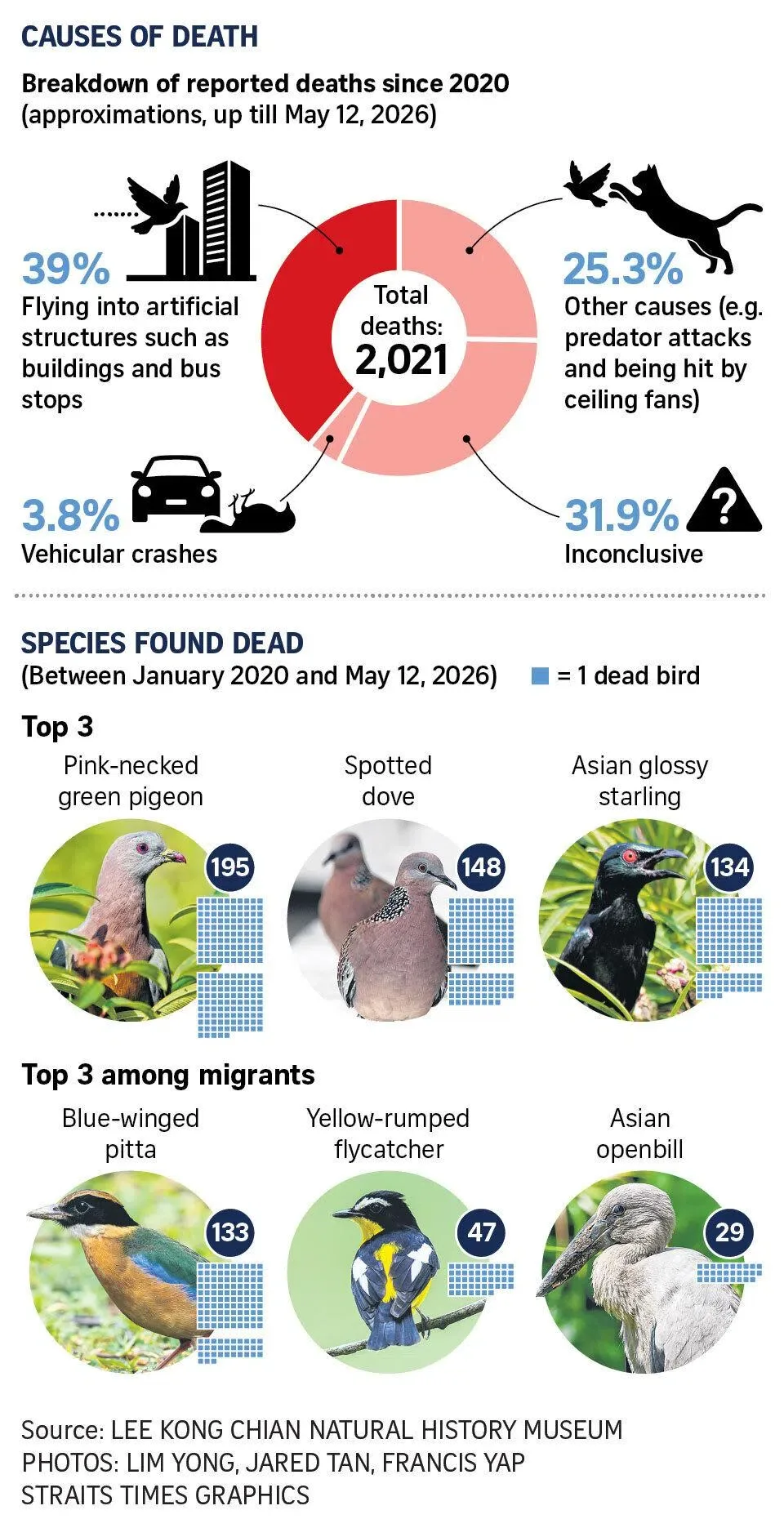
Reported bird injury and death cases in Singapore rose to a record high of about 650 in 2025, driven largely by collisions with man-made structures such as glass buildings and bus stops [1, 2, 3]. The first quarter of 2026 shows trends even higher than last year, on track to surpass the 2025 record. "We are on track to break that record this year, with the first quarter trending higher than in 2025, even though we haven’t even hit our busiest time of the year," said Dr Tan Yen Yi [1].
Singapore is a key stopover point along the East Asian-Australasian Flyway, where migratory bird fatalities peak during the Northern Hemisphere autumn and spring seasons [1, 2, 3]. The increase in bird deaths comes despite ongoing efforts to track and address the issue.
In May 2026, NParks reported that two of four peregrine falcon chicks recently featured in a livestream likely died due to collisions with man-made structures [1, 2, 3]. These losses highlight the continuing risks urban infrastructure poses to local and migratory bird populations.
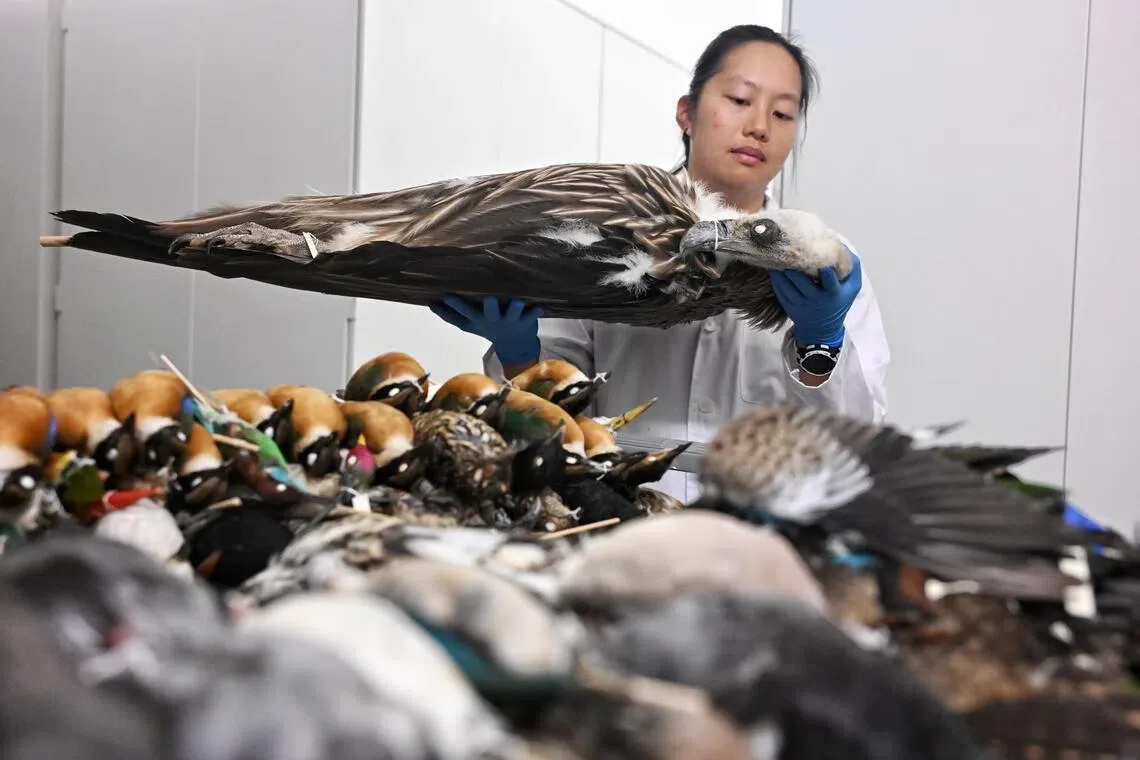
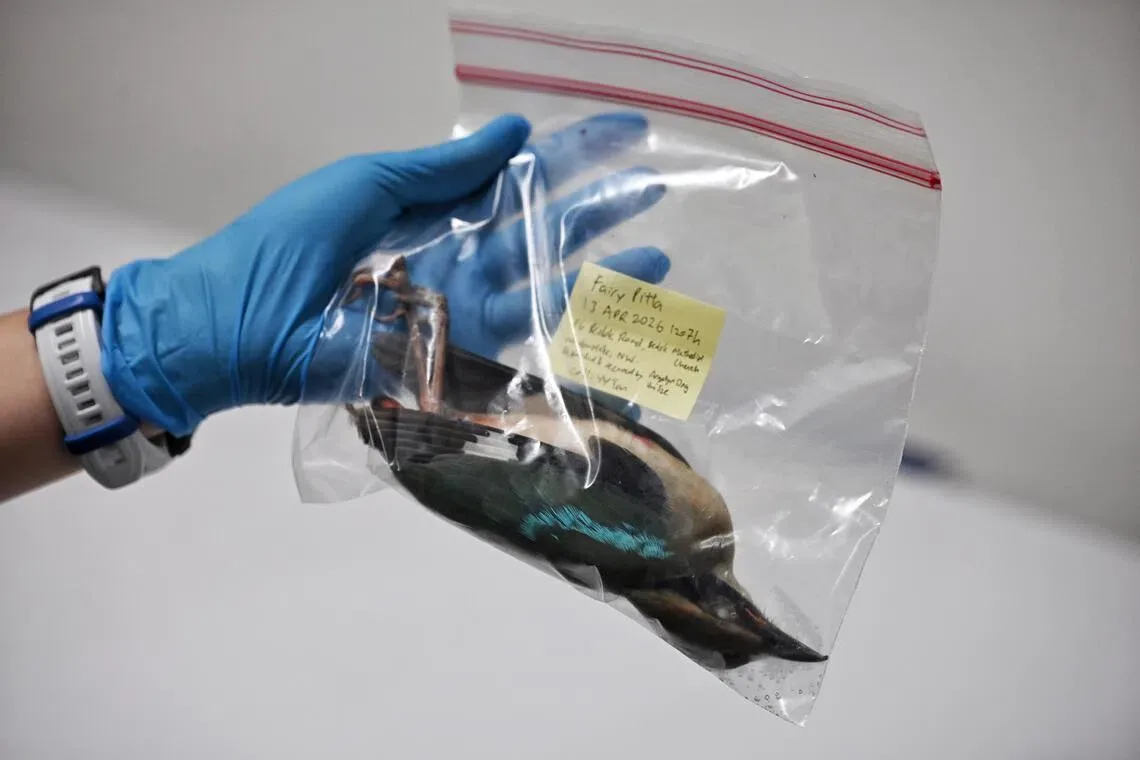
The Dead Bird Hotline, operated by the National University of Singapore’s Lee Kong Chian Natural History Museum, helps with reporting and conducting post-mortem investigations, averaging about an hour per case [1, 2, 3]. Experts emphasize bird-safe practices including making buildings more visible to birds and protecting wetlands to support both environmental and human health [1, 2, 3].
Recorded cases hit a record of about 650 bird injury and death reports in 2025. The first quarter of 2026 has already exceeded the 2025 total in reported fatalities, raising concern for the rest of the year [1, 2, 3].