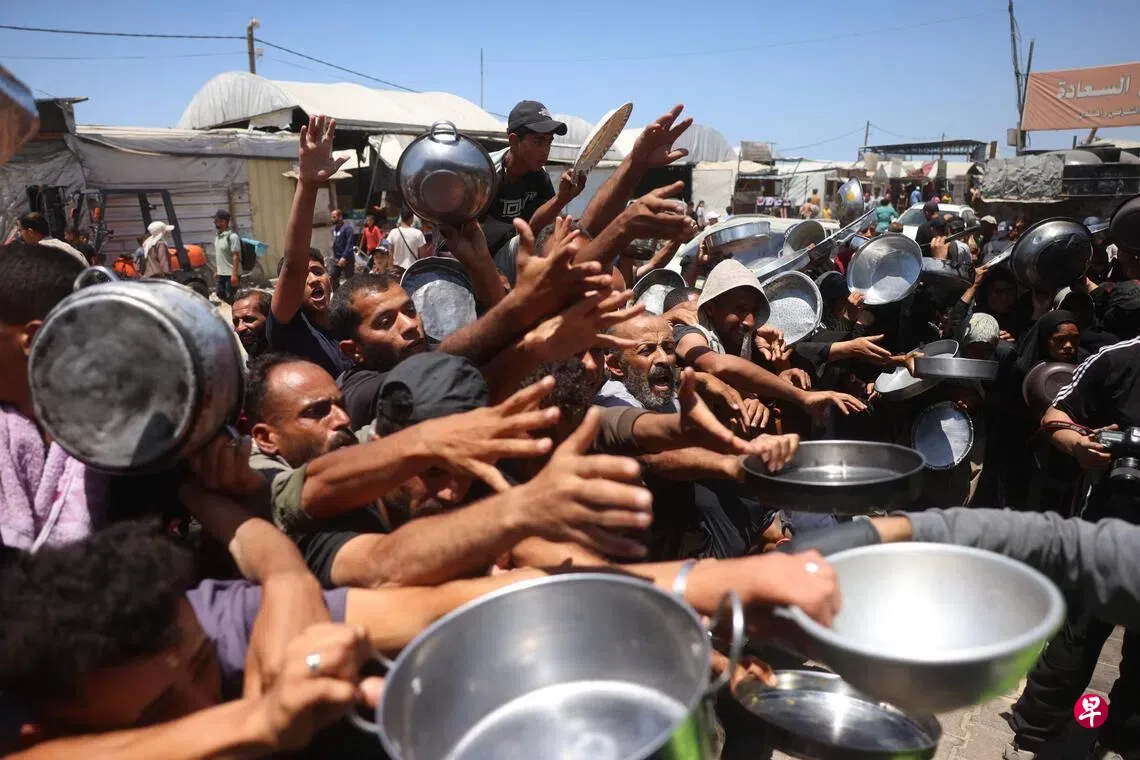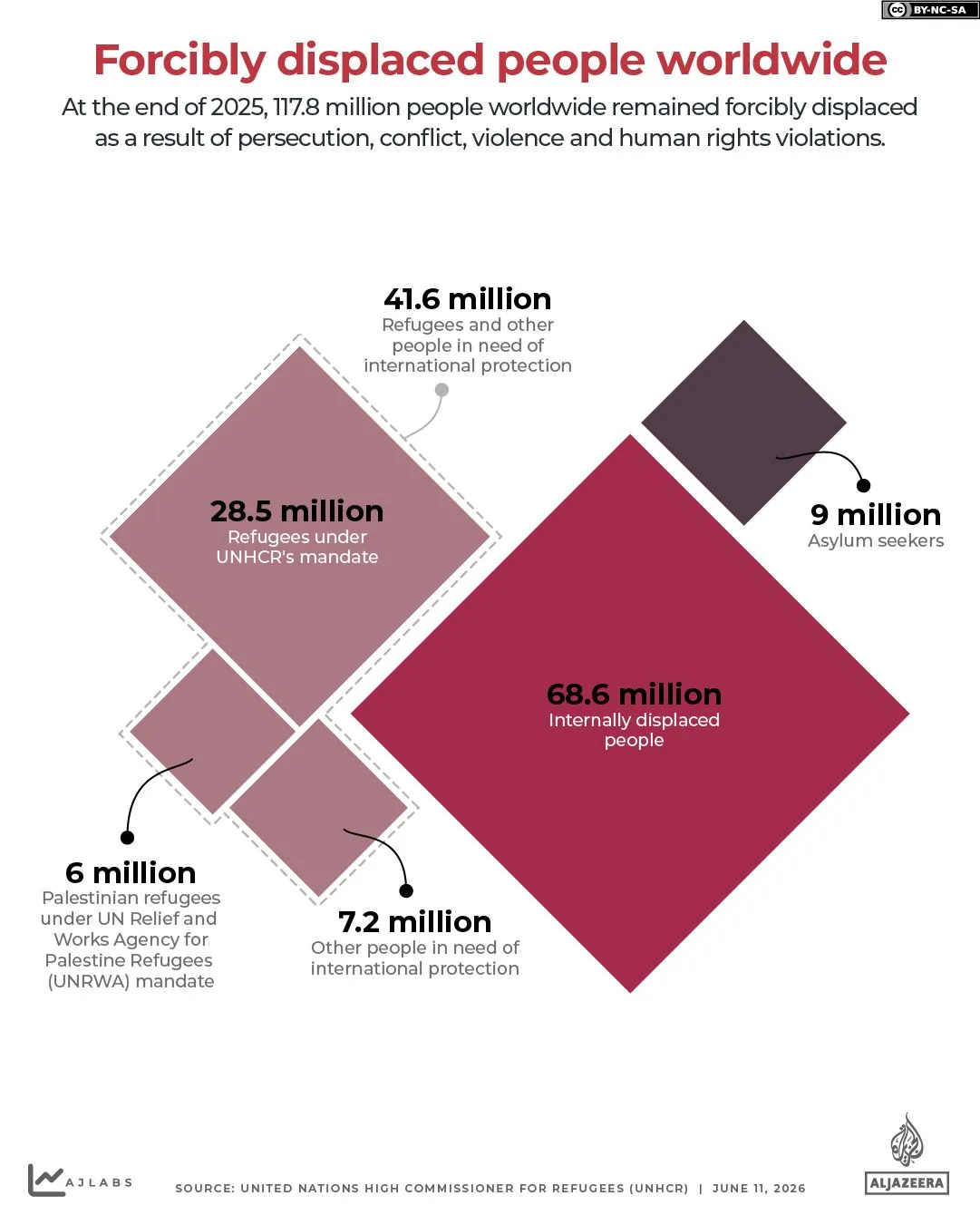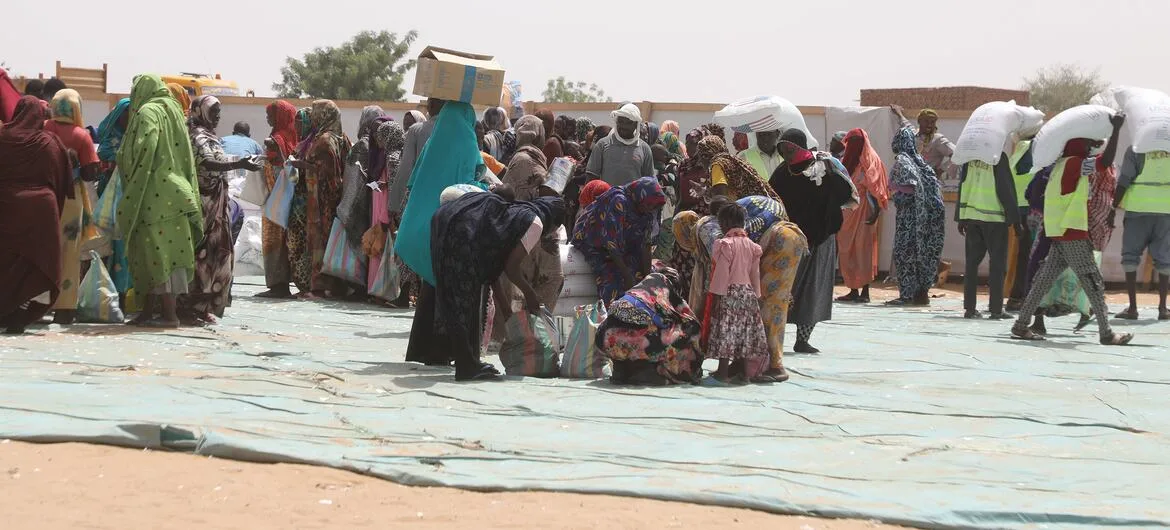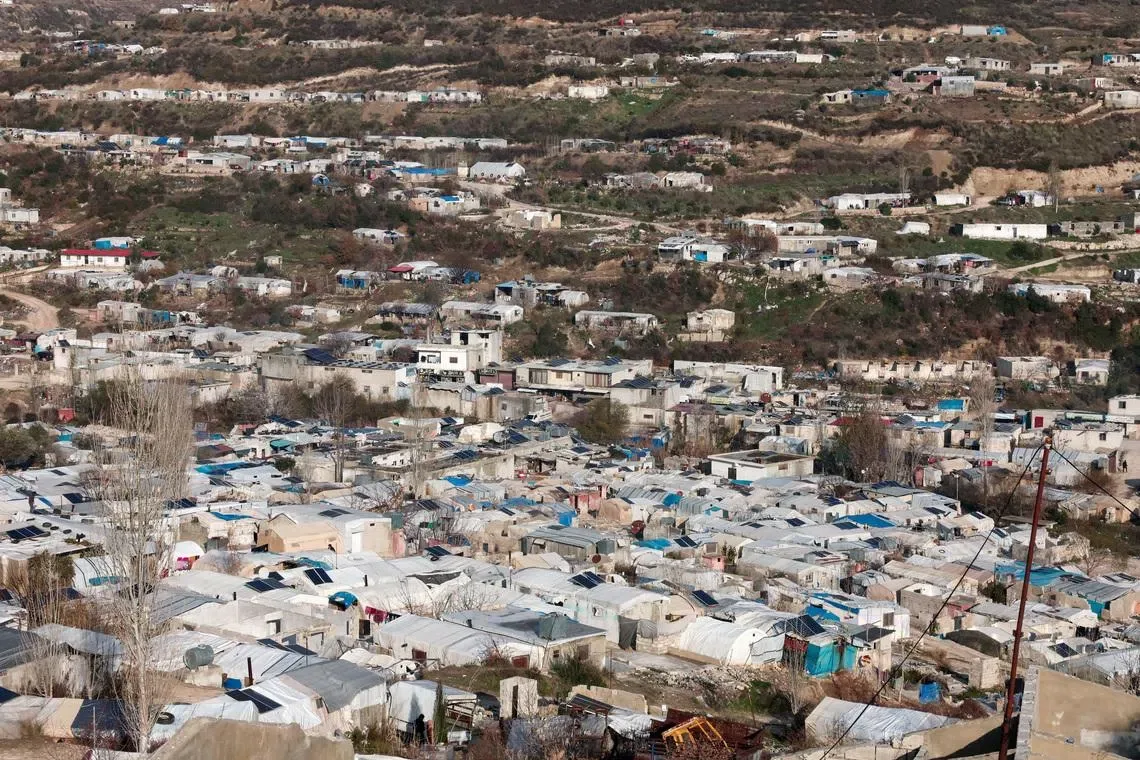
At the end of 2025, about 117.8 million people were forcibly displaced worldwide due to conflict, violence, or persecution, marking the first decline in a decade [1, 2, 3, 4, 5, 6]. The drop of approximately 5.4 million people compared to 2024 reflects significant movements of refugees and internally displaced persons (IDPs) returning home [1, 2, 3, 5, 6].
Of the total displaced, around 41.6 million were refugees, including 6 million Palestinian refugees under UNRWA’s mandate [1, 3, 4, 5]. In 2025 alone, 5.4 million people newly fled their countries, with about 60% coming from Sudan, Ukraine, Syria, Afghanistan, Venezuela, South Sudan, Palestine, and one other nation [1, 4, 5].
The year also saw a record 14.7 million displaced persons return home—the second highest number in six decades—including 4.4 million refugees and 10.3 million IDPs [1, 2, 3, 5, 6]. Largest refugee returns were reported in Afghanistan, Sudan, Syria, the Democratic Republic of the Congo, Ukraine, and Myanmar [1, 2, 3, 6].
Sharp declines in refugee numbers were recorded for Afghanistan, falling from 5.8 million in 2024 to 3.7 million in 2025, largely due to stricter policies in Iran and Pakistan forcing returns [1, 3, 4, 6]. Syrian refugees also fell from 6 million to 4.9 million after the fall of Bashar al-Assad's government in December 2024 and increased returns [1, 3, 4, 6].
Many returnees face serious challenges. Barham Salih, UNHCR High Commissioner, noted, "Many returnees face serious challenges, including insecurity, widespread destruction, weak economic conditions, limited services and jobs, and continued sporadic violence in parts of the country" [1]. He warned in another statement that "Unsafe returns are not a solution and could trigger new waves of displacement" [2].
The number of people displaced inside countries by conflict or violence reached about 68.6 million in 2025, with Sudan experiencing the largest IDP crisis at 9.1 million [3, 4].
Refugee resettlement opportunities dropped sharply in 2025 to about 81,800 places worldwide, down from 188,800 in 2024 due primarily to reduced admissions in the United States [2, 3, 5, 6]. Roughly 70% of refugees live in long-term displacement, often below the poverty line and reliant on humanitarian aid [3, 6]. Colombia, Germany, Turkey, Uganda, Iran, Chad, and Pakistan remain top refugee-hosting nations [4].
In early 2026, displacement increased again in the Middle East as US and Israeli strikes displaced 3.2 million in Iran since February and over 1 million were displaced in Lebanon since March amid ongoing conflict [1, 2, 3, 4, 7, 5, 6]. As of mid-May 2026, these conflicts continue to drive displacement in those countries [3, 4, 7].