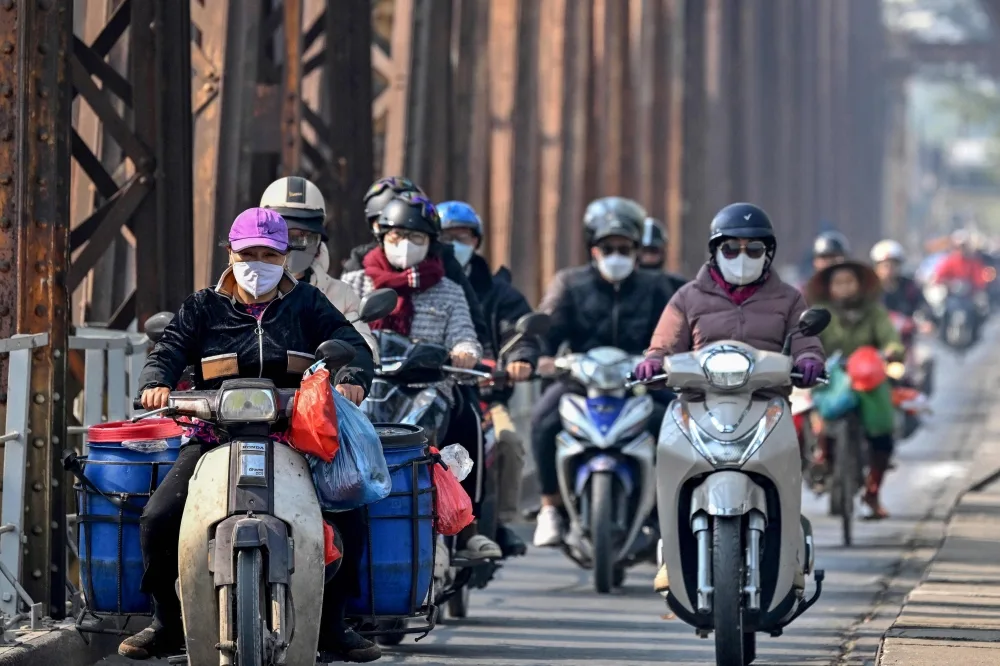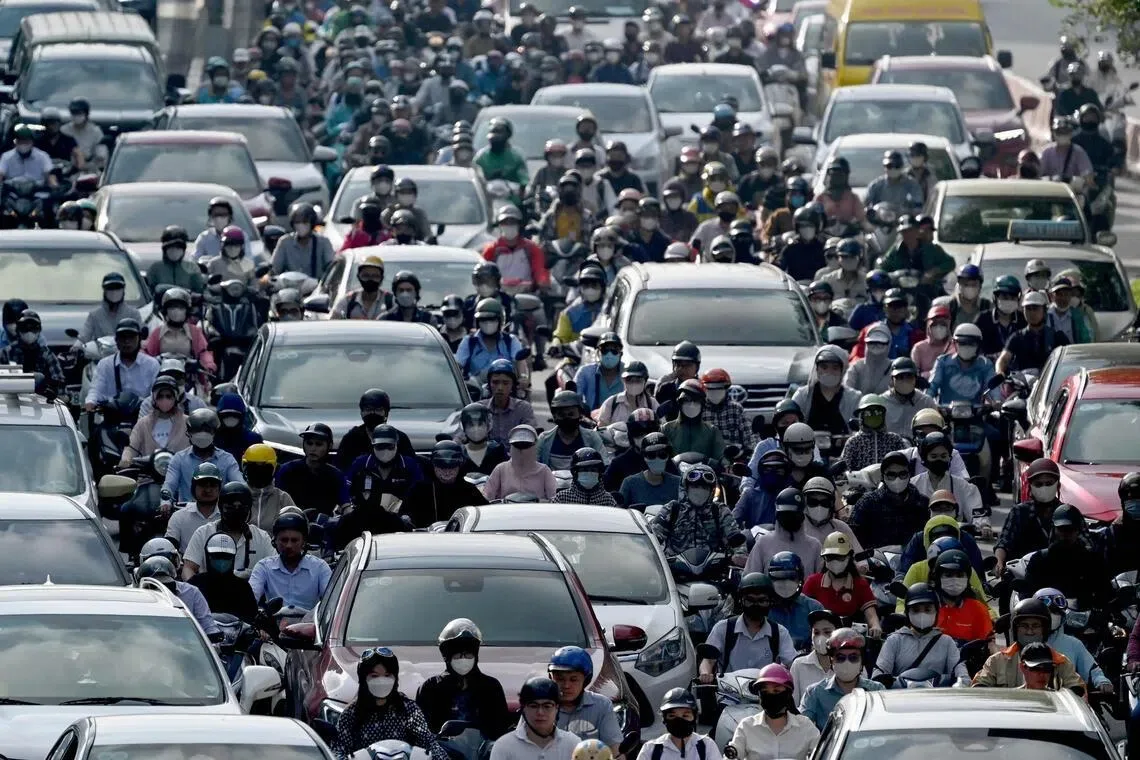
Vietnam's Communist government announced in 2025 a plan to ban petrol motorbikes from a 26 square kilometer area in Hanoi's historic center to reduce pollution and air emissions [1, 2]. The original ban aimed to tackle vehicular emissions, which contribute to over half of Hanoi's pollution, with the city often suffering some of the worst air quality globally [1, 2].
Nearly seven million motorbikes are used in Hanoi, outnumbering cars by about seven to one. Much of the population relies on two-wheelers due to limited public transport and affordability issues [1, 2]. This heavy dependence made the ban deeply unpopular, with residents voicing strong opposition. Phuong Anh Nguyen said, "I think almost everyone opposes the ban" citing concerns over electric vehicle maintenance and risks [1, 2].
As a result, the government scaled the ban back to cover only 11 streets over 0.5 square kilometers in the historic center [1, 2]. The reduced "low-emission zone" would restrict petrol motorbikes only during Friday evenings and some weekend periods, instead of a full-time ban [1, 2].
City officials postponed approval of the scaled-back ban from May to June 2026, casting doubt on the planned July 1 implementation date [1, 2]. Nguyen Khac Giang, a Vietnam analyst, noted, "The government tends to back down when their legitimacy is threatened... and I think that is what drives the loosening of the petrol bike ban regulations" [1].
The government plans to encourage gradual electric vehicle adoption. Ho Chi Minh City has announced a slower phase-out of petrol motorbikes as well [1, 2]. However, difficulties building a sufficient charging infrastructure and the strong reliance on motorbikes complicate efforts.
The delayed decision and reduced scope mark a significant retreat for Hanoi's ambitious pollution control plan. Officials continue to weigh public acceptance and practical infrastructure readiness as they move closer to a final decision in June.