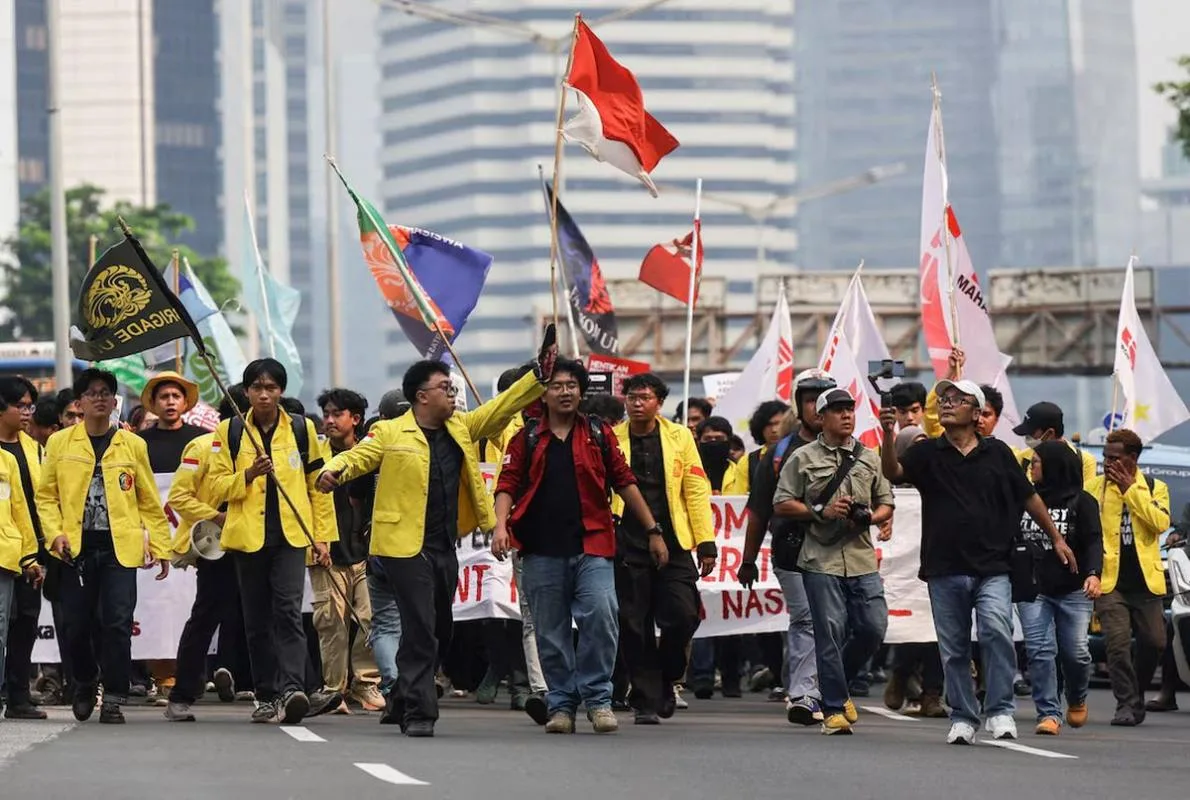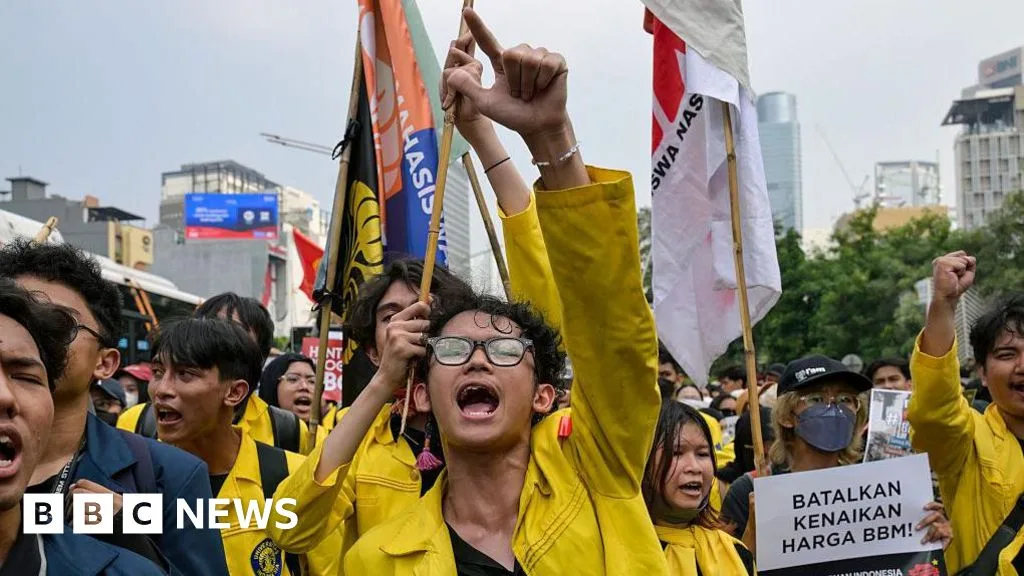
Hundreds of Indonesian students gathered in Jakarta on June 12 to protest against President Prabowo Subianto’s government policies, targeting recent fuel price hikes and what they called wasteful state spending [1, 2, 3]. The demonstration, named "Heading to Bankrupt Indonesia," challenged the government’s flagship programmes, including free meals for children and village cooperatives, alongside the increase in fuel and staple food prices [2, 3].
Earlier this month, state-run Pertamina raised Pertamax fuel prices by more than 30%, ending a long-standing policy of stable fuel costs despite global oil price spikes caused by the Iran war [1, 2, 3]. Students carried signs demanding cancellations of both the free meals and village cooperatives programmes, saying these drain public funds while pushing prices higher [2, 3].
The free meals programme, a central part of Prabowo’s agenda, costs about $28 billion annually and aims to improve child nutrition and education [1, 2]. However, it has faced sharp criticism from protesters and activists for repeated mass food poisonings, corruption, and inefficiency. Rina, a university student, said, "There have been incidents like mass food poisoning, and now corruption. The public has been calling for it to stop, but those demands have been ignored" [1].
Student leader Yatalathof Ma’shum Imawan said, "We want to show that things are not okay. We don’t want Indonesia to truly go bankrupt, but these behaviours prove that Indonesia will go bankrupt economically, democratically, and morally" [2]. Protesters also voiced concerns about the growing role of the military in civilian affairs under Prabowo, fearing a return to authoritarian rule reminiscent of the Suharto era [2, 3].
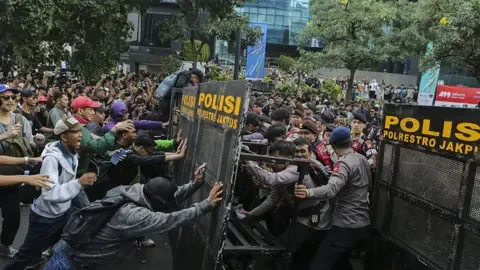
The protests escalated when police and military forces blocked the students from reaching the central Bundaran HI (Hotel Indonesia roundabout) area, leading to scuffles and attempts by protesters to push through barricades [1, 2, 3]. Authorities reported no immediate injuries during the protests [1].
Government spokesman Muhammad Qodari described the protests as democratic and said the administration is listening to public opinion. He added that the government has cut extraneous spending and asserted the free meals programme was designed to safeguard public health [3].
The demonstrations on June 12 follow the fuel price increase earlier this month and reflect ongoing public discontent. No further protests have been scheduled as of now [1, 2, 3].