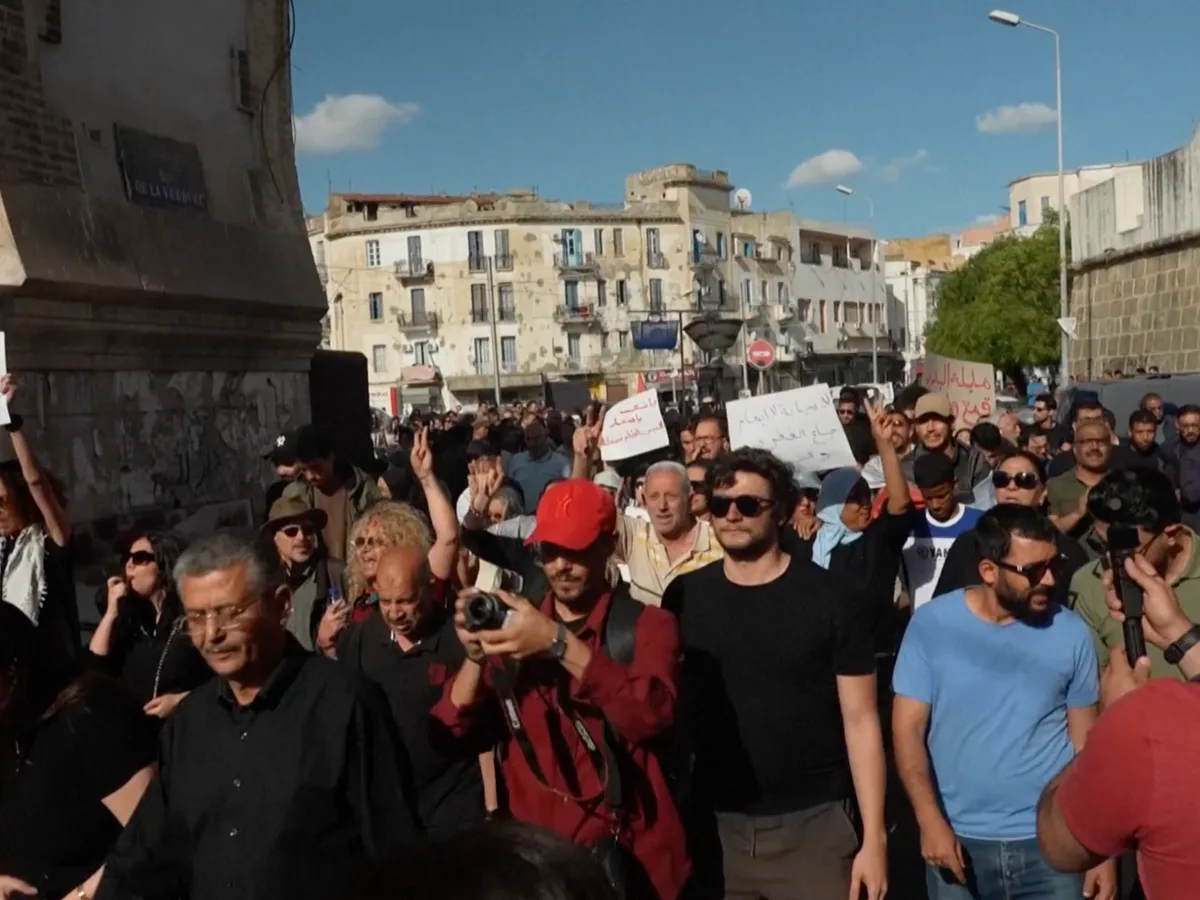
Hundreds of Tunisians gathered in the capital Tunis on May 16 to protest President Kais Saied’s government, accusing him of undermining freedoms and worsening the country’s economic and social crisis [1, 2]. Protesters called for an end to Saied’s one-man rule and condemned the arrests of politicians, journalists, and civil society members amid a crackdown on dissent [1].
Tunisia faces severe economic strain, including sluggish growth, soaring prices, shortages of medicine and some food, financing pressures, and deteriorating public services, fueling public discontent [1]. Since dissolving parliament in 2022 and ruling by decree, Saied has faced mounting criticism from rights groups for dismantling Tunisia’s post-2011 democratic system [1]. Protesters said he was eroding the achievements of the Tunisian revolution that began over a decade ago [2].
Saied rejects accusations of political repression, asserting that his measures are necessary to save Tunisia from chaos and corruption [1]. Authorities maintain they are enforcing the law and deny claims of targeting political opponents [1]. Meanwhile, the Tunisian bar association has called for strikes over what it describes as erosion of judicial independence, while the journalists’ union plans protests against press restrictions and jailing of journalists [1].
On May 16 and 17, marches in Tunis denounced both the economic crisis and the government crackdown on dissent, bringing hundreds onto the streets [1, 2]. The protests highlight growing frustration with the political and economic direction under Saied. The government has not publicly responded to the rallies.
The demonstrations came nearly four years after Saied dissolved parliament and began ruling by decree in 2022, a move that dramatically shifted Tunisia’s trajectory [1]. Activists say further protests and strikes are planned in response to the continued crackdown on freedoms and worsening economic conditions.