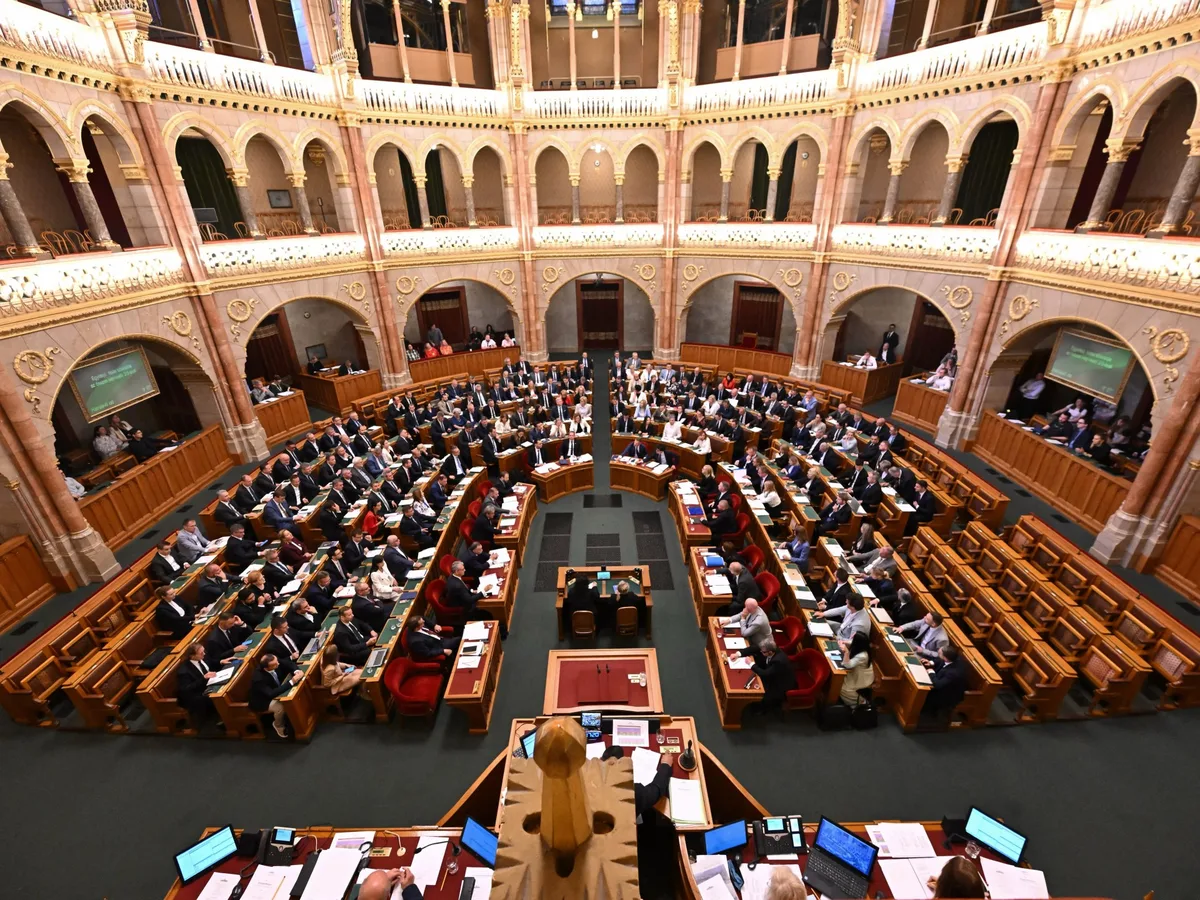
Hungarian lawmakers passed a constitutional amendment on June 15, 2026, that limits prime ministers to a maximum of eight years in office, effectively preventing former prime minister Viktor Orban from regaining power after 16 years at the helm [1, 2, 3]. The vote saw either 135 or 150 members supporting the amendment, with 50 opposing and 6 abstaining, according to differing sources [1, 2, 3].
The amendment applies retroactively to all prime ministerial terms held since May 2, 1990, and requires officeholders to step down after two terms or eight years total [1, 2]. It was introduced following Orban’s defeat in April 2026 elections, when Peter Magyar’s party won a two-thirds parliamentary majority and ended Orban’s 16-year rule [1, 2, 3].
Alongside term limits, the amendment dissolves the Sovereignty Protection Office, a body created in 2023 under Orban to "safeguard" Hungary’s constitutional identity but widely used to investigate government critics and journalists [1, 3]. The office’s abolition is expected to be finalized by a parliamentary vote at the end of June 2026 [3].
The constitutional change also returns control of public-interest asset-management foundations to the state. These foundations, formed under Orban, hold hundreds of billions of forints in state assets and have been a significant source of government influence [1].
Despite losing the prime ministership, Orban was re-elected leader of the Fidesz party in June 2026. He said after the vote, "The Orban law has been passed. That was the most pressing issue… If I’m needed, I’ll be here" [3].
The parliamentary vote marks a clear legal block on Orban’s return as prime minister. Peter Magyar’s government will now oversee the transition of control over state-related foundations and dismantle the Sovereignty Protection Office, with a follow-up vote on the latter expected later this month [3].