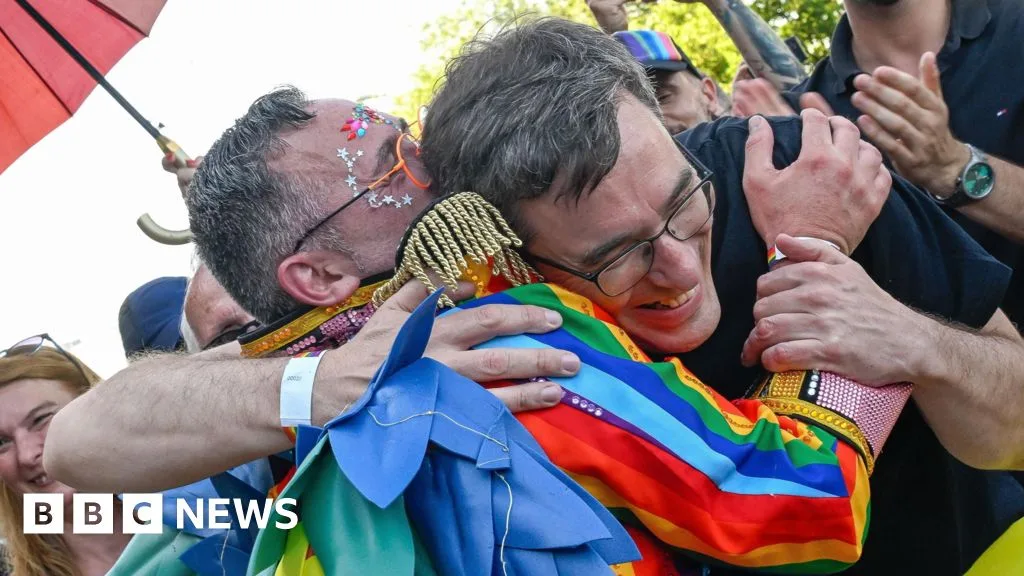
Hungarian prosecutors dropped charges against Budapest Mayor Gergely Karacsony related to organising the June 2025 Pride march, citing a recent European Court of Justice ruling [1, 2].
Karacsony faced charges since January 2025 for organising a banned assembly tied to the Pride event, which defied a police ban and government opposition [1, 2]. The 2025 march drew a reported record crowd of 200,000 people and was registered by Karacsony as a municipal event to circumvent the ban [1, 2]. Karacsony declared, "Neither freedom nor love can be banned in Budapest," expressing defiance amid the controversy [1].
The march also became a mass anti-government demonstration against former Prime Minister Viktor Orban, whose administration enacted Hungary's anti-LGBTQ "child protection" law in 2021 [2]. That law banned the promotion of homosexuality or gender change to minors and formed the legal basis for prohibiting the Pride march [1, 2].
In late April 2026, the European Court of Justice ruled the law unlawful and in violation of EU fundamental rights and values, a decision that directly impacted Karacsony's case [1, 2]. Orban had been ousted in a national election on April 12, 2026, after 16 years in power, shifting Hungary's political landscape [2].
Following the ruling and political changes, prosecutors withdrew the charges against Karacsony on August 25, 2026 [1, 2]. The dismissal marks a concrete legal outcome connected to the EU court’s December judgment and the political turnover in Hungary.