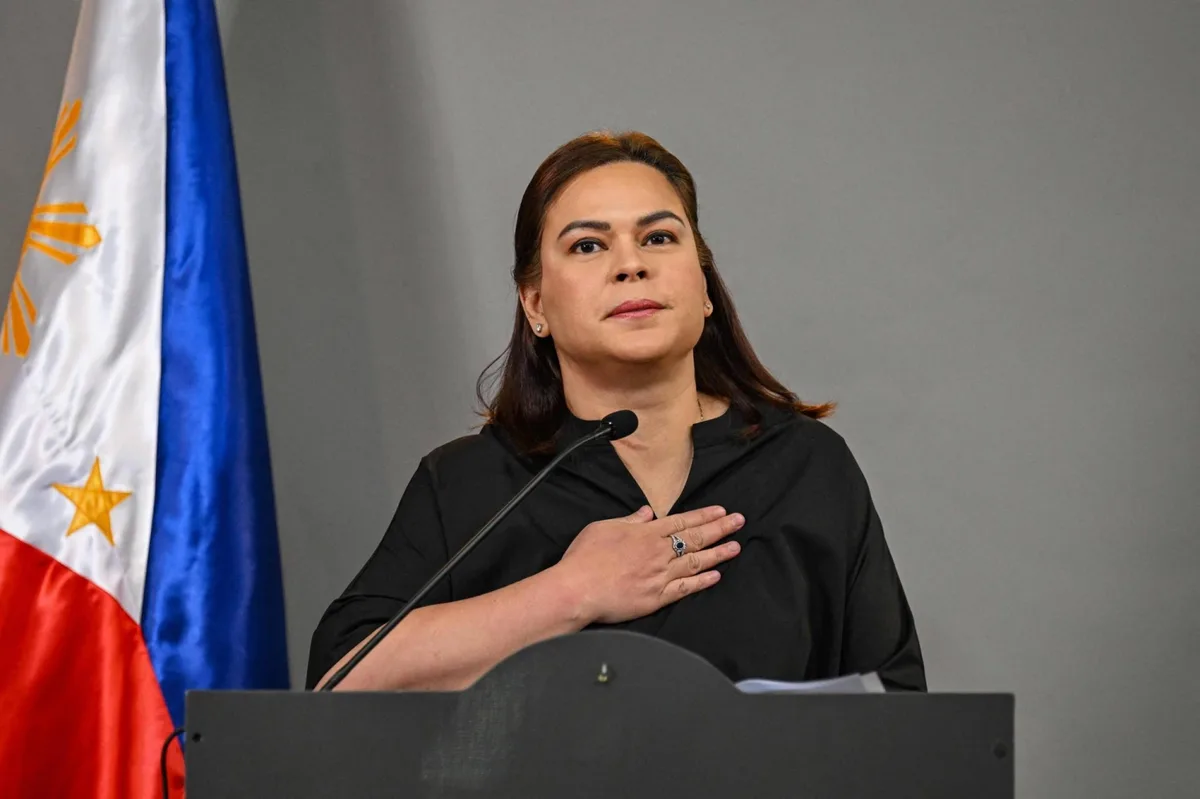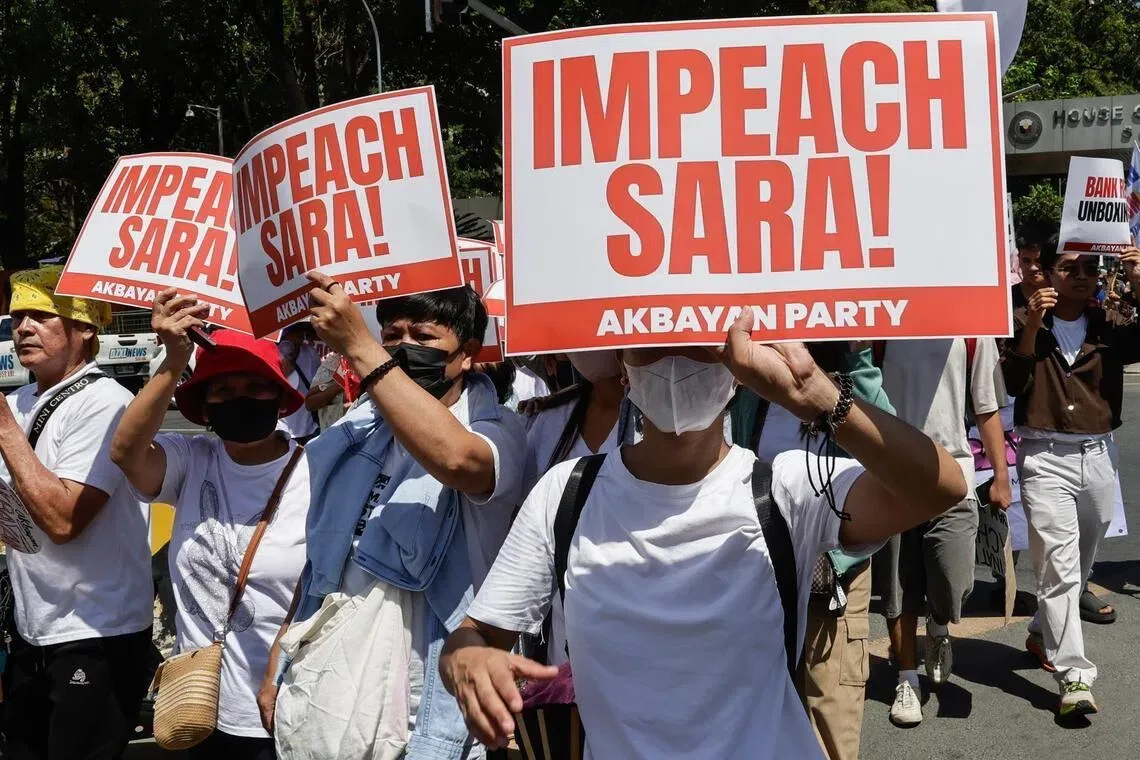
The impeachment trial of Philippine Vice-President Sara Duterte began its trial phase on May 18, 2026, when the Senate convened an impeachment court of 24 members to hear allegations against her [1, 2, 3]. The charges include misuse of funds and unexplained wealth, which Duterte denies [1, 2, 3].
Sara Duterte was impeached by the House of Representatives, which is dominated by allies of President Ferdinand Marcos Jr. [1, 2, 3]. The impeachment has deepened the bitter political feud between Marcos and Duterte, who is seen as a leading contender to succeed Marcos in the 2028 presidential election [1, 2].
The Senate requires a two-thirds majority vote to convict Duterte, a threshold she is expected to overcome, likely leading to her acquittal [1, 2, 3]. Business and civil society groups, including the Management Association of the Philippines, have urged for a politically impartial trial to uphold the rule of law and maintain investor confidence. In a joint statement, they warned that "when the rule of law appears subordinate to political interests, investor confidence and institutional credibility suffer" [1, 2].
The impeachment drama unfolds against a backdrop of rising political turmoil and economic strain in the Philippines. The economy is weakened by concerns of stagflation partly caused by an energy crisis stemming from the Iran war that began in late February 2026 [1, 2]. Despite this, the peso and stock market benchmarks have mostly ignored the political noise but remain among Asia's worst performers since the outbreak of the conflict [1, 2].
Ruben Carlo Asuncion, chief economist at Union Bank of the Philippines, said, "The impeachment saga is not yet a macro story, but is already a confidence and volatility story. The bigger risk sits in governance: prolonged proceedings can distract policymakers and slow progress on priority reforms, creating a drag on sentiment" [2].
The Marcos administration has seen its investor confidence and political capital for reforms weakened by ongoing corruption scandals and political instability [1, 2]. The Senate trial continues as a critical next step in the impeachment process, with outcomes expected to influence both political alliances and economic outlook in the coming months [1, 2, 3].