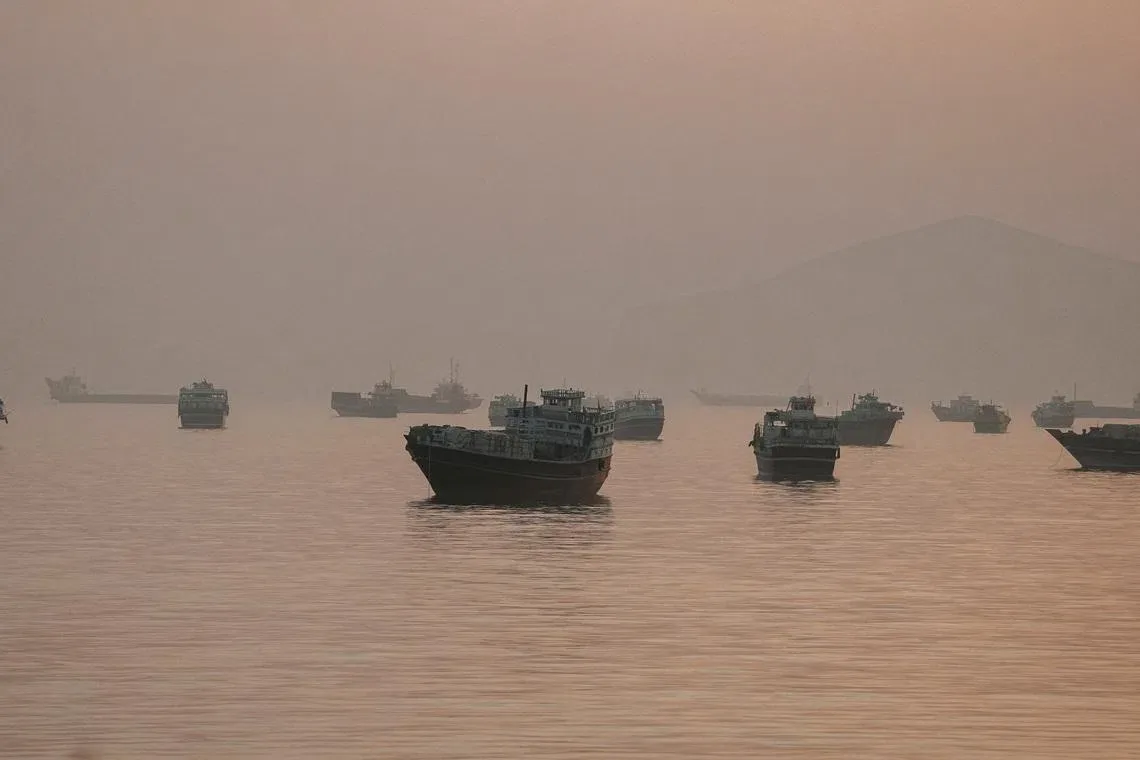
Iran's Revolutionary Guards launched at least two missiles at commercial ships transiting the Strait of Hormuz on the night of July 6, 2026, damaging two vessels, according to multiple sources [1, 2, 3].
One tanker, believed to be Al Rekayyat, a liquefied natural gas carrier managed by Qatar's Nakilat, was struck about 8 nautical miles (15 kilometers) east of Oman's Limah as it traveled southbound [1, 2]. The missile hit the port side of the tanker, causing a fire at the top of the engine room. Despite the blaze, all crew were reported safe and gathered on the starboard side, and no casualties were reported [1, 2]. A Wall Street Journal report cited by one source described the engine room fire as "full of smoke" but noted an inability to assess further damage [1].
The second vessel also suffered significant damage but no casualties have been reported from the attack [1, 2]. No environmental impact was reported following the missile strikes [1, 2, 3].
According to Iranian Revolutionary Guard warnings broadcast over maritime radio the weekend before the attack, "Our missiles and drones are ready to fire at you," signaling heightened tensions in the area [1, 2]. The attacks occurred shortly after indirect U.S.-Iran talks ended in late June without any progress toward peace during a 60-day ceasefire period [1, 2].
In response to the incidents, the UK Maritime Trade Operations agency (UKMTO) issued an immediate advisory for vessels to exercise caution when transiting the Strait of Hormuz, a critical global shipping chokepoint [3].
U.S. officials have indicated that retaliation against Iranian targets is likely following the missile attacks, signaling potential further escalation in the region [3].
The situation remains tense as international maritime traffic faces risks in the Strait of Hormuz. Further developments and any responses from regional or global actors are expected to unfold in the coming days.