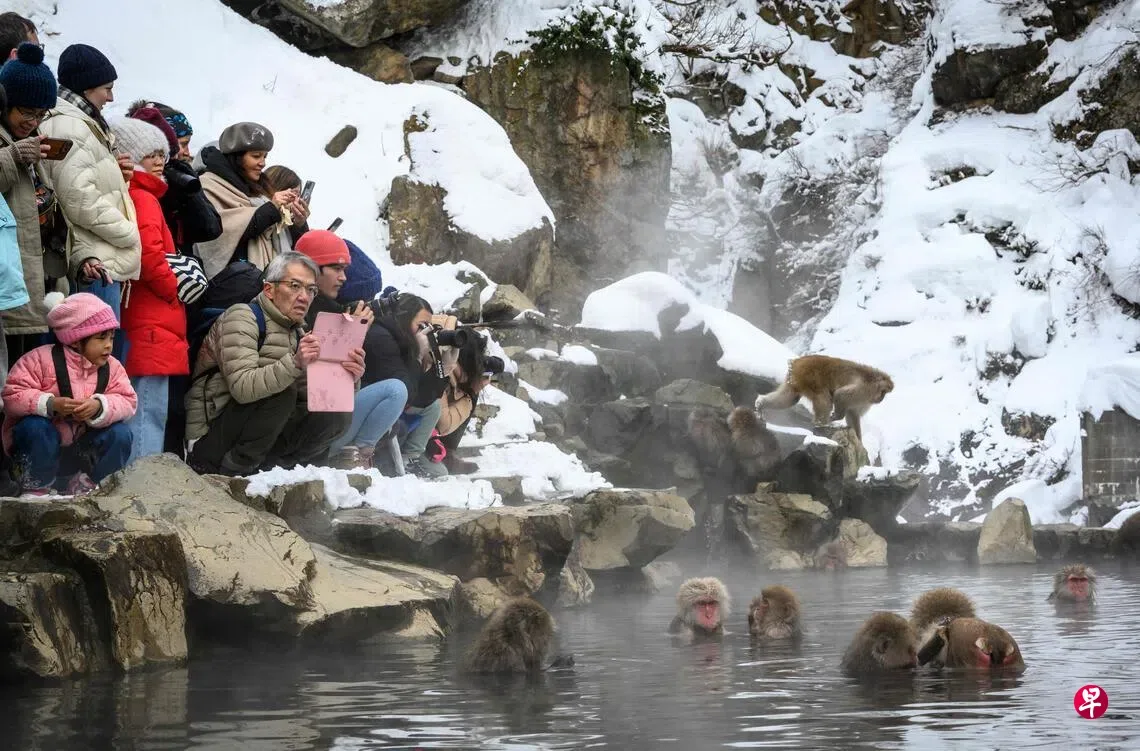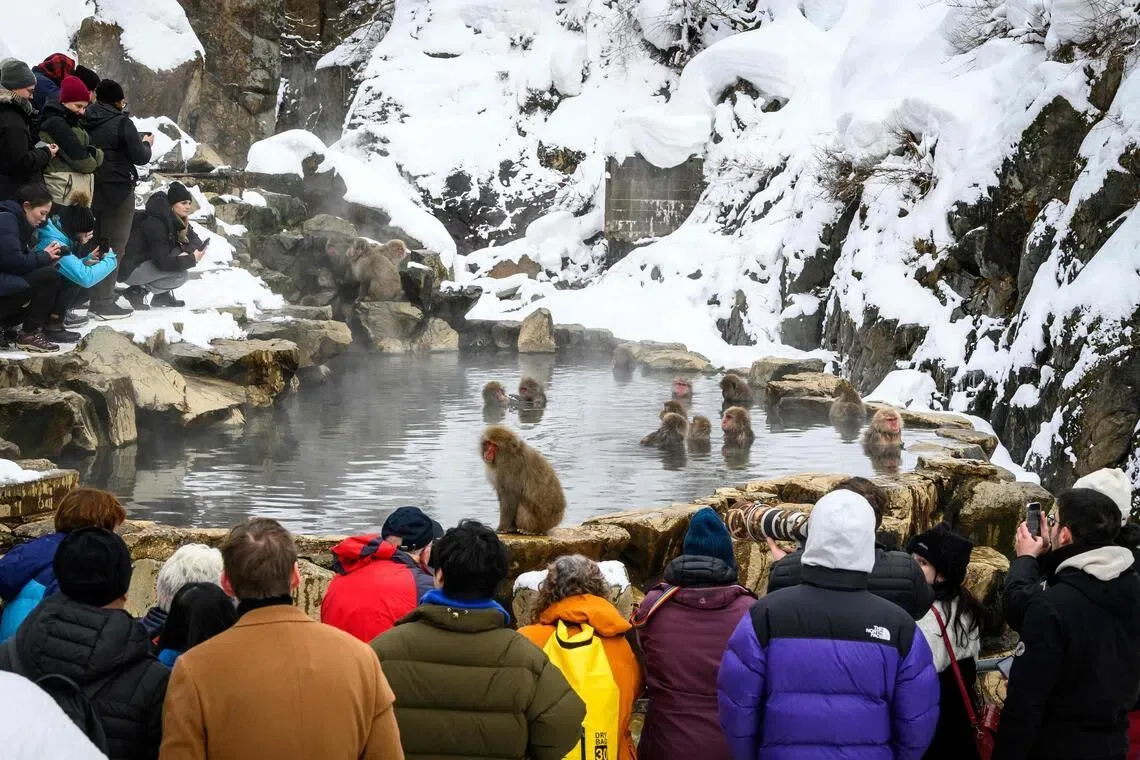
Jigokudani Yaen-Koen, situated at 850 meters altitude in Nagano Prefecture, is famed for being the only site where wild Japanese macaques routinely bathe in hot springs [1, 2, 3]. On cold winter days, these monkeys soak in the steaming water for hours [1, 2, 3].
In recent years, the park has seen a surge of tourists, with daily visitor counts sometimes reaching 3,000 to 4,000, mostly non-Japanese travelers [1, 2, 3]. This spike follows Japan’s record 42.7 million inbound tourists in 2025, fueled by a weak yen [1, 3].
The large crowds have caused overcrowding and increased instances of inappropriate behavior, including visitors trying to feed, touch, or bathe alongside the monkeys [1, 2, 3]. A park official said, "We have been seeing incredibly long queues of visitors waiting outside the ticket booth. To ease that, we will have them buy tickets in advance" [1]. Another source noted attempts to "试图喂食或触摸猴子"—trying to feed or touch the monkeys [2].
To address these issues, the park announced it will require advance online ticket purchases starting August 2026. Along with this, a daily visitor cap of around 2,000 people may be introduced to reduce crowding [1, 2, 3].
The tourism overload problem extends beyond Jigokudani. Overcrowding complaints and disrespectful behavior toward geisha performers have been reported in Kyoto, and a 2026 cherry blossom festival in Fujiyoshida was canceled after residents raised concerns about tourism disruptions [1, 3].
The park’s new measures aim to balance visitor access with wildlife protection and local quality of life. The introduction of online ticketing and visitor limits is scheduled to begin in August 2026 [1, 2, 3].