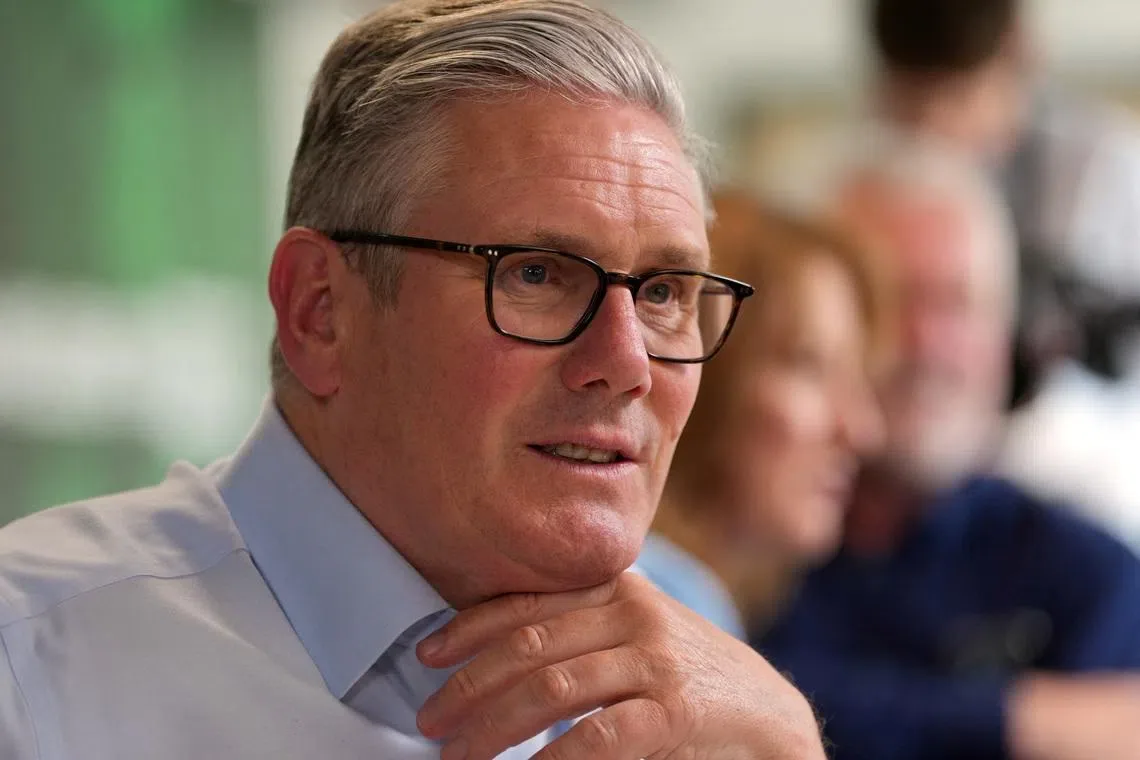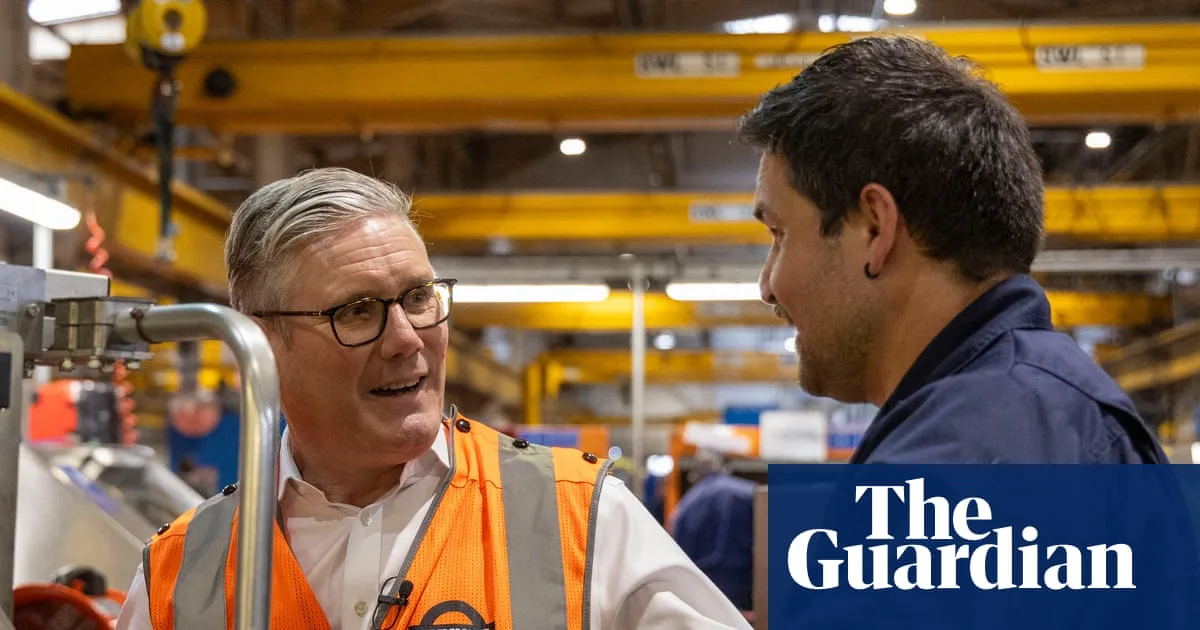
UK Prime Minister Keir Starmer defended his government's policy decisions since 2024, saying they were appropriate for a very different situation than in 1997 under Tony Blair [1, 2]. Speaking during a visit to a London apprentice centre, Starmer said, "I don't agree that the policy choices of this government weren't the right policy choices, given what we inherited. (It's a) very different situation in 2024 to 1997; and dealing with what we had to turn around, the policy choices were vindicated by them, because those changes have happened" [1].
Starmer cited economic stabilization, improved relations with the EU, and the NHS achieving its biggest waiting time reduction in 17 years as evidence of his government's successes [1, 2]. He maintained his government's manifesto pledges, rejecting Blair's call to drop policies on workers’ rights and net zero commitments.
Tony Blair published a lengthy essay of around 5,000 words on May 26, sharply criticizing Starmer's government for abandoning the political centre ground and risking Labour's future [1, 2]. Blair controversially urged the government to support Donald Trump's stance on Iran and argued the manifesto commitments were unrealistic [2].
Starmer faced internal party pressure after poor local election results led some to question his leadership [1]. However, prominent Labour figures including Andy Burnham and Wes Streeting publicly rejected Blair's critique, arguing it ignored rising inequality, the impact of falling living standards, and shifting voting patterns [1, 2]. Burnham said Blair’s analysis was undermined by the "gaping omission" of not acknowledging the economic pressures driving voter behaviour [2].
Both Burnham and Streeting defended Starmer’s policy approach as suitably calibrated to contemporary challenges, countering Blair’s claims that the government had lost coherence [1, 2].
The debate has added fresh momentum to discussions within Labour ahead of upcoming strategy reviews, with Starmer and his allies emphasizing measurable policy achievements while navigating divided opinions. The party plans further meetings in the coming weeks to chart its political course.