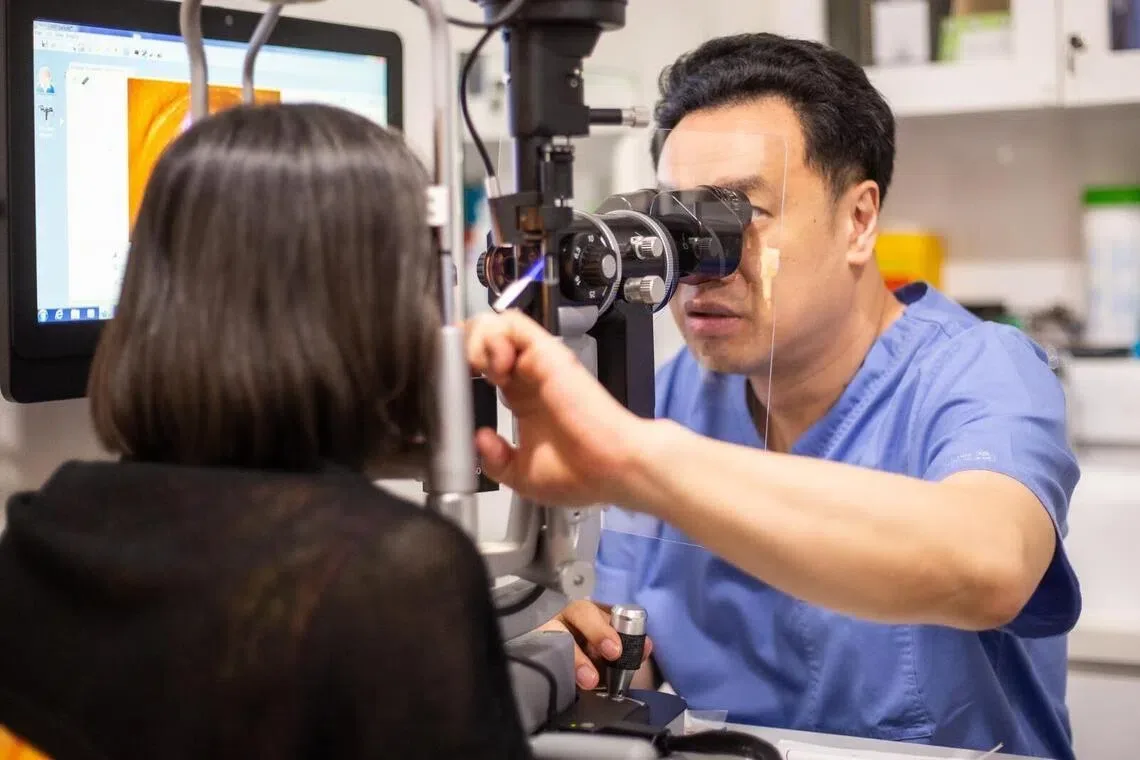
Glaucoma affects up to 5 percent of Singaporeans over age 50 and is an age-related condition, according to Dr David Goh [1]. The eye disease is a leading cause of irreversible blindness worldwide, with some 80 million people affected globally [1, 2]. Known as the “silent thief of sight,” glaucoma damages the optic nerve over time due to increased fluid pressure inside the eye, often without early symptoms [1, 2].
Around half of people with glaucoma are unaware they have the disease because it progresses silently in early stages [1, 2]. Risk factors for glaucoma include high myopia of more than 600 degrees, steroid use, eye trauma or surgery, and a family history of the disease [1, 2]. Those with a family history are three times more likely to develop glaucoma and should start annual screening from their 40s [1, 2].
Managing glaucoma usually begins with daily medicated eye drops to lower eye pressure. However, up to 40 percent of patients do not follow their prescribed regimen due to side effects, forgetfulness, or difficulty administering the drops, Dr Goh said [1]. “Compliance with medication is a huge thing, whether it’s because of the side effects, forgetfulness or inability to administer them on their own,” he said. “It’s not just about prescribing the medication. It’s about whether patients can realistically keep up with it every single day.” [1]
A newly available minimally invasive glaucoma surgery uses microscopic stents implanted in the eye to provide an alternative to daily eye drops [1, 2]. The procedure reduces eye pressure and offers longer-term relief without the need for constant medication.
This option may benefit patients who struggle with eye drop adherence or have side effects, addressing a major challenge in glaucoma care. Regular screening and early detection remain critical as vision loss from glaucoma is irreversible.
Efforts to increase awareness and access to these new surgical options are ongoing across Singapore. Patients with risk factors or early signs of glaucoma should consult an eye specialist promptly for evaluation and treatment planning. [1]