The National University of Singapore (NUS) announced that from August 2026, all undergraduates must complete at least two compulsory AI courses before graduation, including a new introductory module called ‘Applied Generative AI: From Prompting to Evaluation’ for incoming freshmen [1, 2, 3]. This requirement covers over 85% of the 29,600 undergraduates across 15 colleges, faculties, and schools at NUS [2, 3].
These AI courses are integrated across multiple faculties and majors. For example, business students will take 'Decision Analytics using Spreadsheets and AI,' while political science majors will study 'Artificial Intelligence and Public Policy' [2, 3]. Additionally, students interested in deeper specialization can pursue new minors or second majors, such as the Bachelor of Science in Geospatial Intelligence and Applied AI (Design and Engineering), starting August 2026 [2, 3].
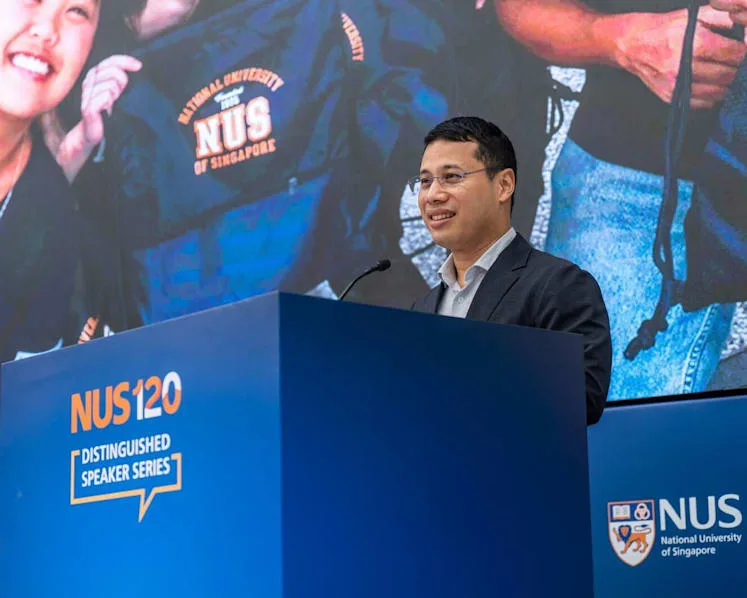
NUS provost Aaron Thean emphasized the university's educational philosophy, stating, "The core business of a university is really to develop the human, not to develop the AI" [2]. He also said, "Our goal is for all students to be 'AI fluent' by the time they graduate, while a smaller group specialising in the field would go on to master it" [3].
Separately, from August 31, 2026, all NUS students, faculty, and staff will receive free baseline access to ChatGPT Edu, a version of ChatGPT developed by OpenAI specifically for university use [1, 2, 3]. This new ChatGPT Edu access complements existing Microsoft Copilot tools available to students through the Microsoft 365 subscription [1].
The partnership with OpenAI is the first of several planned collaborations, with NUS aiming to work with multiple AI providers to ensure broad and equitable access to AI technologies across disciplines [1].