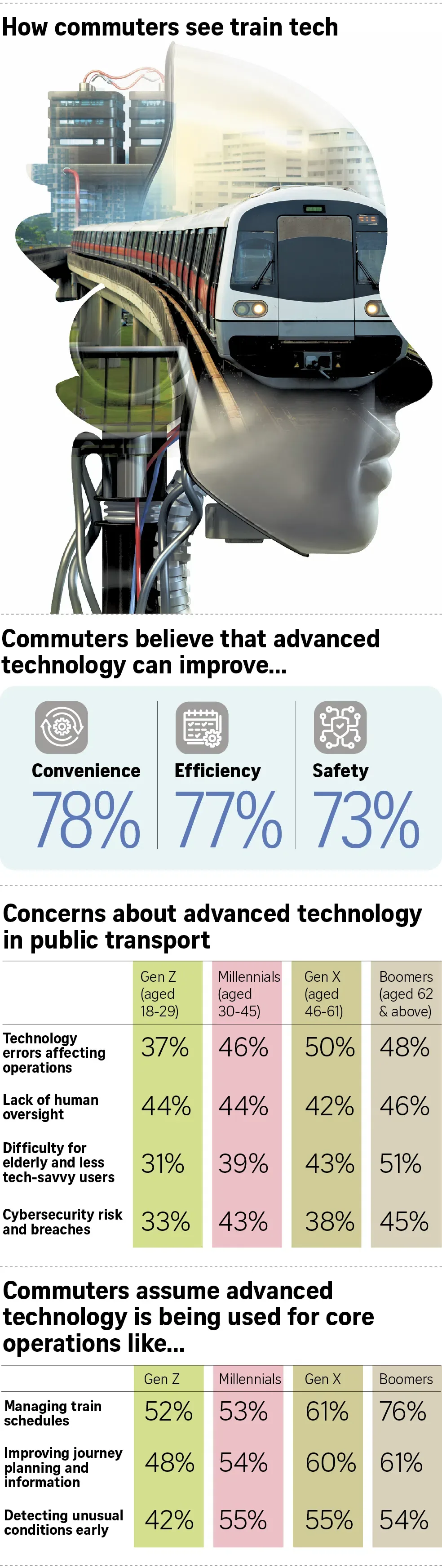
Over 70% of Singapore public transport commuters believe advanced technology enhances the convenience, efficiency, and safety of the city’s train systems, according to a survey of 1,010 users conducted in February 2026 [1, 2].
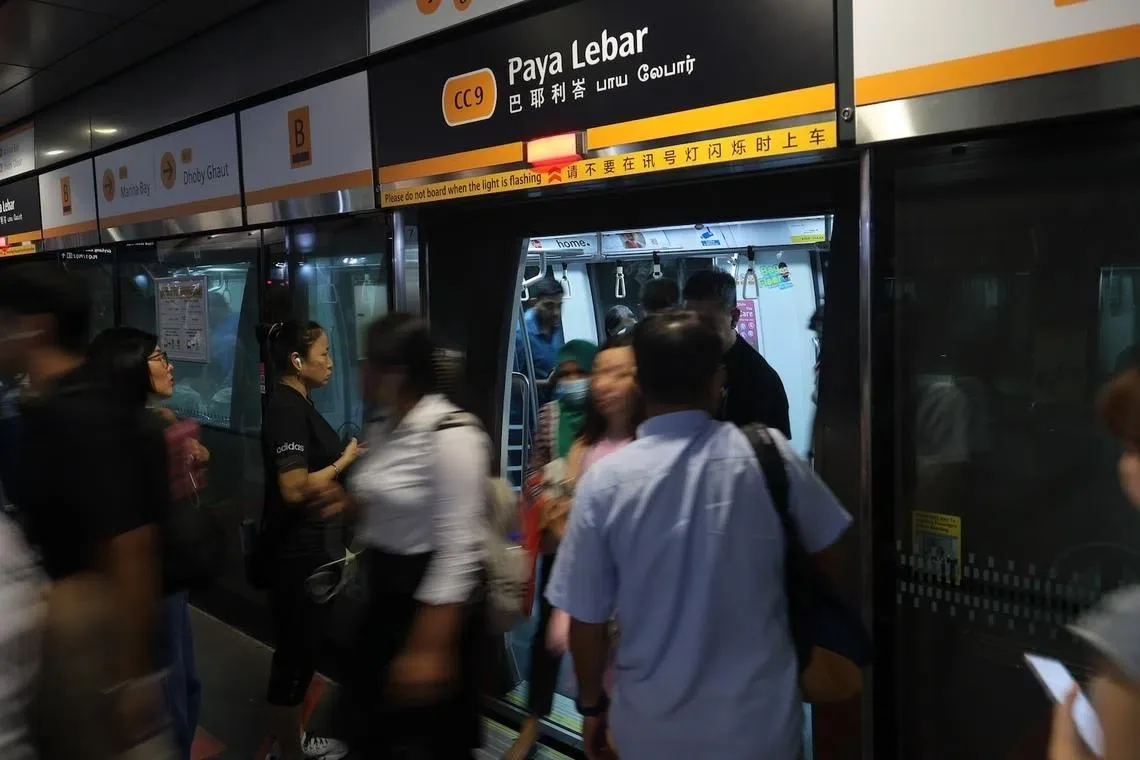
The Mass Rapid Transit (MRT) network operates 24 hours and relies on a mix of technology and human involvement to maintain service quality [1, 2]. SMRT, the public transport operator, has increased its use of AI and automation to support operations and maintenance. Ang Hang Guan, SMRT’s group chief engineering officer, said the company is "increasingly using advanced technologies like artificial intelligence and automation to support operations and maintenance, though the human in the loop is still critical" [1].
Despite broad support, concerns exist among younger commuters. About 44% of Gen Z respondents aged 18 to 29 cited potential lack of human oversight as their main worry about AI and automation in public transport [1, 2]. Simran Kaur, a 26-year-old student from Nanyang Technological University, said she assumes AI helps with route planning and safety but feels human operators should remain involved. "Technologies like AI could (be helping to) improve (areas like) route planning and safety of our public transport systems," she said. "I wouldn’t be surprised if (train operators) are using AI now to make their jobs easier. But I do believe there should be people overseeing the system." She added, "I know a train will come in a few minutes, so I just go to the platform and wait" [1].
The February 2026 survey reflects general acceptance of AI tools integrated into Singapore’s extensive MRT system, balanced by a desire for human oversight. The results underline ongoing efforts by SMRT to leverage technology while retaining critical human roles.
SMRT continues to develop and deploy AI and automated systems to enhance commuter experience and operational reliability.