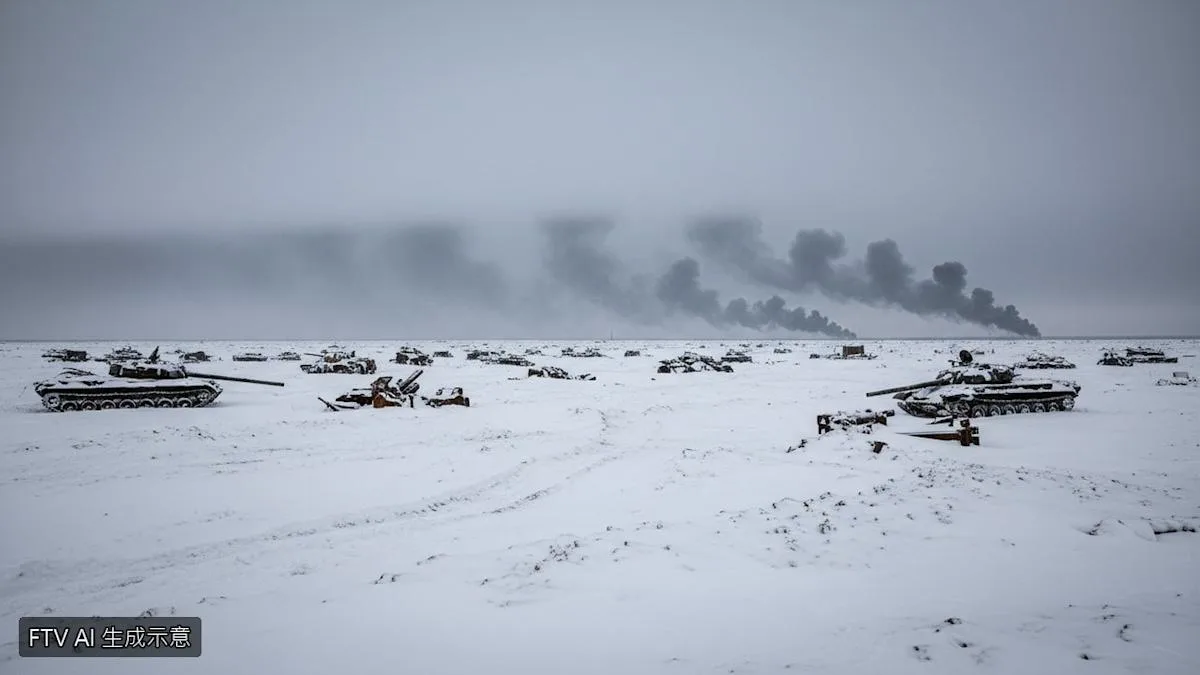
Russian President Vladimir Putin is dealing with mounting difficulties as Russian forces fail to make significant gains in Ukraine and Western sanctions squeeze the country’s economy [1, 2]. For months, Russian troops have been unable to advance on the battlefield, while losses continue to outpace recruitment in the fifth year of conflict [1, 2].
A general mobilisation within Russia appears unlikely due to its deep unpopularity and the threat it poses to domestic stability [1, 2]. The economic toll is also visible, with Russia’s economy contracting by 0.3% in the first quarter of 2026, reflecting the sharp impact of sanctions on the country’s financial and oil sectors [1, 2].
Despite the setbacks, Putin insists government measures are improving the economy and vows to meet military objectives, including maintaining control over the entire Donbas region [1, 2]. Russian policy shows no indication of abandoning this goal. Analysts also note that Russia intends to hold a large military presence near NATO’s borders, suggesting a strategy focused on influence rather than immediate advances [2].
Estonia, observing the situation closely, has urged the West to sustain pressure on Russia through sanctions. Kaupo Rosin, Estonia’s intelligence chief, said "all these factors together are creating a situation where some people in Russia including in the higher levels understand that they have a big problem" [1]. Rosin urged continued sanctions enforcement: "This is not the time to hesitate, just let's keep going" [1].
The most recent concrete data point is Russia’s economic contraction in Q1 2026 amid sanctions and war costs. The situation remains fluid, with further developments expected as Russia confronts internal and external pressures.