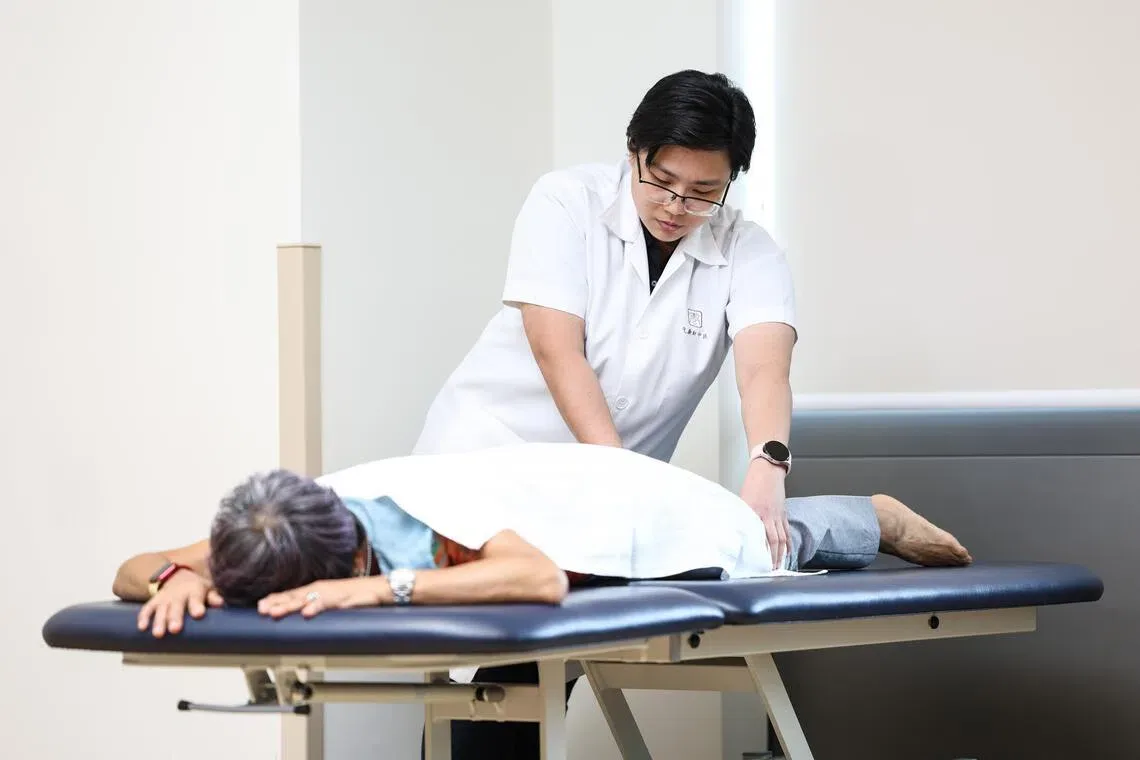
A Singapore General Hospital (SGH) study found that Traditional Chinese Medicine (TCM) tuina therapy offers short-term relief for chronic lower back pain comparable to physiotherapy after two months of treatment [1, 2]. Tuina therapy applies manual pressure to meridians and acupoints, similar to acupuncture but without needles, and differs from spa tuina, which is mainly a relaxation massage [1, 2].
Participants who combined tuina therapy with physiotherapy had pain scores similar to those receiving physiotherapy alone after two months [1, 2]. However, physiotherapy showed better long-term benefits after five months, improving patients' ability to perform daily activities such as walking, sitting, and lifting [1, 2]. SGH senior principal physiotherapist Celia Tan explained, "When you’re using a very direct contact (tuina) treatment, there’s the tendency for them to feel that the pain is coming back (when treatment stops)" [1].
Physiotherapy encourages patients to continue self-treatment exercises at home, which likely contributes to the sustained improvements. Tan noted, "For physiotherapy, we tend to use more self-treatment exercises...to get them to be responsible for their treatment" [2]. One study participant, 63-year-old Erica Ong, said, "I receive the best of both worlds with the two treatments. I do the tailored physiotherapy exercises at home for about 10 to 15 minutes, up to three times a week, to manage my back pain" [1].
SGH plans further studies on TCM tuina for other conditions including shoulder pain, knee pain, and insomnia [1, 2]. The findings were discussed by Tan in a media briefing on 12 May 2026 [1, 2].