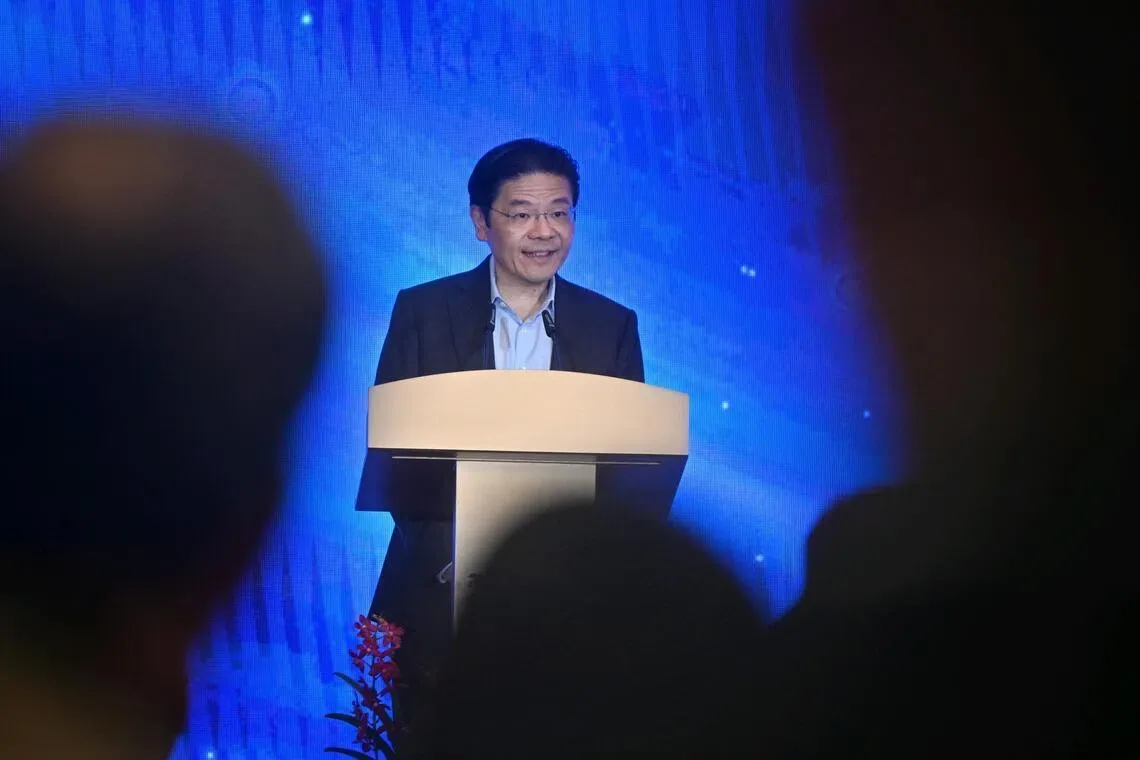
Singapore announced a diversified energy strategy on May 19, aiming to improve energy security by expanding natural gas sources, electricity imports, and developing low-carbon alternatives [1, 2]. Prime Minister Lawrence Wong said, "There is no single solution for Singapore, there is no silver bullet." He emphasized the need to avoid dependence on any one fuel source or technology, saying, "We have to pursue multiple pathways at the same time – balancing security, affordability and sustainability" [1].
The city-state imports nearly all its energy, making it vulnerable to global supply disruptions [1, 2]. Its decarbonization options are constrained by limited renewable resources, despite increasing solar capacity by almost five-fold over the last five years [1, 2]. However, solar energy can only meet a limited share of Singapore's power demand even when rooftops, reservoirs, and vacant land are fully utilized [1, 2].
Hydrogen is seen as a potential clean fuel, with pilot projects underway including tests of ammonia—a hydrogen carrier—for power generation on Jurong Island and hydrogen-ready gas turbines [1, 2]. Prime Minister Wong cautioned that hydrogen production involves energy losses during liquefaction, shipping as ammonia, reconversion, and combustion. "Technology can help improve parts of the process. But it cannot eliminate these losses altogether. So this will constrain the role that hydrogen can play in large scale power generation for some time to come," he stated [1].
Singapore is also studying nuclear power as an option and plans to undergo an International Atomic Energy Agency (IAEA) assessment in 2027 to evaluate its feasibility [1, 2].
The Energy Market Authority celebrated its 25th anniversary on May 19, the same day Prime Minister Wong gave the speech outlining the energy strategy [1, 2].